
Table of Contents
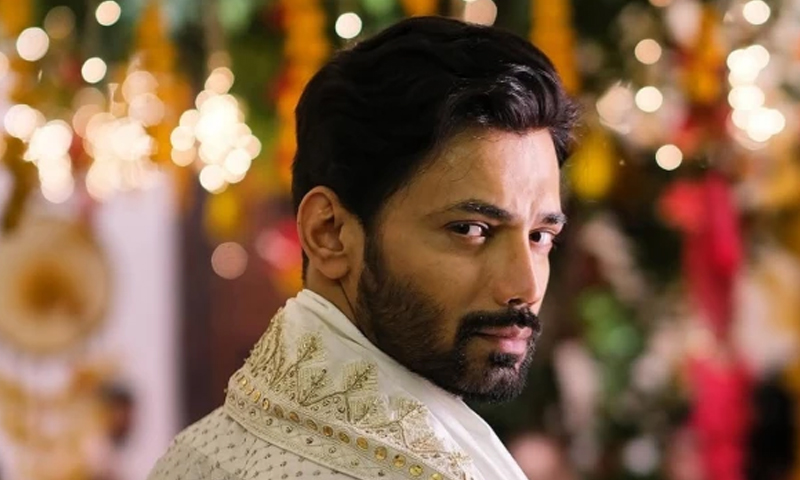
Pakistani actor Zahid Ahmed has found himself at the center of a heated debate after his recent appearance on Excuse Me with Ahmad Ali Butt. During the hour-long interview, Zahid discussed everything from his approach to selecting acting projects and family life to his disillusionment with social media — but it was his outspoken remarks about vulgarity and influencers that caught the public’s attention.
Known for his thoughtful persona and selective approach to acting, Zahid rarely makes public appearances, which made this interview one of the most anticipated of the season. However, his comments have sparked mixed reactions across the entertainment industry and social media platforms.
“I Will Never Promote Vulgarity” — Zahid Ahmed on Lazawal Ishq
When host Ahmad Ali Butt asked if there was anything Zahid would never endorse or promote, the actor didn’t hesitate.
“I will never endorse any idea, any show that promotes vulgarity like Lazawal Ishq,” Zahid said firmly.
The actor went on to question the production origins of the popular reality show, which has drawn criticism for its format centered around contestants finding love on-screen.
“I have tried asking people but nobody knows who has produced it,” he said, expressing suspicion about the team behind the show.
According to host Ayesha Omar, Lazawal Ishq was made “with the help of a Turkish production house,” though it remains unclear whether the team was fully or partially responsible for the show’s creation.
Zahid, echoing the sentiments of many conservative critics, argued that such programming contradicts Islamic values and suggested there may be a “hidden agenda” behind its popularity.
“There is an evil agenda behind promoting such shows. These things go against our religion and culture,” he asserted.
His remarks were quickly picked up across social media, with supporters praising him for “speaking the truth” and critics accusing him of moral policing and selective outrage.
Zahid’s Harsh Take on Social Media: “I Hate It, I Resent It”
The actor didn’t stop there. Turning to a topic he feels strongly about, Zahid shared his unfiltered thoughts about social media and its cultural impact.
“I hate social media. I resent it,” he said, adding that he believes the platforms have done more harm than good to society.
He made headlines when he went further, claiming that those who created social media platforms “will burn in hell.”
The statement, unsurprisingly, ignited a wave of backlash online. While many understood his frustration with online negativity and vanity culture, others saw his remarks as unnecessarily extreme.
Zahid later clarified that his statement wasn’t directed at content creators or influencers themselves, but rather the founders and corporations that built the platforms.
“I didn’t mean people who make content should go to hell — I meant those who created these systems that encourage showing off and vanity,” he explained.
Even with this clarification, the damage was done. Influencers, in particular, took issue with his broad criticism, arguing that the entertainment industry is no different — both rely on visibility, branding, and public image.
Influencers Respond: “Double Standards” in Entertainment
One of the first to respond publicly was Adnan Zafar, better known by his online persona Ken (formerly “Ken Doll”). In a video shared to his Instagram, he criticized Zahid’s comments, calling them “hypocritical” and “disrespectful.”
“Actors promote brands, show their faces, and make money off fame — just like influencers do,” Zafar said. “So why the double standards?”
Several other creators echoed similar sentiments, saying that actors and influencers are part of the same ecosystem of media and marketing, where exposure and brand work are essential.
One user on X (formerly Twitter) wrote, “If influencers are un-Islamic for showing off, what about actors who do fashion shoots, endorsements, and red carpet events?”
The debate quickly snowballed into a broader discussion about morality, fame, and the blurred line between art and influence in Pakistan’s entertainment industry.
Public Reaction: Praise, Backlash, and Reflection
While Zahid Ahmed’s remarks have polarized audiences, many fans continue to admire his honesty and boldness. Supporters on Facebook and YouTube flooded comment sections with messages praising him for “standing up for Islamic values” and “rejecting vulgarity.”
Others, however, argued that his views reflect an outdated mindset that stifles creative expression. Some even accused him of hypocrisy, pointing out that the entertainment industry itself thrives on attention, glamour, and controversy.
Despite the criticism, Zahid’s comments have reignited an important conversation about the role of morality, culture, and faith in modern entertainment — a topic that often divides Pakistan’s showbiz community.
Final Thoughts
Zahid Ahmed’s appearance on Excuse Me with Ahmad Ali Butt has undoubtedly left a lasting impression. Whether praised for his courage or criticized for his rigidity, the actor has once again proven that he is unafraid to speak his mind — even when his opinions stir controversy.
As the debate over Lazawal Ishq and social media continues to unfold, Zahid’s remarks have sparked a wider reflection on what defines “vulgarity” and how much of our public life — whether on TV or online — aligns with the values we claim to uphold.
