
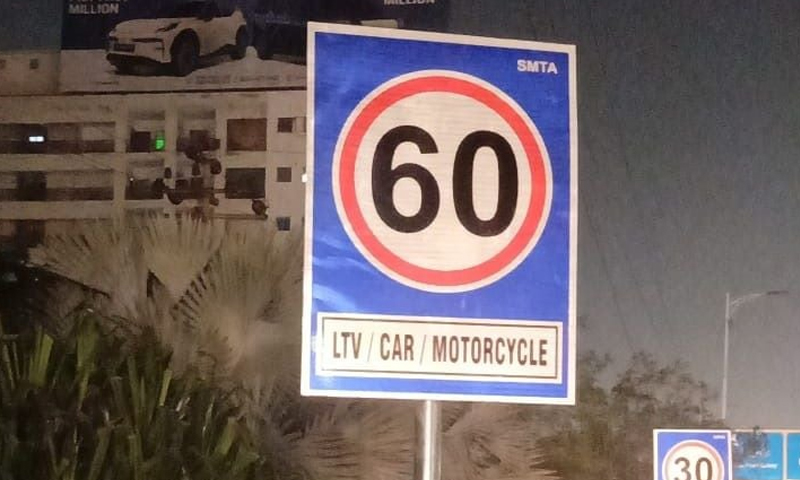
Karachi’s traffic landscape is undergoing one of its most comprehensive overhauls in years, following the enforcement of new speed limits on Shahrah-e-Faisal. Building on the initiative, the administration has launched a wide-ranging program in Saddar — the city’s most crowded commercial district — installing no-parking and no double-parking signs and accelerating the development of lane markings and zebra crossings across major routes. The campaign aims to restore discipline, reduce congestion, and give the metropolis a more organized and modern traffic system.
This citywide effort comes on the heels of the Karachi Traffic Police’s rollout of the modern, automatic, faceless e-ticketing system, which has already begun penalising violations through camera surveillance instead of manual challans. With the digital enforcement system now in motion, the Sindh Mass Transit Authority (SMTA) has stepped in with large-scale lane-marking work, targeting roads around major commercial centres, markets, and transport corridors. Alongside this, signage for lane discipline, pedestrian zebra crossings, speed limits, and parking restrictions is being installed rapidly.
DSP Admin Traffic Police Kashif Nadeem, while speaking to The Express Tribune, confirmed that the speed limits on Shahrah-e-Faisal — Karachi’s busiest and most crucial thoroughfare — have now been officially set and signboards placed at multiple points along the route. Under the revised rules, cars and motorcycles must not exceed 60 km/h, while buses and heavy vehicles are confined to 30 km/h. These limits aim to reduce accidents, ensure better flow of traffic, and strengthen overall road safety standards.
He explained that after stabilising the situation on Shahrah-e-Faisal, the administration shifted its focus to Saddar — a hotspot for congestion due to heavy commercial activity, street markets, bus stops, and pedestrian movement. No-parking and no double-parking signs have now been erected across several high-traffic roads in the area. Authorities warn that violators will face strict penalties: Rs2,000 fines for motorcyclists and Rs10,000 fines for cars, vans, and other vehicles caught violating the new regulations, including illegal parking or speeding.
DSP Kashif Nadeem outlined the areas where signage has been installed: Empress Market, Zaibunnisa Street, Staff Lane, Abdullah Haroon Road, Bambino Cinema, Lyric Mall, Saddar Preedy Quarters, Al-Haroon Chambers, Fatima Jinnah Road, Rex Centre, Panorama Centre, Centre Mall, State Life Building Civil Lane, Madina City Mall, Jahangir Kothari Mansion, and China Shopping Mall — among many other points across Saddar. These locations were chosen due to their chronic congestion issues and frequent traffic bottlenecks.
Meanwhile, progress on lane markings and zebra crossings is advancing swiftly. According to DSP Nadeem, the work has already been completed on important stretches including II Chundrigar Road, Shaheen Complex, PIDC Signal, Metropole Signal, Teen Talwar, Boat Basin, National Stadium Signal, and Powerhouse Chowrangi in North Karachi. These markings are expected to improve lane discipline, enhance pedestrian safety, and ease turning movements at busy intersections.
He added that the agency responsible for executing the markings and installing the signboards is working at a very fast pace, in coordination with both the Traffic Police and SMTA. The aim is to ensure the entire project — covering all major routes of Karachi — is completed as soon as possible to deliver noticeable improvements in the city’s overall traffic discipline and visual order.
Once finished, the initiative is expected to bring about a visibly more organised road environment, making daily commutes safer and more predictable for motorists, motorcyclists, and pedestrians alike. The combination of modern e-ticketing, freshly painted lane guides, prominent zebra crossings, and strict new parking regulations signals the beginning of a major transformation in how Karachi’s roads will be used and regulated.
For a city that has long struggled with disorderly driving, encroachments, double parking, and signal violations, the administration believes this coordinated effort can finally steer Karachi toward a more disciplined, efficient, and safer traffic culture. The coming weeks will reveal how well the public adapts, but the groundwork for a modernised urban traffic system is clearly being laid.
