
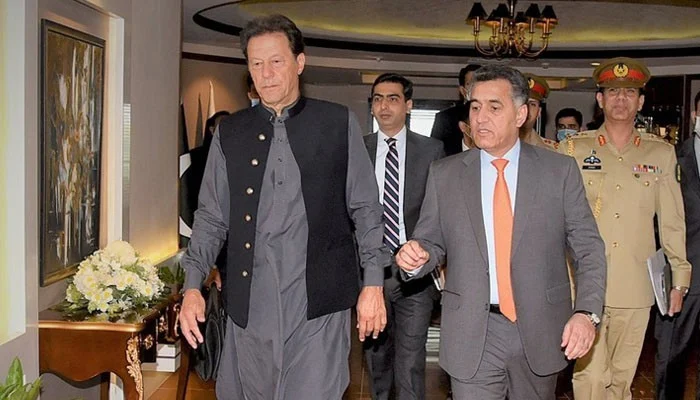
In a significant development underscoring the Pakistan Army’s commitment to internal discipline, retired Lt Gen Faiz Hameed has been sentenced to 14 years of rigorous imprisonment by a Field General Court Martial (FGCM). The verdict, delivered on December 11, 2025, follows an exhaustive 15-month trial initiated on August 12, 2024, under the provisions of the Pakistan Army Act. This ruling highlights the military’s resolve to address high-level misconduct that undermines national security and institutional integrity.
The proceedings stemmed from serious allegations against Hameed, a former prominent figure in Pakistan’s armed forces known for his roles in intelligence and operations. The court found him guilty on four pivotal charges: breaching the Official Secrets Act in ways that jeopardized state security and interests; unauthorized engagement in political activities; the improper utilization of official resources and authority; and inflicting undue financial harm on private individuals. These violations, spanning misuse of power and sensitive information handling, were meticulously examined during the trial, where Hameed was afforded full legal representation and all procedural safeguards.
The FGCM ensured a fair process, adhering strictly to legal standards and allowing the accused to mount a robust defense. While the sentence marks a conclusive judgment on these counts, parallel investigations continue into Hameed’s purported role in fomenting political unrest through ties with various factions—a matter the military has flagged for independent scrutiny. This dual-track approach reflects a broader strategy to root out influences that could destabilize the nation’s governance framework.
Hameed retains the statutory right to appeal the decision through appropriate appellate channels, providing an avenue for further judicial review. The outcome resonates amid ongoing efforts to fortify military ethos, particularly as Pakistan navigates complex internal and external challenges. Observers note that such accountability measures bolster public trust in the armed forces, deterring future overreaches and reinforcing the separation of military duties from partisan endeavors.
This case arrives at a juncture when Pakistan’s institutions are under the spotlight for transparency and reform. By holding senior officers to account, the establishment signals zero tolerance for actions that erode the foundational principles of service and loyalty. As appeals unfold, the episode could catalyze deeper discussions on the intersections of military influence and civilian politics, ultimately aiming to safeguard democratic processes.
The military’s statement post-verdict emphasized procedural justice, stating that every step complied with constitutional mandates. For Hameed, once a key strategist, the imprisonment—effective immediately—closes a contentious chapter, yet opens avenues for legal recourse.
