
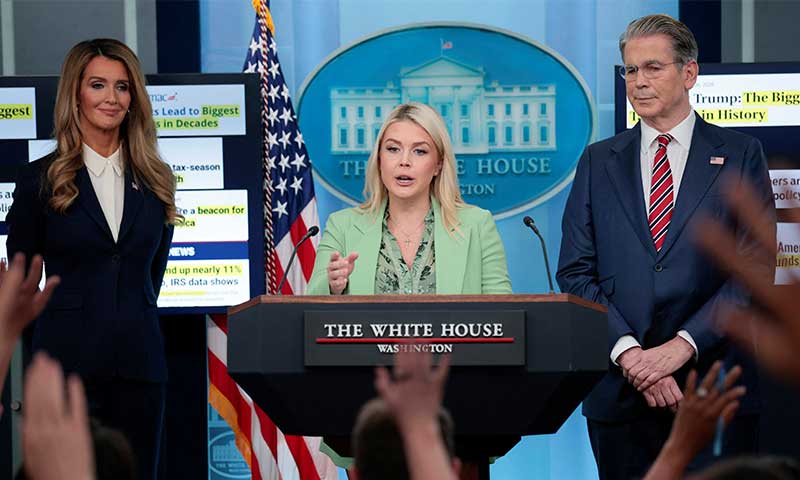
WASHINGTON/TEHRAN – The White House has formally demanded that Iran surrender its entire stockpile of enriched uranium as part of ongoing peace negotiations, marking a significant hardening of the US position .
White House Press Secretary Karoline Leavitt confirmed the demand, stating it is a “key component” of discussions between the two sides . According to international nuclear watchdog estimates, Iran currently possesses nearly 2,000 kilograms of enriched uranium, including approximately 440-450 kilograms enriched to 60% purity – a level just one technical step away from weapons-grade material .
The demand represents a dramatic shift from the 2015 Joint Comprehensive Plan of Action (JCPOA), under which Iran had agreed to cap enrichment at 3.67% and limit its stockpile to 300 kilograms in exchange for sanctions relief. The United States withdrew from that deal in 2018 under President Donald Trump .
The Trump administration is reportedly seeking the permanent and complete surrender of Iran’s enrichment rights, with demands that all 440 kilograms of 60% highly enriched uranium be exported to the US or a third country . This amount is estimated to be sufficient for the production of approximately 11 nuclear warheads .
However, Tehran has firmly rejected the proposal. Iranian Foreign Ministry spokesperson Esmaeil Baghaei stated on Monday that transferring enriched uranium stockpiles abroad “is not on the Islamic Republic’s agenda” . Baghaei emphasized that “preserving nuclear achievements within Iran’s territory” is Tehran’s definitive position .
Iran has consistently maintained that its nuclear program is for peaceful civilian purposes and insists that uranium enrichment is an “indisputable” sovereign right . The Islamic Republic has previously proposed a five-year suspension of enrichment activities as a compromise, but US officials rejected that offer .
The nuclear negotiations are unfolding against a backdrop of heightened tensions, including a fragile ceasefire, a continued US naval blockade of Iranian ports, and severe disruptions to shipping in the strategic Strait of Hormuz .
