
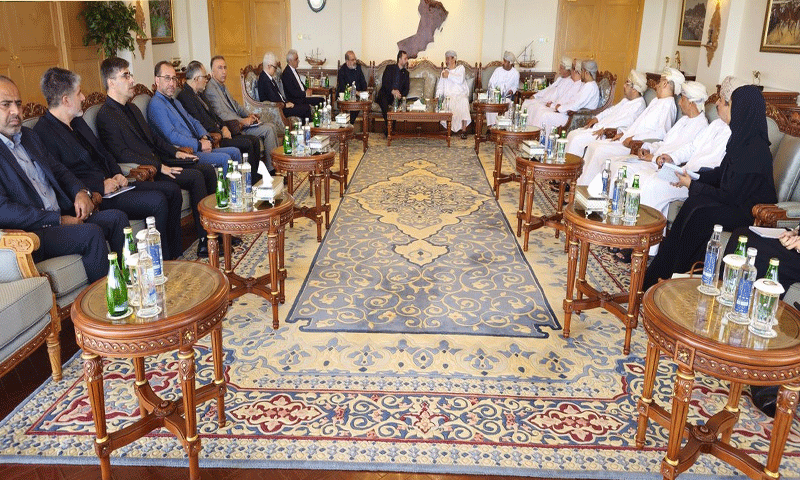
MUSCAT: Iran and Oman have convened the inaugural meeting of a joint committee dedicated to the Strait of Hormuz in Muscat, marking an early step in implementing aspects of a recent interim agreement between Tehran and Washington.
Kazem Gharibabadi, Iran’s deputy foreign minister for legal and international affairs, announced the development on his X account on Monday, describing constructive exchanges on the sovereign rights of Gulf coastal states and the long-term administration of the strategically vital waterway.
Cooperation Rooted in Interim Deal
The talks come weeks after Tehran and Washington signed a 14-point interim memorandum of understanding in mid-June aimed at ending recent hostilities, reopening the Strait of Hormuz, and easing certain sanctions while broader negotiations continue.
The agreement explicitly calls for dialogue between Iran and Oman on defining future maritime administration and services in the strait, in consultation with other littoral states and in line with international law.
The joint committee is expected to address shipping protocols, safety measures, and related services, building on longstanding cooperation between the two neighbours who share oversight responsibilities for the narrow chokepoint through which a significant portion of global oil trade has historically flowed.
Strategic Importance for Regional Stability
The Strait of Hormuz remains one of the world’s most critical maritime passages. Its closure during the recent Iran-related conflict triggered energy market disruptions, underscoring the need for coordinated management to ensure safe and uninterrupted navigation.
Both sides have reaffirmed their commitment to freedom of navigation while respecting coastal states’ rights. Further details from the Muscat meeting are anticipated in a forthcoming joint statement, as officials work towards a sustainable framework for the strait’s governance.
