
Table of Contents
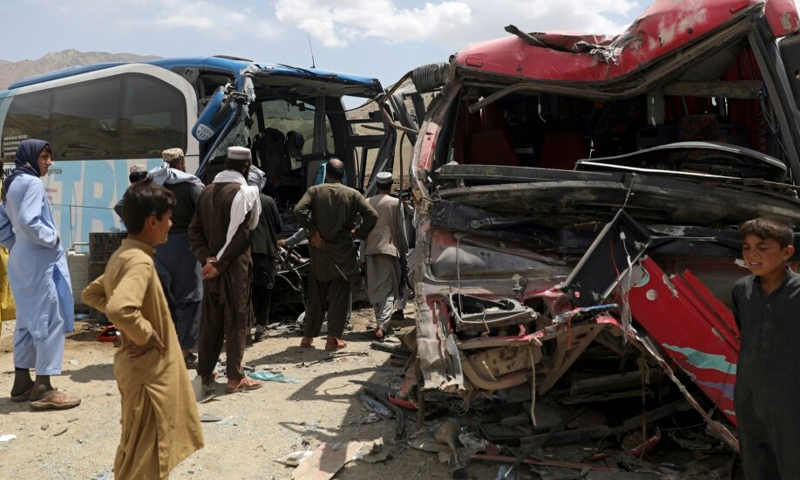
Two tragic bus accidents, involving a fuel tanker and a truck, have left 52 people dead and 65 others injured in central Afghanistan. The incidents occurred on the Kabul-Kandahar Highway in Ghazni province late Wednesday, according to local officials and Taliban government spokespeople. This highway, a major route linking the capital Kabul with the southern city of Kandahar, has witnessed numerous accidents in recent years due to hazardous conditions and unsafe driving.
Details of the Accidents in Ghazni
The fatal accidents occurred in different parts of Ghazni province. The first crash took place near Shahbaz village, where one of the buses collided with a fuel tanker. The second accident happened in the eastern district of Andar, when another bus struck a truck. While the exact breakdown of the casualties for each accident is not yet available, provincial officials, including Hamidullah Nisar, the head of information and culture in Ghazni, confirmed the number of deaths and injuries.
Zelenskiy Claims Russian Drone Attack on Chernobyl, Russia Denies Allegations
Zabihullah Mujahid, the chief spokesman of the Taliban government, expressed deep regret over the accidents. “We learned with great regret that two fatal traffic accidents occurred on the Kabul-Kandahar Highway, in which 52 of our compatriots were killed and 65 others were injured,” he stated. The injured individuals were quickly transported to hospitals, and several remain in critical condition. Rescue teams responded swiftly, but the severity of the accidents left many in urgent need of medical attention.
Rescue Operations and Response
Following the accidents, rescue operations were launched by local teams, who arrived on the scene to assist the survivors. Due to the extent of the injuries, many of the victims were rushed to nearby hospitals. Some of the injured are said to be in “serious condition,” according to reports. Despite the quick response from emergency services, the death toll continues to rise as the injured are treated.
The highway between Kabul and Kandahar is a vital route for many travelers, but it has been notoriously dangerous due to the poor state of the roads and inadequate infrastructure. The combination of these factors, along with reckless driving practices, has contributed to the high frequency of accidents in this region.
India-U.S. Strengthen Ties: Trade, Defense, and Diplomacy in Summit
The Growing Problem of Traffic Accidents in Afghanistan
Traffic accidents are a persistent issue in Afghanistan, particularly on major highways like the Kabul-Kandahar route. Decades of conflict have left the country’s infrastructure in disrepair, with many roads remaining poorly maintained and prone to accidents. Additionally, the lack of road safety regulations and the prevalence of dangerous driving contribute to the high number of fatalities each year.
This tragic incident is not an isolated case. In March of this year, a bus collided with a fuel tanker in southern Helmand province, killing more than 20 people and injuring 38 others. In another devastating accident in December 2022, a fuel tanker overturned and caught fire in the high-altitude Salang Pass, a major highway linking northern Afghanistan with the capital. The accident claimed 31 lives and left dozens more with severe burns. These incidents highlight the urgent need for improved road safety measures and better regulation of transportation in the country.
The Impact of Afghanistan’s Road Infrastructure Crisis
Afghanistan’s road infrastructure has suffered greatly due to decades of war and conflict. Many roads are narrow, poorly paved, or entirely unmaintained, creating hazards for drivers and passengers alike. Even major highways such as the Kabul-Kandahar route are in desperate need of upgrades and safety improvements. With the country’s reliance on road transport for both domestic and international travel, these dangerous conditions remain a significant threat to public safety.
Additionally, the absence of strict traffic laws or their enforcement means that reckless driving is a common issue. Speeding, overloading vehicles, and lack of proper vehicle maintenance all contribute to the high risk of accidents. Many drivers continue to ignore safety regulations, with little consequence, further exacerbating the situation.
Call for Road Safety Reforms
The repeated accidents on Afghanistan’s highways, especially involving fuel tankers and buses, underscore the need for comprehensive reforms in road safety and infrastructure. The government must prioritize the repair and maintenance of roads, implement stricter regulations for commercial vehicles, and improve driver education to reduce accidents. Given the frequency of these fatal crashes, it is clear that more needs to be done to protect the lives of the Afghan people.
As Afghanistan grapples with the aftermath of these accidents, the focus must shift to preventing future tragedies. Road safety initiatives, including better enforcement of laws, improved vehicle inspections, and road maintenance, are critical for safeguarding the public. Until significant steps are taken to address these issues, the threat of deadly accidents will continue to haunt travelers across the country.
