
Table of Contents
Australia Accuses China of “Unsafe” Military Conduct After Jet Releases Flares Near Patrol Plane
Tensions between Australia and China flared again over the South China Sea after Canberra accused a Chinese military aircraft of releasing flares dangerously close to an Australian patrol jet during a routine flight.
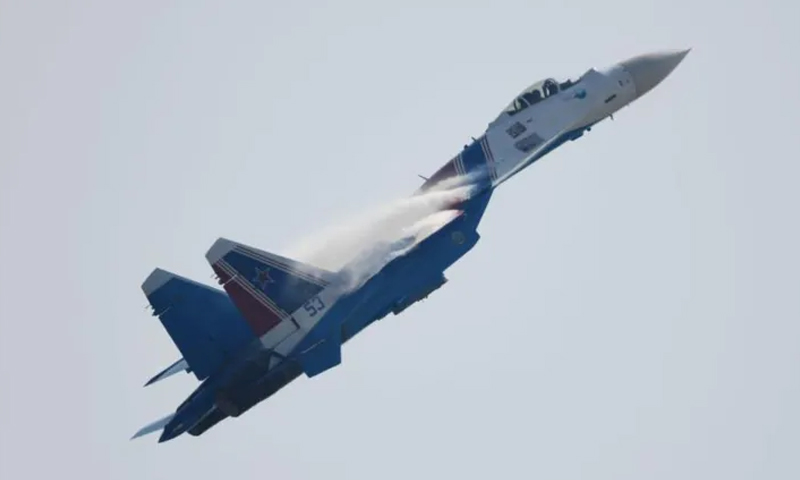
According to a statement from Australia’s Department of Defence, the incident took place on Sunday, when a Chinese fighter jet released flares “in close proximity” to an Australian P-8A Poseidon maritime patrol aircraft operating in international airspace.
Although the Australian aircraft and its crew were not harmed, Defence officials described the encounter as “unsafe and unprofessional,” adding that Canberra has formally raised its concerns with Beijing.
“The Australian government has expressed its serious concern to China through appropriate channels,” the Defence Department said on Monday. “Such actions jeopardize the safety of personnel and increase the risk of miscalculation.”
China Denounces Australia for “Infringing Sovereignty”
Beijing, however, offered a starkly different version of events.
A spokesperson for China’s Southern Theater Command Air Force, Senior Colonel Li Jianjian, accused the Australian aircraft of “illegally intruding” into Chinese airspace and said Chinese pilots acted in accordance with the law.
“The Australian aircraft’s actions seriously infringed upon China’s sovereignty,” Li said in a statement published by Chinese state media. “Our response was necessary and legitimate. We urge Australia to immediately cease its infringing and provocative actions.”
Chinese officials maintain that the South China Sea — nearly all of which Beijing claims as its own — falls under its jurisdiction, despite international rulings rejecting those assertions.
Australia Pushes Back
Australia rejected Beijing’s claim of intrusion, insisting that its patrols operate “in accordance with international law” and within internationally recognized airspace.
“The Australian Defence Force expects all countries, including China, to operate their militaries in a safe and professional manner,” an ADF spokesperson said.
The ADF emphasized that its aircraft routinely conduct surveillance missions across the Indo-Pacific as part of efforts to promote “peace, stability, and adherence to international norms.”
The P-8A Poseidon, the aircraft involved in Sunday’s incident, is a long-range maritime patrol jet used for anti-submarine warfare, intelligence-gathering, and reconnaissance — often deployed to monitor activities in contested waters.
A Pattern of Confrontations
This latest episode marks yet another in a series of tense encounters between Australian and Chinese forces in recent years, underscoring the growing friction between the two militaries in regional hotspots.
In February 2025, Australia accused another Chinese jet of dropping flares dangerously close to an Australian aircraft in the same region. At the time, China also defended its actions, saying the Australian plane had “intentionally intruded” into Chinese airspace and that its response was “lawful and restrained.”
The pattern of near-misses stretches back further:
- In May 2024, an Australian Navy helicopter part of a UN Security Council mission over the Yellow Sea was reportedly targeted by Chinese fighter jets deploying flares nearby.
- In November 2023, Canberra accused the Chinese navy of using sonar pulses against Australian divers in international waters off Japan, which resulted in minor injuries to the divers.
Each incident has reinforced Canberra’s growing concern over China’s military assertiveness in the region — particularly around contested maritime zones.
Diplomatic Timing Raises Stakes
The timing of the latest incident is particularly sensitive. It occurred just as Australian Prime Minister Anthony Albanese departed for the United States to meet with President Donald Trump for high-level discussions.
One of the key agenda items is expected to be the AUKUS alliance — a strategic defence pact between Australia, the United States, and the United Kingdom aimed at countering Chinese influence in the Indo-Pacific.
Under AUKUS, Australia will receive nuclear-powered submarines and advanced military technologies — a deal worth tens of billions of dollars and one that Beijing has repeatedly criticized as “destabilizing” for regional security.
Analysts suggest that Sunday’s flare incident could add tension to the upcoming talks, underscoring the volatile military environment in which Australia’s defence commitments are evolving.
South China Sea: The Broader Flashpoint
While Australia has no territorial claims in the South China Sea, it has consistently aligned itself with the U.S. and allied nations in challenging China’s sweeping maritime assertions.
The South China Sea remains one of the world’s most contested waterways — claimed in part by several Southeast Asian nations, including Vietnam, the Philippines, Malaysia, and Brunei. In 2016, an international tribunal in The Hague ruled that China’s claims had no legal basis, a decision Beijing continues to reject.
Australia, along with Japan, India, and the U.S., has participated in freedom-of-navigation operations (FONOPs) to assert the right of passage through what they regard as international waters. Beijing routinely condemns such missions as provocations.
Escalating Risks of Miscalculation
Defence analysts warn that repeated close encounters like this one raise the risk of serious accidents that could trigger diplomatic or even military crises.
“Every unsafe intercept or aggressive manoeuvre increases the likelihood of a tragic incident,” said one regional security expert. “Both sides need better communication protocols to avoid escalation.”
As the Indo-Pacific grows increasingly militarized, the South China Sea continues to serve as a barometer of great-power tension — and Sunday’s encounter is yet another reminder of how fragile that balance has become.
