
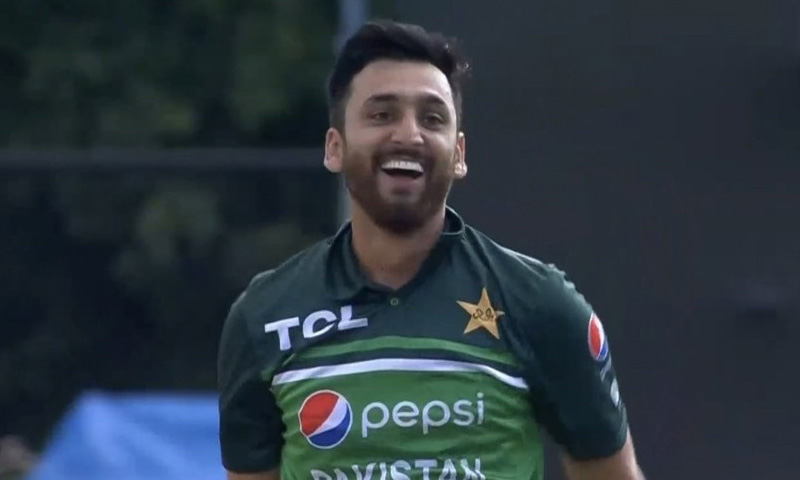
Pakistan’s T20I captain Salman Ali Agha has offered a clear indication of how the national squad may shape up ahead of the ICC Men’s T20 World Cup 2026, set to take place in India and Sri Lanka. With the tournament scheduled to begin on February 7 next year, the skipper believes Pakistan already have a strong, stable core—one he expects will remain largely unchanged as the World Cup draws closer.
Since taking over the T20I captaincy earlier this year, Salman has led Pakistan to a solid stretch of performances in the shortest format. The most recent success came at home in a competitive tri-series featuring Sri Lanka and Zimbabwe, where Pakistan emerged victorious. According to Salman, the squad that featured in that series has now developed a well-defined structure and rhythm, one he sees as the foundation of Pakistan’s World Cup campaign.
Speaking on a podcast for the Pakistan Cricket Board (PCB), the captain emphasized the need for consistency over late experimentation.
“I don’t think there will be any major changes before the World Cup; this will be the combination,” Salman stated confidently. “All players have been given their roles, and we will move forward with these roles.”
With only six T20I matches remaining before the global tournament, Salman stressed the importance of stability.
“We have six matches left before the T20 World Cup, and we will have to play with consistency. We cannot make big changes in these six matches.”
This approach signals good news for several high-profile names, including former captain Babar Azam and star fast bowler Naseem Shah—both of whom made successful returns during the tri-series after going through a period where they appeared to be out of favour with selectors. Their performances not only strengthened Pakistan’s lineup but also reaffirmed their value heading into a demanding World Cup year.
Salman highlighted that the group’s recent cohesion and on-field improvement have strengthened his belief that Pakistan are heading in the right direction under his leadership.
“We have played with this group for six months, and the results have started to come,” he said.
With confidence building and the dressing room settling under his captaincy, Salman has begun thinking beyond just the upcoming tournament. He openly shared his ambition of steering Pakistan toward multiple ICC titles in the coming years.
“I want us to win the 2026 T20 World Cup and then the 2027 ODI World Cup. Winning both World Cups is my dream; if it happens, I will be very happy,” he stated with optimism.
As it stands, Salman is prepared to lead Pakistan during the 2026 T20 World Cup and believes the team’s upcoming series in Sri Lanka will play a crucial role in preparations.
“Senior players understand Sri Lankan pitches; the Sri Lanka series will benefit the new players before the World Cup,” he explained.
The captain believes that Pakistan are progressing steadily, though he acknowledges that improvement is still needed to reach the elite level fans and experts expect.
“The team is on the right track, but there is still room for improvement. We want Pakistan to reach the level where everyone hopes to see it.”
Salman’s leadership has already signalled a renewed direction for Pakistan cricket: role clarity, minimal disruption, and a greater emphasis on continuity. With a blend of returning veterans, rising talent, and a captain eager to carve his place in history, Pakistan’s journey toward the 2026 T20 World Cup promises both excitement and ambition.
As preparations intensify, all eyes will be on how the squad handles the limited matches left, how the senior players guide younger teammates, and how Pakistan fine-tune their strategies for subcontinental conditions—conditions they know well but must master with precision to chase their dream of lifting a long-awaited second T20 World Cup trophy.
