
Table of Contents
The Island That Handles 90% of Iran’s Oil
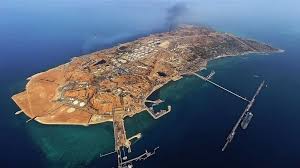
As the US-Israeli military campaign against Iran enters its second week, a striking pattern has emerged in the targeting strategy. While strikes have hit nuclear installations, drone bases, and military infrastructure across the country, one of Iran’s most critical and vulnerable assets remains completely untouched: Kharg Island .
Located about 25 kilometers off Iran’s coast in the northern Gulf, this tiny coral island serves as Iran’s principal crude oil export terminal . Built by US oil company Amoco in the 1960s, it is capable of loading up to 7 million barrels of oil per day and handles approximately 90% of all Iranian crude exports . For Iran’s sanctions-hit economy, the island is quite literally the economic lifeline.
“The economy bottoms out without it,” Richard Nephew, a former US deputy special envoy for Iran, told the Financial Times .
America’s Red Line
Despite being one of the most obvious economic targets in the entire country, Washington has historically drawn a clear red line around attacking Kharg. Multiple analysts confirm that this restraint continues in the current conflict .
The reasons are calculated and strategic. Hitting Kharg would undoubtedly cripple Iran’s economy—but it would also trigger a cascade of consequences the US appears unwilling to face:
“The administration does not want to destroy the basis for a post-war Iranian economy,” said Michael Doran, a senior fellow at the Hudson Institute. “It is a longstanding American red line” .
Oil Flows Despite War
Satellite imagery suggests the terminal has remained active even after the latest strikes. According to Bloomberg, a very-large crude carrier capable of transporting about 2 million barrels of oil was docked at one of Kharg’s loading jetties on March 2, two days after US and Israeli air strikes began .
However, the number of tankers around the island has dropped sharply—from 10 VLCCs in late February to just four currently—as the conflict has made shipping more perilous .
What About Seizure?
While strikes remain off the table, a different possibility has emerged: seizure.
White House adviser Jarrod Agen has suggested the US could take control of Kharg, telling Fox Business: “We’re going to get all of the oil out of the hands of terrorists” . Michael Rubin, a former Pentagon official, called sending soldiers to seize the island a “no-brainer,” arguing it would choke off Tehran’s ability to bankroll its military .
JP Morgan warned that seizing Kharg would trigger severe retaliation. “A direct strike would immediately halt the bulk of Iran’s crude exports, likely triggering severe retaliation in the Strait of Hormuz or against regional energy infrastructure,” the bank said in a note .
Historical Precedent
The restraint on Kharg has deep historical roots. During the 1979 Iran hostage crisis, President Jimmy Carter imposed sanctions but refrained from ordering strikes on the island. His successor Ronald Reagan, during the 1980s Iran-Iraq Tanker War, prioritized protecting shipping and targeting Iranian vessels while leaving Kharg untouched .
Although Iraqi forces struck some terminals during the eight-year war with Iran, Kharg remained largely operational—demonstrating that disabling it would require sustained, large-scale attacks .
The Strategic Calculation
For now, the US appears to have calculated that the costs of hitting Kharg outweigh the benefits. Israeli opposition leader Yair Lapid has called for strikes on the island to “cripple Iran’s economy and topple the regime,” but officials involved in the operation say the campaign has more limited objectives .
“The goal is to allow regime change,” a person briefed on the Israeli operation told the Financial Times. “The objective is not to destroy Iran completely” .
That means Iran’s most important oil artery—despite being one of the easiest targets in the country—remains untouched, at least for now.
