
Table of Contents
🇮🇷 Iran Confirms Participation in Islamabad Talks
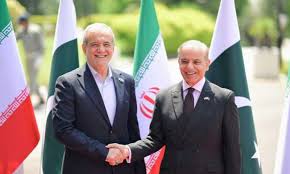
Iran has formally accepted Pakistan’s offer to host negotiations with the United States in Islamabad, following a telephone conversation between Prime Minister Shehbaz Sharif and Iranian President Dr. Masoud Pezeshkian on Wednesday .
During the call, which lasted over 45 minutes, Sharif appreciated the Iranian leadership for agreeing to a ceasefire and accepting Pakistan’s offer to host the crucial negotiations. President Pezeshkian thanked Prime Minister Sharif and acknowledged Pakistan’s role in facilitating the temporary ceasefire, while extending good wishes to the people of Pakistan .
Ceasefire Agreed Hours Before Trump’s Deadline
The breakthrough came just hours before President Donald Trump’s 8 PM ET deadline to launch devastating strikes on Iranian infrastructure. Trump announced Tuesday that he had agreed to “suspend the bombing and attack of Iran for a period of two weeks,” calling it a “total and complete victory” .
The temporary ceasefire is “subject to” Iran agreeing to the complete, immediate and safe opening of the Strait of Hormuz . Iran’s Foreign Minister Seyed Abbas Araghchi has confirmed that Iran will cease “defensive operations” if attacks against it stop .
Islamabad Talks Set for Friday
Prime Minister Shehbaz Sharif officially announced the development on X (formerly Twitter):
“I am pleased to announce that the Islamic Republic of Iran and the United States of America, along with their allies, have agreed to an immediate ceasefire everywhere including Lebanon and elsewhere, EFFECTIVE IMMEDIATELY.”
Sharif invited both delegations to Islamabad on Friday, April 10, 2026, “to further negotiate for a conclusive agreement to settle all disputes” .
Iran’s 10-Point Proposal
Iran has put forward a 10-point proposal that the US has reportedly accepted as “workable” . Key conditions include:
| Condition | Details |
|---|---|
| Non-aggression | US commitment to ensure no further acts of aggression |
| Strait of Hormuz | Continued Iranian control over the strategic waterway |
| Enrichment rights | Acceptance of Iran’s nuclear enrichment program |
| Sanctions relief | Lifting of all primary and secondary sanctions |
| UN resolutions | Termination of all UN Security Council resolutions |
| IAEA resolutions | Termination of all IAEA Board of Governors resolutions |
| Compensation | Payment of compensation for damages |
| US withdrawal | Withdrawal of US combat forces from the region |
| Cessation of war | End of war on all fronts, including against Hezbollah in Lebanon |
The talks are being held with “full distrust” toward the US side, and Iran’s Supreme National Security Council warned that “hands remain on the trigger” .
Pakistan’s Mediation Role
Pakistan emerged as a key mediator in the conflict, leveraging its unique position as a country with close ties to both Washington and Tehran. Pakistan is home to the world’s second-biggest Shia Muslim population after Iran — with which it shares a 900-kilometre border — and represents some Iranian diplomatic interests in Washington where Tehran has no embassy .
The diplomatic push involved multiple nations. Turkey and Egypt also helped mediate in recent days, while China helped bring Iran to the negotiating table . The European Council and the UN Secretary General have publicly endorsed Pakistan’s diplomatic efforts .
Ceasefire Terms and Strait of Hormuz
Under the ceasefire terms, safe passage through the Strait of Hormuz will be ensured during the two weeks through coordination with Iran’s armed forces, under a framework that maintains Iran’s control over transit . The strait, through which roughly one-fifth of the world’s oil passes, had been effectively closed by Iran since the war began on February 28.
Israel’s Position
Israel supports the temporary truce, “subject to Iran immediately reopening the straits and stopping all attacks on the United States, Israel and countries in the region,” Prime Minister Benjamin Netanyahu’s office said in a statement .
However, Netanyahu’s office claimed that the ceasefire “does not include Lebanon,” and Israeli attacks against Hezbollah are expected to continue .
What Comes Next
Negotiations are scheduled to begin Friday in Islamabad and may be extended by mutual agreement, lasting up to 15 days under Pakistan’s mediation . The temporary ceasefire does not mean an end to the war; any final cessation of hostilities depends on securing Iran’s conditions and finalizing details of its 10-point proposal .
The world now watches as two arch-enemies prepare to sit across from each other in Islamabad, with Pakistan playing host to what could be one of the most consequential diplomatic engagements in decades.
