
Table of Contents
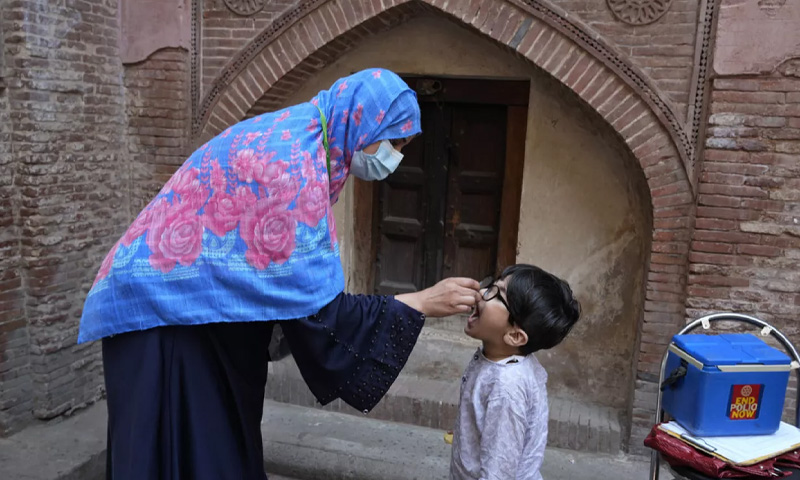
In a concerning update this week, global health authorities have reported several new cases of Wild Poliovirus type 1 (WPV1) and vaccine-derived poliovirus (cVDPV2). These developments reflect ongoing challenges in the fight to eradicate polio, with significant reports from Afghanistan, Pakistan, and the Occupied Palestinian Territory. Here’s a summary of the most recent findings and the implications for global polio eradication efforts.
Three New WPV1 Cases Reported
Three new cases of WPV1 have been confirmed this week, marking a total of three cases for the year 2025 so far. These cases include:
- Afghanistan: A single case reported from Bala Murhab district in Badghis province, with the date of onset on 27th January 2025.
- Pakistan: Two cases have been reported from Sindh province. The case in Shikarpur district had an onset date of 15th December 2024 and was identified through a positive contact. The second case, in Badin district, had a date of onset on 30th January 2025.
These new cases bring the total WPV1 count for 2025 to three, with one from Afghanistan and two from Pakistan. In comparison, 2024 saw a total of 99 cases of WPV1 (25 from Afghanistan and 74 from Pakistan), underscoring the ongoing need for vaccination and surveillance in both regions.
Measles Outbreak in West Texas Linked to Declining Vaccination Rates
New WPV1 Environmental Samples Reported
Environmental surveillance (ES) continues to be a crucial tool in monitoring the spread of poliovirus, especially in areas where wild poliovirus cases have been reported. This week, a total of 18 new WPV1 positive environmental samples (ES) were recorded, with nine each from Afghanistan and Pakistan.
Afghanistan:
- Kandahar province: 5 positive samples from Kandahar district.
- Hilmand province: 3 positive samples from Nahr-E-Saraj (2) and Lashkargah (1) districts.
- Laghman province: 1 positive sample from Mehtarlam district.
Pakistan:
- Balochistan province: 5 positive samples from Kech, Barkhan, Sibi, Quetta, and Gwadur districts.
- Khyber Pakhtunkhwa province: 4 positive samples from Wazir-South Lower, Bannu, and Dera Ismail Khan districts.
The total number of WPV1 positive environmental samples for 2025 now stands at 80 (9 from Afghanistan and 71 from Pakistan). This is in stark contrast to the total environmental sample count for 2024, which was 741, with 113 from Afghanistan and 628 from Pakistan. These figures highlight both the progress and the challenges that remain in controlling the spread of polio.
Vaccine-Derived Poliovirus (VDPV) Cases
Vaccine-derived poliovirus (VDPV) continues to present challenges, although there have been no new cases of cVDPV in 2025. The total number of cVDPV2 cases for 2024 remains at 39. However, three new cVDPV2 positive environmental samples have been reported this week from the Occupied Palestinian Territory, specifically from Gaza Strip, with two from Deir Al-Balah and one from Khan Younis districts. These samples were collected on 9th January 2025.
Additionally, one of the samples from Deir Al-Balah included a mixture of cVDPV2 and VDPV2, suggesting further complexities in viral transmission.
The total number of cVDPV2 positive environmental samples in 2025 stands at 3 (all from the Occupied Palestinian Territory). In 2024, 38 cVDPV2 cases were reported, with 20 from the Occupied Palestinian Territory, 7 from Yemen, and smaller numbers from Djibouti, Somalia, Egypt, Sudan, and Bahrain.
Ongoing Polio Eradication Efforts
The global health community remains vigilant in the fight against polio, with surveillance efforts intensifying in regions where new cases and environmental samples are being reported. Health agencies continue to work towards the goal of complete eradication, despite ongoing challenges in several countries.
The World Health Organization (WHO) and other partners, such as the Global Polio Eradication Initiative (GPEI), are focusing on both improving vaccination coverage and strengthening surveillance systems in high-risk areas. These efforts remain crucial to preventing further spread and ultimately achieving the goal of a polio-free world.
