
Table of Contents
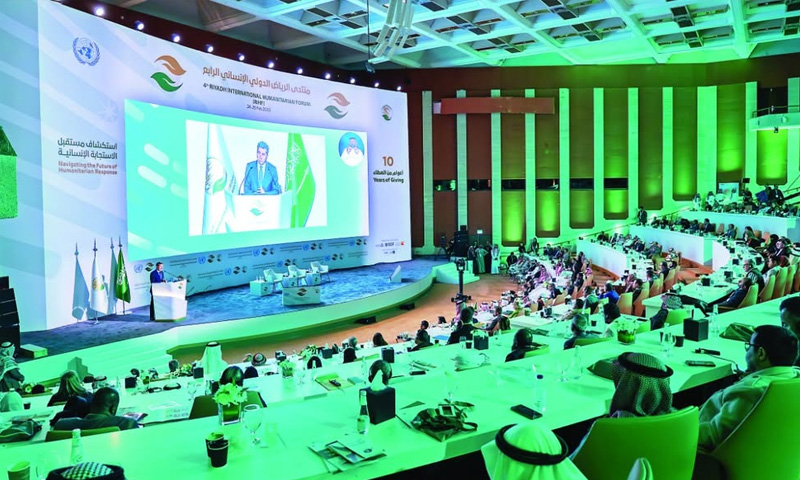
Hundreds of members from the humanitarian community are in Saudi Arabia’s capital for the Fourth Riyadh International Humanitarian Forum, where discussions centered on improving access, funding, and efficiency in delivering life-saving aid. The forum aims to connect relevant bodies to enhance collaboration and effectiveness in humanitarian operations worldwide.
During the event, Thomas Fletcher, UN Under-Secretary-General for Humanitarian Affairs and Emergency Relief Coordinator, highlighted the biggest challenges in global humanitarian aid: lack of funding, limited access, and inefficiency in aid delivery. Fletcher stressed the importance of improving how resources are spent, saying, “There is too much duplication, too much bureaucracy, too much waste.” He added that more effective spending could help address the growing humanitarian needs.
Focus on Polio Eradication and Gavi’s Role
One of the major discussions at the conference revolved around the eradication of polio. Saudi Arabia confirmed a significant commitment of $500 million to the Global Polio Eradication Initiative, aiming to vaccinate 370 million children and work toward permanently eliminating the disease.
Dr. Sania Nishtar, CEO of Gavi, the Vaccine Alliance, discussed the challenges faced by organizations operating in fragile contexts, including armed conflict, natural disasters, and internal migrations. Gavi, an international public-private partnership providing vaccines for low-income countries, has adapted its strategies to address humanitarian crises and strengthen vaccination delivery systems in conflict zones.
In partnership with Saudi Arabia, Gavi is preparing its 6.0 Strategy for 2026-2030, focusing on reaching more people with vaccines and tackling diseases more efficiently. Nishtar emphasized the importance of working with the Saudi government to execute this strategy, ensuring that vulnerable populations receive the health care they need, especially during emergencies.
Saudi Arabia’s Role in Humanitarian Efforts
Saudi Arabia’s significant role in the humanitarian landscape was evident at the forum, with KSrelief (King Salman Humanitarian Aid and Relief Center) playing a crucial part in delivering aid across the globe. Fletcher praised the Kingdom for its contributions, noting that KSrelief’s funding has saved millions of lives and emphasized the importance of the partnerships formed through collaborative efforts.
“KSrelief has been around for 10 years now, and their funding will have saved millions of lives in that time,” Fletcher said, adding that the focus should not only be on financial aid but also on shared ideas, innovations, and regional expertise that improve humanitarian efforts.
Humanitarian Challenges in Conflict Zones
The forum also addressed the critical issue of delivering aid in conflict zones. Fletcher pointed out the difficulty of providing assistance in volatile regions such as Gaza and Syria, where ongoing conflicts complicate efforts to provide life-saving resources to the affected populations. Despite these challenges, OCHA (Office for the Coordination of Humanitarian Affairs) has managed to deliver over 20,000 aid trucks to Gaza in the past month, benefiting over 2 million people.
Gavi’s recent commitment of $20 million for vaccine procurement and distribution in Gaza underscores the collaborative nature of humanitarian efforts in conflict areas. However, Nishtar noted that in conflict zones, conventional methods of operation often fall short, requiring new approaches and partnerships to ensure access to essential services.
Isle of Man Nears Landmark Assisted Dying Legislation
Climate Change and Its Impact on Humanitarian Operations
The effects of climate change are increasingly evident in humanitarian crises, as climate-induced disasters exacerbate existing vulnerabilities. Fletcher highlighted how the climate crisis intersects with inequality, poverty, and political instability, creating a “perfect storm” of humanitarian needs.
“Climate change isn’t going to go away just because of a few elections. For every degree the climate heats up, a billion people will be displaced,” Fletcher said. He also noted how climate change contributes to the re-emergence of diseases like dengue, malaria, and yellow fever, as changing temperatures affect the behavior of disease-carrying insects.
Nishtar echoed these concerns, emphasizing how climate-related disasters, such as floods and droughts, complicate health crises and add new layers of difficulty to humanitarian operations.
The Need for Ruthless Prioritization in Humanitarian Aid
As the number of humanitarian crises increases globally, prioritization becomes increasingly difficult. OCHA’s annual global humanitarian overview identified 300 million people in dire need of aid, with 190 million requiring immediate attention. The total funding needed to address these crises is $47 billion. However, with political tensions and the recent reduction in US funding for global humanitarian appeals, resources remain scarce, making it even harder to address the growing needs.
Fletcher stated that the UN Office for the Coordination of Humanitarian Affairs must remain neutral and independent when delivering aid, regardless of the political landscape. He emphasized the importance of continuing to provide unfiltered aid to those in need, without being influenced by governments or political interests.
