
Table of Contents
Deadly Explosion Hits Balochistan’s Qila Abdullah
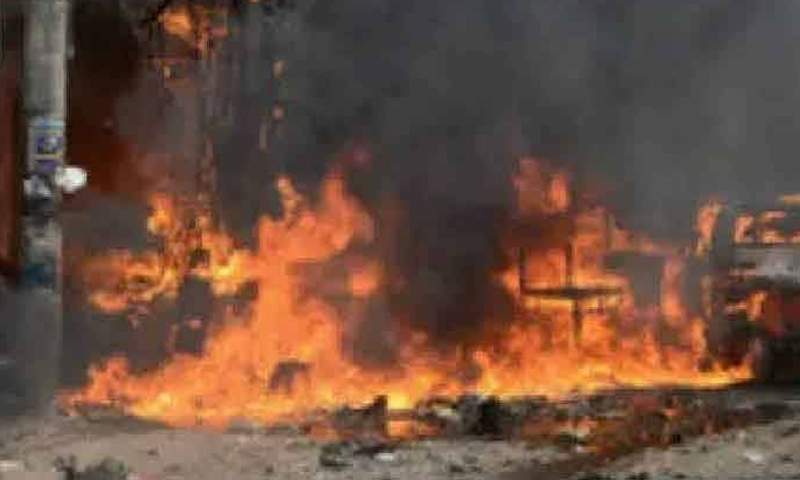
At least four people lost their lives and around 20 others sustained injuries in a deadly bomb blast that occurred near the Frontier Corps (FC) fort in Qila Abdullah, a restive district in Balochistan province. The explosion took place adjacent to Jabbar Market, right next to the back wall of the FC compound, causing widespread panic and chaos in the area.According to Deputy Commissioner Riaz Khan, the explosion was powerful enough to destroy several nearby vehicles and shops. Early reports suggest that the attack was likely aimed at targeting the FC fort, indicating a deliberate act of terrorism against security infrastructure.
Exchange of Fire After Explosion
Following the explosion, armed militants and Frontier Corps personnel exchanged fire, escalating tensions in the area. The security forces responded quickly, cordoning off the site and launching a search and clearance operation to apprehend any suspects still in the vicinity.
The presence of law enforcement personnel in large numbers reflected the gravity of the threat and the ongoing volatility in the region. Authorities suspect the attack was planned to undermine law and order and send a message of defiance to security forces stationed in the region.
High-Profile Injuries and Medical Emergency
Among the injured were tribal leader Haji Faizullah Khan Ghabizai, his personal security guard, and a passerby who happened to be near the explosion site at the time. The tribal leader was in his office close to the market when the explosion occurred.
Due to the limited healthcare facilities in Qila Abdullah, several of the injured had to be urgently transported to Quetta, the provincial capital, for advanced medical care. This highlights the urgent need for better medical infrastructure in conflict-prone rural regions of Balochistan.
Background: Rising Militancy in Balochistan and KP
Balochistan has long remained one of Pakistan’s most volatile regions, suffering from sectarian violence, ethnic insurgency, and militant attacks. Since the Taliban’s return to power in Afghanistan in 2021, Pakistan has experienced a marked surge in terrorist activities, especially in border provinces like Khyber Pakhtunkhwa (KP) and Balochistan.
Insurgents and militant groups have taken advantage of the porous border and the complex tribal landscape to launch cross-border operations, target military personnel, and disrupt state functions.
Security Trends: A Glimmer of Hope Amidst Violence
Despite the ongoing violence, Pakistan’s security landscape in early 2025 has shown some positive trends. According to a recent report published by the Centre for Research and Security Studies (CRSS), the first quarter (Q1) of 2025 saw a 13% decrease in overall violence compared to the last quarter (Q4) of 2024.
Windstorm, rain hit sizzling Islamabad amid heatwave
Importantly, the number of militants and insurgents killed exceeded the cumulative fatalities of civilians and security personnel—a reversal of trends seen in previous years. These developments suggest that counterinsurgency operations are becoming more effective, at least in certain areas.
Balochistan Still the Epicentre of Fatalities
While the national trends show some improvement, Balochistan continues to bear the brunt of violent incidents. The CRSS report reveals that the province accounted for 35% of all fatalities in Q1 2025. Alarmingly, Balochistan recorded a 15% increase in violence compared to the previous quarter.
This troubling rise disregards the national decline and reflects the region’s persistent instability. Analysts argue that Balochistan’s combination of geopolitical complexity, underdevelopment, and longstanding grievances makes it particularly vulnerable to insurgent tactics.
Militant Tactics Becoming Bolder
Adding to the security challenges, militant tactics have grown increasingly sophisticated and daring. One of the most startling incidents in recent months was the hijacking of the Jaffar Express, an unprecedented move that shook public confidence and raised concerns about the militants’ operational capabilities.
If the current trend of violence continues, projections suggest that Pakistan could witness over 3,600 fatalities by the end of 2025, making it potentially the deadliest year in recent memory.
