
Table of Contents
Indian Professor Arrested for Criticising BJP and Questioning Military Narrative
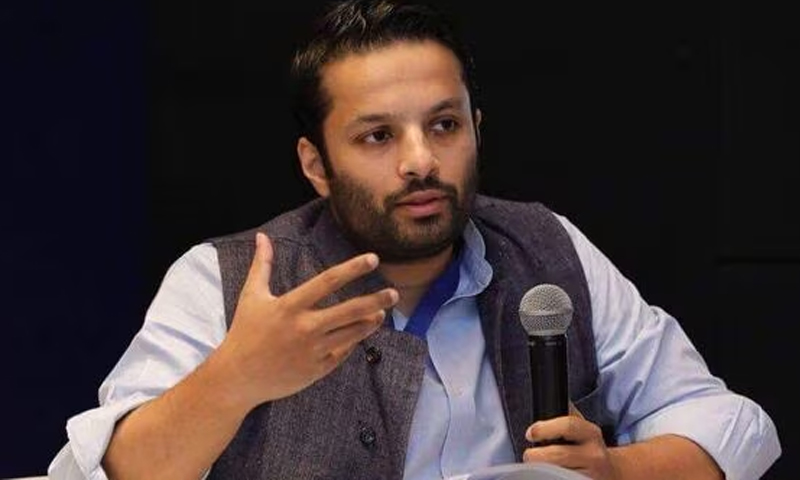
In a move sparking national and international concerns over academic freedom and freedom of speech, Indian authorities have arrested Ali Khan Mahmudabad, a well-known academic and associate professor of political science at Ashoka University in Haryana. Mahmudabad was taken into custody in New Delhi on Sunday after a social media post in which he criticized the Bharatiya Janata Party (BJP) for its discriminatory policies against India’s Muslim population and commented on the recent military confrontation with Pakistan.
Arrest Amid Rising Tensions with Pakistan
The arrest follows escalating tensions between India and Pakistan, particularly after India blamed Islamabad for a deadly militant attack in Indian Illegally Occupied Jammu and Kashmir’s (IIOJK) Pahalgam. While both countries agreed to a ceasefire just over a week ago, the political climate remains fragile.
Mahmudabad’s online commentary came at a sensitive moment, just days after a press briefing by Indian military officials, including Colonel Sofia Qureshi, aimed at framing India’s position in the cross-border skirmish.
Charges Filed Under Serious Legal Sections
According to Indian media, the 42-year-old professor has been booked under multiple sections of the Indian Penal Code, including:
- Incitement of communal disharmony
- Promotion of subversive or armed rebellion
- Insulting religious beliefs
The case was initiated after a formal complaint by Yogesh Jatheri, the general secretary of the BJP’s youth wing in Haryana. The Haryana State Commission for Women also summoned Mahmudabad, alleging that his post was misogynistic and disparaged women officers.
The Controversial Social Media Post
In his post on X (formerly Twitter) dated May 8, Mahmudabad expressed criticism of the apparent hypocrisy of right-wing commentators who praised Colonel Qureshi’s media appearance. He wrote:
“Perhaps they could also equally loudly demand that the victims of mob lynching, arbitrary bulldozing, and others who are victims of the BJP’s hate mongering be protected as Indian citizens.”
He added that while the appearance of two women soldiers was a positive optic, it must reflect real changes on the ground, not just be used for media theatrics. He concluded with a cautious note of optimism:
“An India, united in its diversity, is not completely dead as an idea.”
Mahmudabad Defends His Statement
In a follow-up post, Mahmudabad defended his remarks, saying that his comments were misconstrued and misrepresented by political actors. He stressed that he was calling for protection of both civilians and soldiers, not inciting hatred or discrediting the armed forces.
Deadly Blast Rocks Qila Abdullah Near FC Fort in Balochistan
“My intention was never to insult any individual or institution. The allegations of misogyny are baseless. I was pointing out the disparity between ground realities and the image projected by the government.”
Backdrop: Systemic Discrimination and “Bulldozer Justice”
Mahmudabad’s arrest has reignited debate over the increasing marginalization of Muslims in India under BJP rule. Human rights organizations have repeatedly raised concerns about the demolition of Muslim homes and businesses across several Indian states.
In February last year, Amnesty International called on the Indian government to stop what it described as the “unlawful and discriminatory” demolition of Muslim properties, widely dubbed “bulldozer justice” by the media and politicians.
“The unlawful demolition of Muslim properties by Indian authorities is cruel and appalling,” said Agnes Callamard, Amnesty’s Secretary-General. “Such displacement is deeply unjust and discriminatory… these abuses must be urgently addressed.”
Broader Crackdown: Espionage Arrests and Vigilantism
In a separate development, Indian authorities also arrested travel vlogger Jyoti Malhotra and five other individuals from Punjab and Haryana on charges of espionage for Pakistan. This series of arrests is being interpreted by critics as part of a broader crackdown on dissent and alleged sympathizers of Pakistan.
Meanwhile, far-right vigilante groups in India continue to operate with apparent impunity. Muslims have been lynched on suspicion of cow slaughter, and interfaith relationships are increasingly policed. While Prime Minister Narendra Modi has publicly condemned such acts, his government has taken minimal action to curb the influence and operations of these groups.
Concerns Over Academic Freedom and Democracy
Mahmudabad’s detention has drawn sharp criticism from academics, civil rights groups, and international observers who view it as a dangerous escalation in India’s shrinking space for dissent. Universities, once safe spaces for debate and critique, are increasingly under scrutiny by the state and its ideological affiliates.
“Targeting a respected scholar for expressing a nuanced view of national identity and justice is a grave setback for freedom of thought and expression in India,” said a statement from a coalition of academic organizations.
