
Table of Contents
In a strongly-worded statement delivered at the 78th World Health Assembly (WHA) in Geneva, Pakistan’s Health Minister Mustafa Kamal warned the global community of the dangerous consequences of India’s recent threats to halt the flow of Indus River waters. Speaking to health ministers and officials from across the globe, Kamal underscored that such actions could endanger the lives and health of more than 240 million people in Pakistan.
“Weaponising water and targeting civilian health infrastructure by India are flagrant breaches of international law,” Kamal told the global health forum convened by the World Health Organisation (WHO).
India’s Cross-Border Strikes Damaged Civilian Health Services
The Pakistani minister’s remarks came in the wake of unprovoked Indian military strikes on the night of May 6–7, which reportedly damaged multiple civilian infrastructures in Pakistan. Among the targeted facilities was a government dispensary, responsible for providing frontline medical care to vulnerable populations in the border region.
Kamal expressed concern that India’s aggressive military posture and threats over water flows have created a dual crisis — one of public health insecurity and the undermining of regional stability.
“Such irresponsible actions disrupt not only infrastructure but the essential services our people rely on. Damaging a healthcare facility is a direct assault on humanitarian values and civilian life,” he added.
Indus River: A Lifeline Under Threat
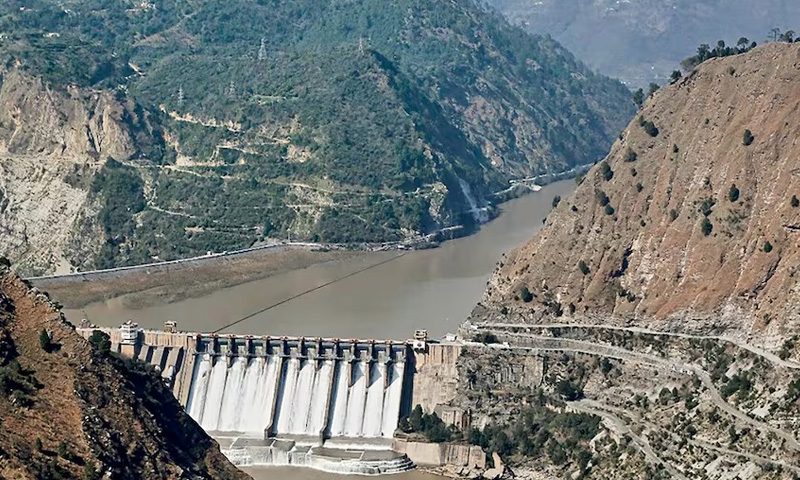
Pakistan’s survival is deeply intertwined with the Indus River system, a shared water resource governed by the 1960 Indus Waters Treaty, brokered by the World Bank. Any attempt to unilaterally alter or stop the river’s flow by India would not only violate the treaty but also constitute an act of aggression with profound humanitarian implications, Pakistan asserts.
“Access to water is not just a matter of agriculture or energy. It is a question of survival, of basic public health, and of the right to life,” Kamal said.
Pakistan has consistently maintained that India’s threats to restrict Indus water flows are part of a broader pattern of coercive behavior aimed at destabilising Pakistan and circumventing international norms.
Pakistan Reaffirms Commitment to Global Health Agenda
Despite these tensions, Minister Kamal reaffirmed Pakistan’s unwavering commitment to the WHO’s global health agenda, particularly its focus on polio eradication, an area where Pakistan remains one of the last two endemic countries.
Field Marshal Asim Munir gets Baton of Field Marshal
He outlined key achievements by Pakistan’s health sector, including:
- Reductions in preventable maternal and child mortality
- Expanded immunisation coverage
- Strengthened responses to infectious diseases like HIV, malaria, dengue, and hepatitis
- Support for the landmark Pandemic Agreement, designed to improve global readiness for future health emergencies
“Health is a shared global responsibility. We remain fully aligned with the WHO in our pursuit of equitable and resilient healthcare systems,” he concluded.
India Responds with Counter-Allegations
India reacted sharply to Kamal’s remarks, accusing Pakistan of politicising a global health forum. Indian representatives repeated a familiar set of allegations concerning Pakistan’s internal security and counterterrorism policies — a move viewed by many diplomats as an attempt to deflect attention from Pakistan’s charges.
In response, Danyal Hasnain, Second Secretary at the Pakistani Mission to the UN in Geneva, delivered a firm rebuttal. He warned that Pakistan would defend its sovereignty by any means necessary if provoked further.
“As a lower riparian, unrestricted access to water is a matter of survival for us. History has proven that whenever provoked, Pakistan has always defended itself — and it will do so again.”
Pakistan Warns of Regional Instability
Hasnain further warned the international community about India’s increasingly adventurist military behavior, especially under the leadership of the Bharatiya Janata Party (BJP). He stated that recent cross-border military actions have endangered not just Pakistan’s sovereignty but the stability of the broader South Asian region.
“Fueled by its misplaced notions of superiority, the Indian government has again demonstrated its status as one of the most persistent violators of international law,” Hasnain said.
He stressed that the recent military aggression violated the core principles of the United Nations Charter, which guarantees the sovereignty, political independence, and territorial integrity of all member states.
Global Calls for De-escalation and Legal Accountability
Pakistan’s statements at the World Health Assembly have drawn international attention to India’s alleged weaponisation of essential resources, particularly water. Legal experts and observers are increasingly calling on both nations to honor international treaties and to resolve disputes through peaceful diplomatic mechanisms.
Analysts warn that using water as a political or military tool could set a dangerous precedent in a region already grappling with climate stress, population growth, and fragile water-sharing arrangements.
“Weaponising water is not just illegal—it is morally indefensible,” said an independent UN-affiliated observer in Geneva. “This goes beyond bilateral tensions. It’s a global concern.”
