
Table of Contents
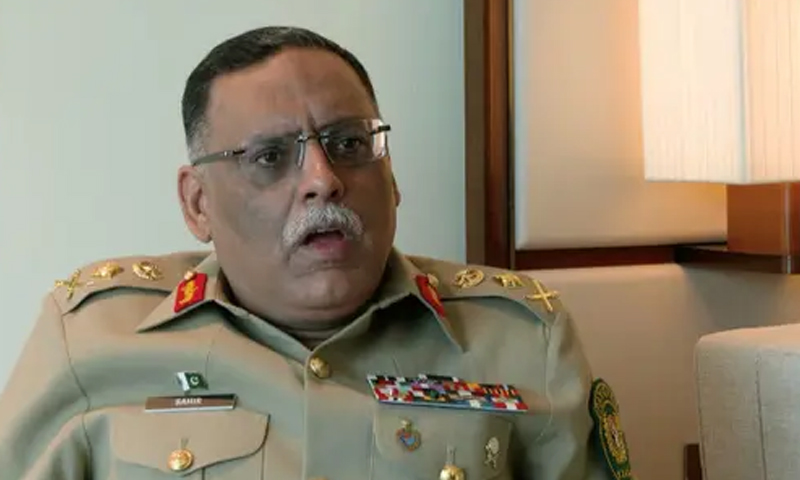
Delivering a wide-ranging and critical address at the prestigious Shangri-La Dialogue in Singapore, Pakistan’s Chairman of the Joint Chiefs of Staff Committee (CJCSC), General Sahir Shamshad Mirza, highlighted the urgent need for inclusive, institutionalised crisis management mechanisms across the Asia-Pacific and South Asia.
Speaking on behalf of Pakistan before an audience of global security leaders, Gen Mirza painted a sobering picture of regional dynamics, underlining how power struggles, long-standing disputes, and growing militarisation are deepening instability — particularly in South Asia.
“Inclusion Is Not Optional” — Building Strategic Stability Through Trust
General Mirza stressed that strategic stability cannot be achieved through exclusion or dominance. Instead, he said it must be founded on mutual understanding of red lines, trust, and self-restraint.
“Mechanisms cannot function in a vacuum of trust or amid systemic asymmetries,” he said. “Inclusion is not optional.”
His remarks were aimed at highlighting the fragility of current regional security frameworks, particularly where long-running disputes remain unresolved and communication channels are lacking or absent.
South Asia at a Dangerous Crossroads
Focusing on South Asia, Gen Mirza described a situation of grave and growing danger, citing the Kashmir conflict, the deteriorating India-Pakistan-China triangle, and instability in Afghanistan as primary fault lines.
He warned that nuclearisation and the absence of robust communication channels have lowered the threshold for miscalculation and escalation — a scenario made more dangerous by political rhetoric and the speed of modern warfare.
He was sharply critical of India’s militarisation and increasing Western backing, suggesting this emboldens New Delhi to avoid diplomatic solutions:
“India’s ambition to become a regional hegemon is disincentivising it to engage in conflict management options.”
A Call for De-Escalation and Responsible Dialogue
Gen Mirza reaffirmed Pakistan’s long-standing position of seeking peaceful, negotiated settlements with India, based on mutual respect, sovereign equality, and dignity.
Bridge Blasts Kill 7 in Russia Ahead of Proposed Ukraine Peace Talks
He specifically condemned India’s recent targeting of civilian areas and threats to revoke the Indus Waters Treaty, calling them “existential threats” and potential acts of war.
“The recent Pakistan-India crisis shows how dangerously low the war threshold has become,” he warned, urging the global community not to underestimate the stakes for 1.5 billion people in the region.
Asia-Pacific: Militarisation and External Influence Undermining Stability
Turning to the wider Asia-Pacific region, Gen Mirza pointed to a growing militarisation and great power competition which continue to be shaped heavily by external actors.
He warned that security frameworks imposed from outside the region lack legitimacy:
“Mechanisms transplanted into this region from outside will not have local respect and recognition.”
Instead, he advocated for regional ownership, revival of existing multilateral mechanisms, and cooperation to move from mere conflict management to genuine conflict resolution.
Global Security at a Moral Crossroads
The Pakistani general was also deeply critical of the global security environment, arguing that today’s world is being driven more by raw power and interests than by principles or international law.
Field Marshal Asim Munir gets Baton of Field Marshal
He warned of a dangerous shift from multilateralism to “myopic mini-lateralism”, where smaller blocs dominate the agenda without wider inclusiveness.
He stressed the importance of institutionalising crisis protocols, conducting joint exercises, and pre-agreed deconfliction mechanisms, especially given the shrinking decision-making windows caused by AI and cyber technologies.
The Role of Communication and Information Warfare
Gen Mirza emphasized the power of strategic communication and warned of the dangers of narrative manipulation, misinformation, and perception warfare, which can serve as accelerants for conflict.
“Misconception, narrative warfare, and information distortion are the oxygen for escalation.”
Reaffirming Support for Kashmir Resolution
In closing, the CJCSC reiterated Pakistan’s firm position on the Indian Illegally Occupied Jammu and Kashmir (IIOJK), calling for a peaceful resolution based on UN Security Council resolutions and the aspirations of the Kashmiri people.
“A just resolution of the Kashmir issue is essential for lasting peace in South Asia,” he said.
General Mirza’s speech at Shangri-La was a sharp reminder that regional peace in Asia is increasingly fragile, and global security norms are under strain. His remarks serve as both a warning and a call to action — that unless trust, inclusion, and principled dialogue are revived, the risks of miscalculation in South Asia and beyond may soon prove catastrophic.
