
Table of Contents
In an unprecedented achievement, Professor Dr. Arshad Abro, a distinguished surgeon from Liaquat University of Medical & Health Sciences (LUHMS) in Pakistan, has performed the world’s first remote robotic cancer surgery. Operating from Dubai, he conducted a complex surgical procedure on a cancer patient located in Shanghai, China, using a state-of-the-art robotic system. The operation was completed successfully, with no complications, despite the thousands of kilometers separating the surgeon from the patient.
This historic event marks a significant milestone in both global medicine and Pakistan’s contribution to cutting-edge healthcare technology.
What Is Remote Robotic Surgery?
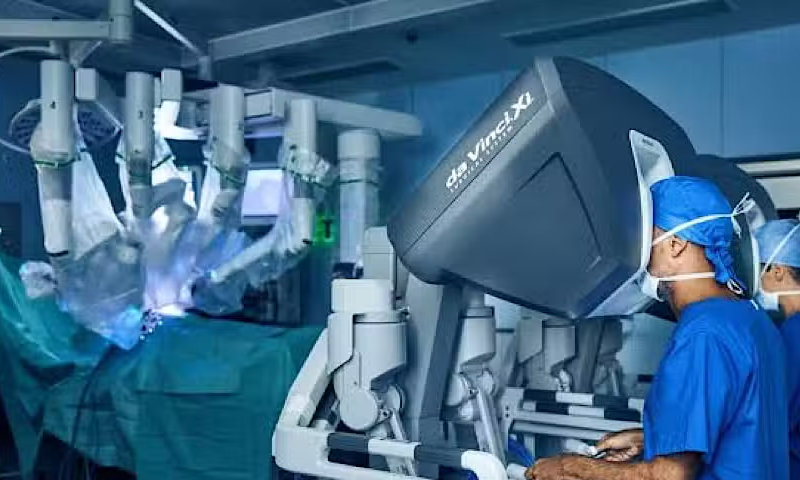
Remote robotic surgery—also known as telesurgery—involves a surgeon performing an operation on a patient from a different location using robotic arms and advanced communication systems. The surgeon controls the robotic instruments through a high-precision console while receiving real-time video and tactile feedback.
The potential of this technology lies in its ability to connect expert surgeons to patients in remote or underserved areas, bypassing geographical barriers and bringing life-saving expertise to those who need it most.
The Technology Behind the Surgery
The surgery performed by Dr. Abro relied on advanced robotic-assisted surgical equipment, high-speed data transmission networks, and real-time imaging technology. These systems ensure seamless coordination and pinpoint precision during surgery, regardless of physical distance.
Thanks to ultra-low latency networks—likely utilizing 5G or equivalent—commands from the surgeon’s console in Dubai were executed in real time by robotic instruments operating on the patient in Shanghai. This is a feat of both surgical skill and technological engineering, requiring flawless synchronization to avoid the smallest of delays that could jeopardize patient safety.
A Proud Moment for Pakistan
Dr. Arshad Abro’s achievement is not only a personal milestone but also a proud moment for Pakistan. While many developed nations have been exploring robotic surgery, this marks the first time a Pakistani surgeon has made such a direct impact on global surgical practice. It reflects the growing talent, capability, and innovation present in Pakistan’s medical community, particularly in fields like minimally invasive and robotic-assisted procedures.
Gold Prices Surge by Rs. 4,000 Per Tola in Pakistan Amid Global Rally
LUHMS, where Dr. Abro is affiliated, has been steadily investing in research and innovation, and this landmark achievement reinforces its status as a hub for medical advancement in the region.
Global Significance and Medical Impact
The surgery has been lauded by healthcare experts around the world as a “paradigm shift in surgical practice.” By demonstrating that complex procedures can be safely performed across international borders, this operation opens up vast possibilities:
- Access to Expert Care: Patients in rural or medically underserved regions can access top-tier surgeons without the need for expensive travel or relocation.
- Disaster and War Zones: Surgeons can provide life-saving interventions remotely in areas affected by conflict or natural disaster.
- Training and Collaboration: Institutions can use telesurgery for international collaboration, training, and peer-assisted surgery.
This achievement could significantly influence future healthcare policies and infrastructure planning, especially in countries where medical expertise is unevenly distributed.
The Road Ahead for Telesurgery
While this event showcases what is possible, several challenges remain for widespread adoption of remote robotic surgery:
- Infrastructure: High-speed internet and data security systems are crucial.
- Costs: Robotic surgery systems and training programs are expensive.
- Regulations: Cross-border medical practices raise complex legal and ethical issues.
For countries like Pakistan, these challenges are real but not insurmountable. This breakthrough is a clear signal that with the right investments and partnerships, Pakistan can emerge as a leader in telehealth and robotic surgery innovation.
