
Table of Contents
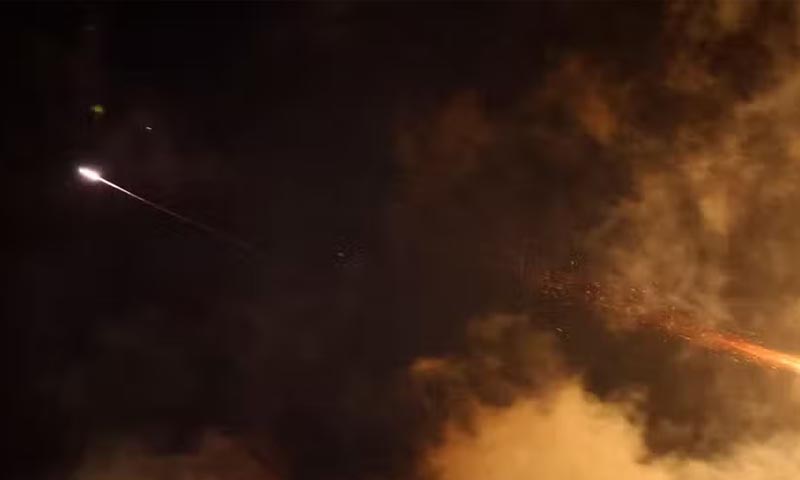
In a dramatic and potentially destabilizing development, Iran has fired a volley of missiles at United States military bases in Qatar and Iraq. The strikes follow closely on the heels of US airstrikes on Iran’s nuclear facilities—actions Tehran denounced as a grave violation of its sovereignty. Iranian officials have dubbed the retaliatory operation “Basharat al-Fath” (Annunciation of Victory), calling it a calculated response to escalating hostilities between Tehran and Washington.
Missile Strikes on Al Udeid Air Base in Qatar
According to Axios and other sources citing Israeli and Qatari officials, Iran launched at least six ballistic missiles at Al Udeid Air Base—the largest American military installation in the Middle East, located just southwest of Doha. This base hosts over 8,000 US personnel and plays a critical role in regional command-and-control operations.
Witnesses in the Qatari capital reported hearing loud explosions late Monday night, with news agencies such as AFP and Reuters confirming the blasts. Qatari defense systems were activated in response, and most—if not all—of the missiles were successfully intercepted before reaching their targets. As of now, there have been no confirmed casualties or serious damage to infrastructure at the base.
Attempted Strike on US Bases in Iraq
In parallel, Iranian forces reportedly fired missiles toward at least one US military installation in Iraq. Israeli news outlet Haaretz reported the launch, though details about its effectiveness remain vague. US officials, speaking to various media outlets, stated that no missiles actually impacted US facilities in Iraq, suggesting either a failed launch or successful interception by allied defenses.
Severe Rain Spell Expected Across Pakistan from June 24 to July 2: Met Office
What Triggered the Strikes? US Bombing of Nuclear Facilities
The Iranian missile attacks were clearly linked to the recent United States airstrikes on multiple Iranian nuclear sites, including Natanz, Fordow, and Isfahan. These strikes, authorized by President Donald Trump, were framed by the White House as a strategic move to degrade Iran’s nuclear weapons capability amidst rising Israel-Iran tensions.
Tehran responded angrily, accusing the US of “crossing a big red line” and violating international norms. Iranian officials framed their missile barrage as both a deterrent and a message of resilience, while also indicating that the response was measured to avoid full-scale war.
US and Regional Reactions
The White House and Pentagon issued statements confirming that they were monitoring the situation closely and had activated heightened security protocols across US facilities in the region. The US Department of Defense has not publicly disclosed any plans for immediate retaliation, though all US personnel in the region remain on high alert.
President Trump, addressing the nation shortly after the strikes, downplayed the scale of the attack, calling it “symbolic and ineffective.” However, he also stated that any future threats would be met with “overwhelming force.”
Qatar’s defense ministry confirmed that no damage was sustained and praised its missile defense systems for preventing casualties. Air traffic over Doha was briefly halted, and civilian flights in the Gulf region were rerouted as a precaution. Bahrain, the UAE, and Saudi Arabia also temporarily raised their alert levels and tightened airspace security.
Strategic Implications and Global Reactions
Experts warn that this incident may signal the beginning of a prolonged tit-for-tat exchange that could further destabilize the Gulf. While both Iran and the US have expressed interest in avoiding a full-scale war, the margin for miscalculation remains dangerously thin.
Oil markets briefly reacted to the news with price dips, reflecting investor uncertainty over long-term regional security. Meanwhile, European and UN officials have called for restraint and a return to diplomatic channels.
What’s Next?
The coming days will be critical in determining whether the situation escalates or stabilizes. With Iran signaling a readiness to defend itself, and the US reaffirming its commitment to regional security, diplomatic backchannels will be key.
Key Points to Watch:
- Potential US or allied countermeasures
- Iranian-backed militia responses in Iraq and Syria
- Diplomatic moves by Gulf states to mediate tensions
- Any renewed threats to civilian infrastructure in the region
