
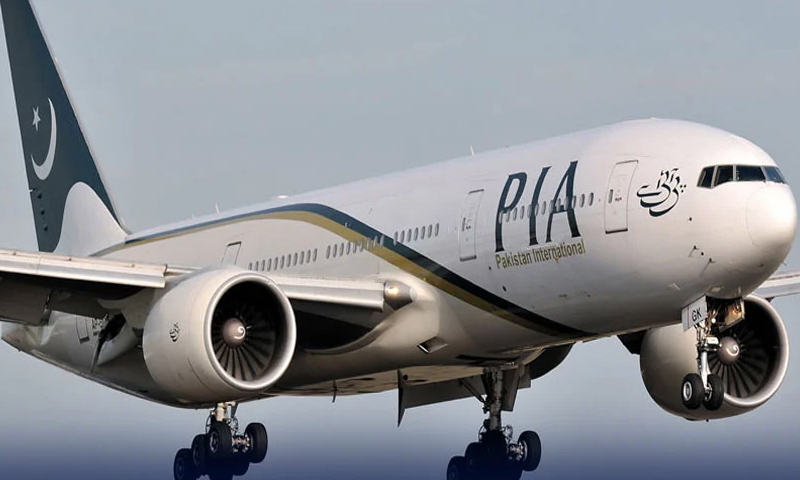
Pakistan took a historic step towards economic restructuring on Tuesday as the Arif Habib consortium emerged victorious in the privatisation of Pakistan International Airlines Corporation Limited (PIACL), securing the national flag carrier with a winning bid of Rs135 billion. The auction, held in Islamabad, marked the country’s first major privatisation transaction in almost 20 years and was broadcast live across television channels and official government social media platforms to ensure transparency.
The bidding process began in the morning with sealed offers submitted by three pre-qualified parties: Lucky Cement, private airline Airblue, and the Arif Habib consortium. Representatives of the bidders deposited their envelopes into a transparent box during a public ceremony aired on state television.
In the first round of bidding, Arif Habib offered Rs115bn, Lucky Cement submitted a bid of Rs101.5bn, while Airblue’s bid stood at Rs26.5bn. Since Airblue’s offer was significantly below the government’s reference price of Rs100bn, the airline exited the process at that stage.
Following the first round, the Privatisation Commission announced the reference price, after which a 30-minute break was given to the two remaining bidders — Arif Habib and Lucky Cement — to consult internally. The auction then moved into an open bidding round.
The second round began with a base price of Rs115bn, reflecting the highest bid from the initial round. The minimum incremental bid was set at Rs250 million. Both parties engaged in a brief but competitive bidding exchange. Lucky Cement raised its offer to Rs134bn; however, Arif Habib countered with a decisive Rs135bn bid. Unable to surpass the offer, Lucky Cement withdrew and congratulated the winning consortium.
The successful bid brings PIACL under private ownership for the first time and represents a major milestone in Pakistan’s privatisation agenda, especially after a failed attempt last year when a single bid fell well below the reference price, forcing the government to abandon the sale.
Speaking at the ceremony, Finance Minister Muhammad Aurangzeb praised the privatisation process for its transparency and commended the efforts of the prime minister’s adviser on privatisation and his team.
“It takes a lot of time and effort to reach a place like this,” Aurangzeb said. “No matter which team won today, Pakistan has won.”
He highlighted that all bidders were local conglomerates, calling it a positive signal for investor confidence. “Some of Pakistan’s most experienced businesspeople will now lead the national airline. This is a strong sign that PIA can be restored not just to where it once was, but to where it needs to be among the community of nations,” he added.
Aurangzeb stressed the need to stop PIA’s financial losses and expressed hope that the transaction would attract further local and foreign investment. “Our institutions must be competitive globally, and this process will help us move in that direction,” he said.
Earlier, Adviser to the Prime Minister on Privatisation Muhammad Ali said the government structured the deal to ensure both fair value and future investment. He explained that at least 75 per cent of PIACL shares were being sold initially, with the option for the successful bidder to acquire the remaining 25 per cent within the next 90 days.
“The objective was not just to sell PIA, but to revive it,” Ali said. “New investment is needed to expand the fleet, acquire new aircraft, repair engines, cut liabilities, and ensure employees are paid on time.”
He added that unsuccessful bidders would not be allowed to join the airline’s management under the new ownership, a clause designed to avoid conflicts of interest. However, groups that did not participate in the auction — such as Fauji Fertiliser Company Limited, which exited the process earlier — may still partner with the winning consortium in the future.
Prime Minister Shehbaz Sharif, addressing a federal cabinet meeting, also welcomed the successful bidding process, calling it the largest privatisation transaction in Pakistan’s history. He reiterated that transparency was the cornerstone of the sale and praised the Privatisation Commission for delivering a credible and competitive auction.
The PIA privatisation is being seen as a crucial test case for Pakistan’s broader reform agenda, as the government looks to offload loss-making state-owned enterprises and restore investor confidence in the economy.
