
Table of Contents
At least 20 people have been confirmed dead and hundreds injured after a powerful earthquake struck northern Afghanistan early Monday morning, according to local authorities. The death toll is expected to rise as rescue operations continue amid widespread damage and power outages.
The quake, measuring 6.3 on the Richter scale, struck near Mazar-e-Sharif — one of Afghanistan’s largest and most historic cities, home to nearly half a million residents. The U.S. Geological Survey (USGS) reported the earthquake’s depth at around 28 kilometers (17 miles), categorizing it at an orange alert level, which signals a likelihood of significant casualties and damage.
The earthquake hit around 01:00 local time (20:30 GMT Sunday), jolting residents from their sleep. Panic quickly spread through Mazar-e-Sharif and neighboring areas as terrified families fled their homes and ran into the streets to avoid being trapped inside collapsing buildings.
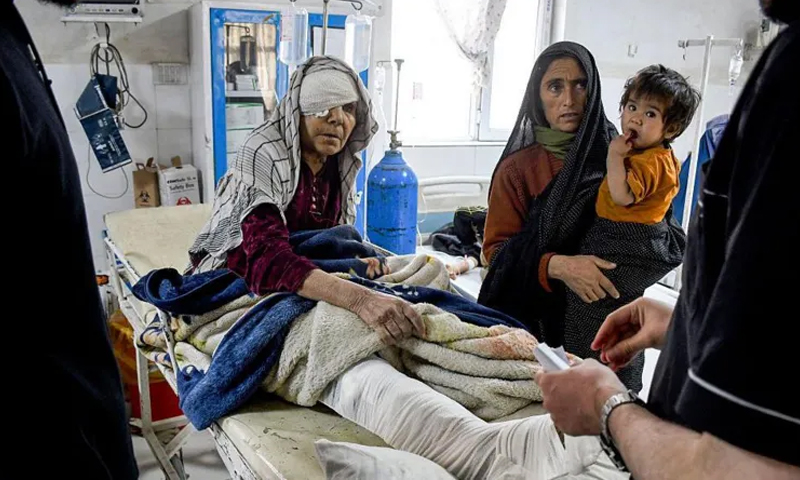
According to the Taliban government’s health ministry, more than 530 people have been injured so far, with many victims suffering fractures and trauma from falling debris. Provincial officials warned that the number of dead and injured is likely to climb as emergency teams reach remote villages where communication remains limited.
Major Impact Across Balkh Province
Haji Zaid, a Taliban spokesman in Balkh province, said that “many people are injured” in the Sholgara district, south of Mazar-e-Sharif. In a post on X (formerly Twitter), he reported that the province had received “reports of minor injuries and superficial damages from all districts,” though Sholgara appeared to have suffered the most serious impact.
“Most of the injuries were caused by people falling from tall buildings,” Zaid added, noting that panic and sudden movement during the tremors led to a significant number of injuries.
Videos shared online by local media and officials showed scenes of chaos — residents crying, damaged homes, and debris scattered across streets. One particularly alarming clip appeared to show debris around the famous Blue Mosque in Mazar-e-Sharif, a sacred and historical landmark revered by Shia Muslims.
Damage to the Historic Blue Mosque
The Blue Mosque, also known as the Shrine of Hazrat Ali, was built in the 15th century and is believed to house the tomb of Hazrat Ali, the son-in-law and cousin of Prophet Muhammad (PBUH). The site attracts thousands of pilgrims every year, especially during religious festivals.
Authorities have not reported structural collapse of the mosque, but visible damage and scattered debris were seen in footage shared by the Taliban’s local spokesperson.
Power Outages and Communication Disruptions
The tremor triggered a nationwide power outage, including in the capital city Kabul. According to officials, electricity supply from Uzbekistan and Tajikistan — the country’s main external power sources — was disrupted due to damage to transmission lines caused by the quake. Repair crews have been dispatched, but full restoration is expected to take several days.
Residents across multiple northern provinces, including Samangan and Balkh, reported communication blackouts and difficulty reaching emergency services.
Khalid Zadran, a spokesman for the Kabul police, stated on X that authorities are “closely monitoring the situation” and coordinating with provincial disaster management teams to assist those affected.
Casualties Reported in Neighboring Provinces
Numerous fatalities were also reported in Samangan province, a mountainous area bordering Balkh. Local officials confirmed that rescue efforts were underway but hampered by blocked roads and limited access to heavy machinery.
The region’s rugged terrain and poor infrastructure have made disaster response challenging. Afghan authorities have appealed for assistance from humanitarian organizations operating in the country, warning that the number of victims may increase as more information emerges.
Afghanistan’s Long History of Deadly Earthquakes
Afghanistan lies in one of the world’s most seismically active zones, located at the intersection of the Indian and Eurasian tectonic plates. Earthquakes are frequent, and the country’s weak infrastructure and traditional housing — often made of mud and timber — make such events particularly deadly.
In late August, a 6.0 magnitude quake struck Afghanistan’s eastern mountains, killing over 1,100 people and leaving thousands homeless. The country also suffered a series of devastating quakes in 2023 that killed hundreds in Herat province.
Experts have long warned that Afghanistan’s lack of earthquake-resistant construction, coupled with poor communication systems and limited emergency services, make the country highly vulnerable to natural disasters.
Rescue and Relief Efforts Underway
Emergency teams, including local Taliban authorities and health workers, are currently engaged in rescue operations across the affected areas. Reports suggest that many victims remain trapped under rubble in rural villages where access is still blocked.
Local hospitals in Mazar-e-Sharif and nearby provinces have issued urgent calls for blood donations, as they continue to receive large numbers of injured victims. Humanitarian agencies are also mobilizing to provide emergency medical supplies, tents, and food to displaced families.
As aftershocks continue to rattle the region, authorities are urging residents to remain outdoors and avoid damaged buildings.
