
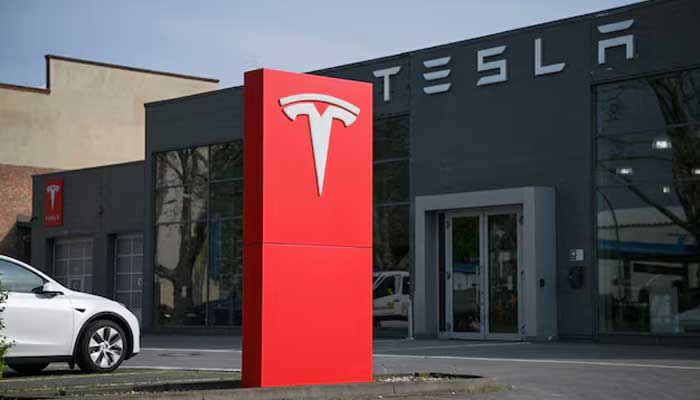
Elon Musk’s ambitious Terafab project in Texas aims to revolutionise semiconductor manufacturing with a massive facility spanning 100 million square feet and billions of dollars in investment.
Elon Musk is planning one of the world’s largest industrial developments in rural Texas, with a massive semiconductor manufacturing complex that could transform the future of artificial intelligence, robotics, electric vehicles and space technology.
Known as Terafab, the project is a joint venture between SpaceX and Tesla. The facility is planned for Grimes County, approximately 70 miles northwest of Houston, and is expected to cover around 100 million square feet.
If completed at its proposed scale, Terafab could become one of the largest buildings in the world by floor area. According to Architectural Digest, its planned size would be more than five times that of China’s New Century Global Centre. However, its eventual ranking will depend on the actual construction and completed floor space.
$119 Billion Investment Planned
The project is expected to be developed in multiple phases. According to Texas Governor Greg Abbott’s office, the initial phase involves more than $16.8 billion in investment and is expected to create approximately 3,000 jobs.
Texas has also approved a $30 million grant through the Texas Enterprise Fund and included the project in its Jobs, Energy, Technology and Innovation (JETI) incentive programme.
The overall investment could reach approximately $119 billion across four phases, according to applications submitted to two local school districts. The filings project construction through 2036 and more than 4,000 direct jobs.
These figures represent projected investments and employment rather than money already spent or jobs already created.
AI Chips, Robots and Space Technology
Terafab’s main objective is to manufacture advanced semiconductor chips required for next-generation technologies.
The facility is expected to bring several stages of chip production under one roof, including logic chips, memory and advanced packaging.
These components will support Tesla’s self-driving vehicles, Optimus humanoid robots and SpaceX’s space programmes.
Musk is targeting volume production by the third quarter of 2028, according to Reuters. However, he has acknowledged that the timeline is highly ambitious and may not be achieved.
Tax Incentives and Local Concerns
The project has attracted significant attention over public incentives and its potential impact on local communities.
Two school districts, Anderson-Shiro and Iola, have given preliminary approval to property tax agreements estimated to provide approximately $1.66 billion in tax relief through 2046.
Under the arrangements, the company would continue paying half of the districts’ operating taxes and all bond taxes. School officials have described the agreements as financially beneficial.
A separate agreement with Grimes County requires SpaceX to invest at least $5 billion by 2030 and create 1,800 permanent jobs by 2035.
However, the agreement also allows the company to withdraw with 30 days’ written notice, subject to a maximum penalty of $60 million.
Land Acquisition and Environmental Questions
Land acquisition for Terafab has progressed rapidly. A company linked to the project, WIT TECH LLC, reportedly holds more than 10,000 acres in Grimes County, compared with approximately 7,700 acres in August.
A Musk-linked company has also purchased a water pumping station on the Navasota River.
Despite expectations of economic growth, local residents have raised concerns about water supplies, electricity, road infrastructure, environmental protection and the area’s rural character.
County Judge Joe Fauth has said the facility will not rely on groundwater. Instead, it is expected to use recycled surface water from Gibbons Creek Reservoir and generate its own electricity separately from the state power grid.
Legal Dispute Over Project Transparency
The development has also triggered legal disputes over public access to project information.
In September, SpaceX sued the Texas attorney general and Grimes County to prevent the release of certain records. On November 9, the company amended its petition to challenge the release of additional documents requested by local broadcaster KBTX.
SpaceX argues that the records contain confidential business information, financial details and employee-identifying information.
Meanwhile, a residents’ organisation, Grimes County Citizens for Responsible Development, has supported greater transparency and filed a separate lawsuit seeking access to the records.
Political Changes Could Affect the Project
The project’s future incentives and regulatory environment could also be influenced by political developments in Texas.
Democrat Gina Hinojosa defeated Republican Governor Greg Abbott in the November 3 election and is expected to take office in January, becoming the state’s first Democratic governor since 1995.
During her campaign, Hinojosa criticised corporate incentives and the use of public resources. She also sought access to communications between Abbott and Musk.
Following her election victory, however, she adopted a more conciliatory position, saying she could work with Musk on terms that protect Texans’ interests.
She has also called for stronger regulations covering water, electricity and community rights, while signalling a temporary pause on new data centre developments.
Terafab therefore represents both a major technological ambition and a significant economic and environmental challenge for Texas. If completed as planned, the project could reshape seElon Musk’s $119 Billion Terafab Project Could Become World’s Largest Industrial Complexmiconductor manufacturing and strengthen Musk’s ambitions in artificial intelligence, robotics and space exploration.
