
Table of Contents
How China’s Used Phone Markets Fuel a Global Boom in Pakistan, Africa, and South Asia
Deep inside the neon-lit maze of Shenzhen’s Huaqiangbei electronics market, international traders from Pakistan, Bangladesh, and across Africa are snapping up stacks of pre-owned smartphones—many with cracked screens—to repair and resell back home.
As the world’s largest smartphone manufacturer, China discards over 400 million devices every year, according to the China Association of Circular Economy. With ongoing chip shortages and rising retail prices pushing brand-new handsets out of reach for millions, global demand for refurbished and second-hand phones has surged.
“From all China, the broken mobile phones come here,” said Akhtar Muhammad, a 38-year-old Pakistani businessman who has been sourcing electronics in China since 2007. “We will fix them in Pakistan.”
Repair Over Replace in Emerging Markets
According to Counterpoint Research, the global secondary smartphone market expanded by 13 percent year-on-year in the first half of 2026, reaching 150 million units. Analyst Ivan Lam notes that consumers in price-sensitive regions like South Asia and Africa are driving much of this shift.
In Pakistan, extending a phone’s lifespan is standard practice. “Maybe people use one mobile phone for four or five years,” Muhammad explained. “It’s not the same like USA, Europe. They change every year or every six months.”
For African traders, the profit margins are substantial. Mama, a 24-year-old buyer from Nigeria, spent a month in Shenzhen—which recently hosted Asia-Pacific leaders including US President Donald Trump—meticulously inspecting devices and buying roughly 40 phones in a single day. Nearby, another Nigerian trader purchased damaged iPhone 13 Pro and 14 Pro models for 1,000 to 2,000 yuan ($150 to $300) each, planning to replace their screens locally before shipping them home for lucrative resale.
The Rise of Formalized Second-Hand Hubs
While Huaqiangbei’s traditional stalls thrive on face-to-face haggling, a more streamlined model is gaining traction nearby at PaiJiTang Mall. Operated by Chinese recycling giant ATRenew, the self-service marketplace displays over 20,000 pre-owned phones. Traders can scan QR codes for instant diagnostic reports and pricing, test devices on the spot, and buy in bulk.
Store manager Zhang Xiaoming noted that the mall attracts up to 1,000 visitors daily, roughly a third of whom are international buyers. Among them is Abdul Rahim, a 20-year-old shopkeeper from Algeria who flies to China up to three times a month, capitalizing on price differences of 100 to 120 euros ($110 to $132) per handset. Streamlined visa access—taking just two to three days compared to difficult European visa processes—has made China his go-to supply hub.
iPhones Lead Overseas Demand
Across these marketplaces, Apple dominates international demand:
- Top Sellers: iPhones make up 70 to 80 percent of sales, with Chinese brands like Huawei, Xiaomi, Oppo, and Vivo accounting for the rest.
- Second Life Abroad: While older models like the iPhone 11, 12, and 13 are losing domestic market share to budget Androids in China, their strong brand appeal makes them prime exports, according to ATRenew’s head of overseas business, Jeremy Ji.
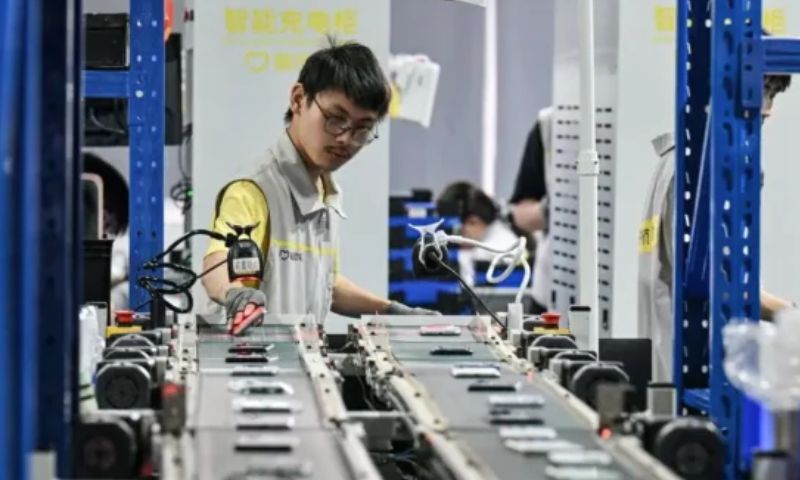
- Industrial Scale: At ATRenew’s massive processing facility in Dongguan, north of Shenzhen, more than 300 technicians inspect and package roughly 30,000 used gadgets daily.
Even within China, rising retail prices are nudging domestic buyers toward nearly new pre-owned flagships, says IDC China analyst Arthur Guo. While Counterpoint notes that most discarded Chinese phones are still absorbed domestically rather than through official bulk exports, hands-on international traders like Mama keep the global pipeline flowing—buying in bulk to keep emerging markets connected.
