
Table of Contents
India’s air travel network descended deeper into crisis on Friday as IndiGo, the country’s largest airline, cancelled hundreds of flights following three days of widespread operational disruption. With its sprawling network of over 2,000 daily flights and control of nearly 60% of India’s aviation market, IndiGo’s troubles have triggered nationwide chaos at a time when travel demand is at its peak.
The airline’s difficulties stem largely from a mounting pilot shortage, intensified by IndiGo’s struggle to implement the government’s newly revised crew rostering and flight duty time rules. The changes—which require longer rest periods and stricter limits on night-duty—were aimed at enhancing pilot well-being and reducing fatigue, but IndiGo’s inability to adjust on time has magnified the impact.
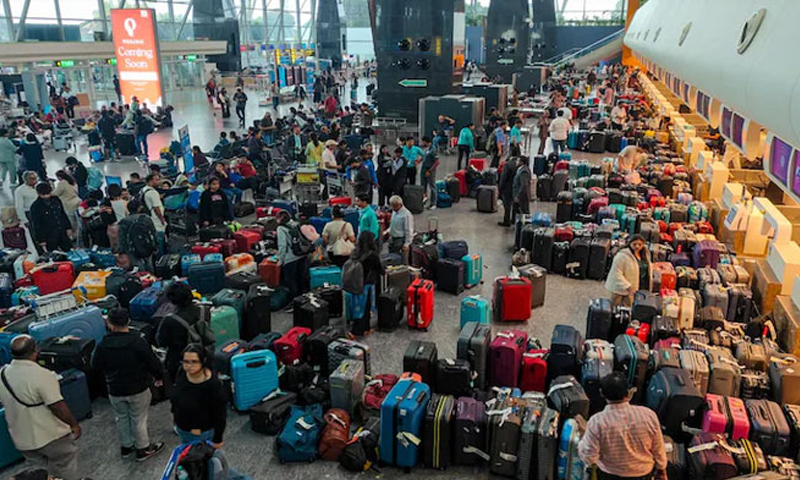
As a result, thousands of passengers have been left stranded across key cities. Delhi—the country’s busiest aviation hub—saw all IndiGo flights cancelled, leaving terminals overcrowded, airlines under pressure, and passengers scrambling for alternatives.
Return to Normalcy Not Expected Until February
In a statement, IndiGo acknowledged the scale of the disruption and said it expects operations to return to full normalcy only by 10 February. To stabilize its schedules, the airline will temporarily reduce its flight operations beginning 8 December. It has also sought short-term relief from the government on aspects of the new crew rest regulations, which the carrier argues have been challenging to adapt to swiftly.
But frustration with the airline’s handling of the situation is growing. India’s federal aviation minister expressed “clear displeasure” over IndiGo’s management of the crisis, while the Directorate General of Civil Aviation (DGCA) issued its own statement attributing the meltdown to “misjudgment and planning gaps” in the airline’s execution of the new duty-time rules.
The DGCA has instructed IndiGo to submit an urgent, detailed plan outlining improvements in crew recruitment, training schedules, roster restructuring, and safety-risk assessments. The regulator stressed that such measures must be implemented immediately to prevent further disruption.
Controversy Over Rule Waivers
Local media outlets have reported that IndiGo has been granted temporary waivers from certain rest requirements, including easing the ban on combining weekly rest with pilot leave. This move, if confirmed, could help bring quick relief to the airline’s fractured schedules. However, the BBC has noted it has not yet independently verified these reports.
Meanwhile, the Airline Pilots Association of India (ALPAI) strongly condemned any concession granted to IndiGo. The association warned that such waivers compromise the integrity of the new regulations and could “gravely undermine the safety” of airline passengers. The new rules significantly cut down night-time landings for pilots—from six per week to just two—aimed at reducing fatigue-associated risks.
Peak Travel Season Adds Pressure
The crisis could not have erupted at a worse time. December marks one of India’s busiest travel months, with school holidays in full swing and the start of the country’s peak wedding season. The surge in demand has left passengers with fewer alternatives, adding to their frustration as flights disappear from departure boards.
In an effort to ease tensions, IndiGo has announced that it will waive all cancellation and rescheduling charges for travel between 5 and 15 December. The airline says it is also arranging hotel accommodations and meals for stranded passengers.
However, many travellers have taken to social media to vent their anger, accusing the airline of providing inadequate updates, poor communication, and leaving passengers stuck at airports with no food or assistance.
Diplomats Stranded, Airports Issue Warnings
The fallout reached diplomatic circles as well. Singapore’s High Commissioner to India, Simon Wong, shared that he was “lost for words” after being stranded and forced to miss the wedding of a staff member due to cancelled flights.
Major airports across the country—including Delhi and Mumbai—have issued advisories urging passengers to check flight status before heading to the airport, as cancellations and delays continue to ripple across the system.
