
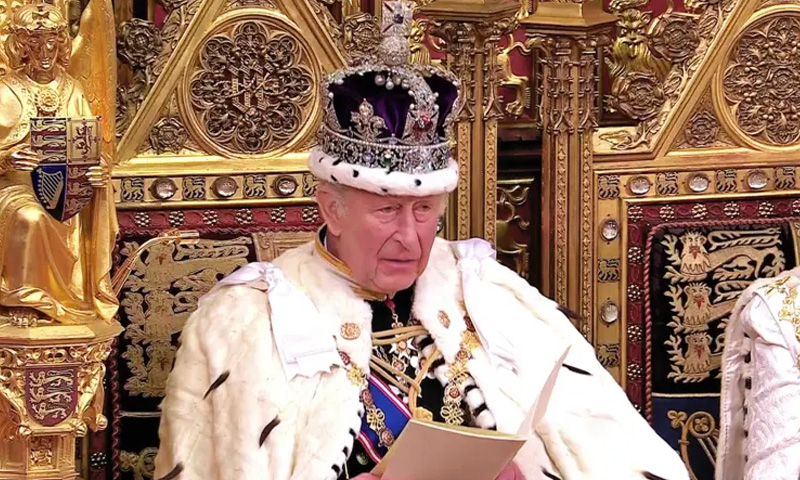
King Charles III said on Wednesday the British government would uphold the country’s “unbreakable commitment” to NATO and its allies, as he outlined Prime Minister Keir Starmer’s legislative agenda during the State Opening of Parliament.
Defense and Public Service Reforms
Delivering the King’s Speech in parliament, Charles set out a series of planned laws focused on defence, public services, infrastructure, trade and economic reform. The King said the government would introduce measures aimed at strengthening the accountability and productivity of the civil service while safeguarding its impartiality and core values. He also confirmed plans to introduce digital identification systems to modernize how citizens interact with public services.
Focus on Child Poverty, Youth Employment
The speech outlined government plans to address child poverty and rising youth unemployment. Charles said ministers believed every child should have the opportunity to succeed regardless of poverty, special educational needs or access to vocational education. The government would continue investing in apprenticeships and respond to the upcoming Milburn Review into youth unemployment, he added. The King also said ministers would review recommendations from the Timms Review examining Britain’s Personal Independence Payment (PIP) welfare system.
Reforms Planned for Police, NHS and Immigration
Charles said the government planned legislation to reform policing, the National Health Service and the criminal justice system. Additional measures would seek to strengthen public confidence in immigration and asylum systems, clean up the water industry and establish Great British Railways.
Infrastructure, Trade and EU Ties Prioritised
The King said Britain’s economic security depended on “world-class” infrastructure, outlining plans to support airport expansion, speed up major road projects including the Lower Thames Crossing, and advance Northern Powerhouse Rail projects in northern England. He added that the government would also seek to safeguard domestic steel production and strengthen economic ties with the European Union. On trade, Charles said improved international economic relations were vital and announced plans for legislation aimed at supporting British businesses, reducing late payments and easing unnecessary regulatory burdens.
