
Table of Contents
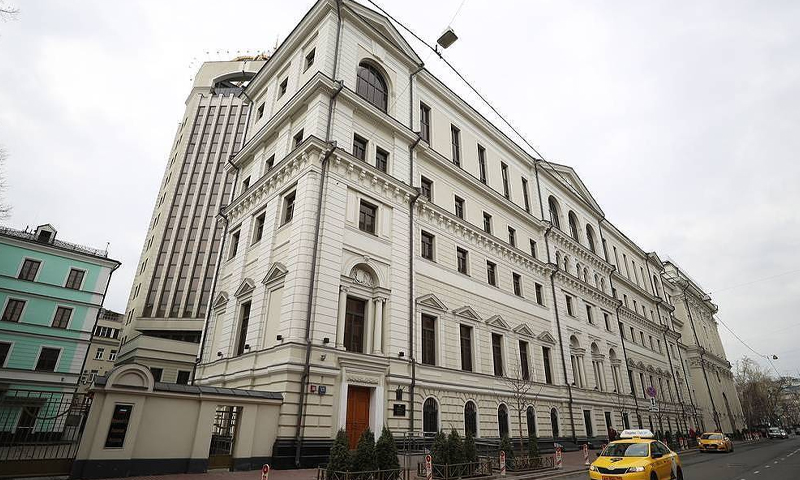
Russia’s Supreme Court is scheduled to rule next month on whether to remove the Taliban from its list of banned “terrorist” organizations. The court hearing, set for April 17, 2025, will decide on a request from the Prosecutor General’s Office to lift the ban, as reported by TASS. The hearing will be conducted behind closed doors.
Background of the Legal Request
The legal request to delist the Taliban comes after President Vladimir Putin signed a law in December that enables the removal of terrorist designations from certain groups. According to the law, a court can decide to remove a group from the banned list if the Prosecutor General demonstrates that the group has ceased its “terrorist” activities. The Russian Federal Security Service (FSB) would then be responsible for carrying out the removal.
Trump Threatens Iran with Bombings and Secondary Tariffs Over Nuclear Deal
The ruling would not imply formal recognition of the Taliban government, officially known as the “Islamic Emirate of Afghanistan.” To date, no country has officially recognized the Taliban’s control over Afghanistan.
Moscow’s Evolving Relationship with the Taliban
Russia has gradually warmed its relations with the Taliban since their takeover of Afghanistan following the US military’s chaotic withdrawal in 2021. Despite the group being officially listed as a terrorist organization in Russia since 2003, Moscow has engaged in dialogue with the Taliban. Taliban representatives have even visited Russia for talks on Afghanistan’s future, signaling a shift in diplomatic relations.
In a notable statement last summer, President Putin referred to the Taliban as Russia’s “allies” in the fight against terrorism. He noted that the Taliban’s control of Afghanistan makes them a key player in ensuring the country’s stability, a shared interest with Moscow.
The Taliban and IS-K
One of the primary reasons for Russia’s evolving relationship with the Taliban is their shared opposition to the Islamic State Khorasan (IS-K) group, which has been active in Afghanistan. The Taliban has been fighting IS-K for several years, with both groups engaged in brutal conflict.
The growing influence of IS-K has raised concerns for Russia, especially after the group claimed responsibility for an attack on a Moscow concert hall in 2024 that killed over 140 people, marking the deadliest terrorist attack in Russia in almost two decades.
As Russia continues to navigate its relationship with Afghanistan under the Taliban’s rule, the upcoming Supreme Court decision will likely have significant implications for the future of Russia’s policies in the region and its stance on international terrorism.
