
KARACHI – The State Bank of Pakistan (SBP) on Monday raised its policy rate by 50 basis points to 12 per cent, up from 11.5 per cent, citing rising energy prices amid the US-Iran war, persistent inflationary pressures and higher global oil prices.
The central bank had kept the policy rate unchanged at 11.5 per cent at its September 14 monetary policy meeting.
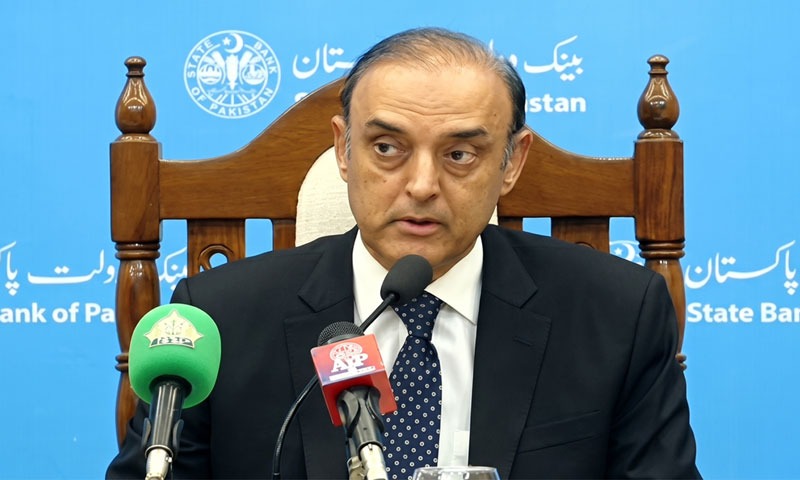
Speaking at a press conference after the Monetary Policy Committee (MPC) meeting, SBP Governor Jameel Ahmad said nine of the committee’s 10 members voted in favour of the increase, while one member opposed it. Ahmad said the committee had assessed the impact of rising oil prices on inflation and reviewed key macroeconomic indicators, including the external account and remittances.
He said the current account position had improved, while the committee had also monitored foreign exchange inflows and remittance trends. Pakistan received $10.9 billion in remittances during the first quarter of the current fiscal year, according to the governor, who expressed optimism about further improvement in inflows. He said remittances were expected to reach $45 billion during the current fiscal year.
Pakistan’s inflation rate stood at 7.1 per cent, while rising international oil prices have added to concerns about the future inflation trajectory. The SBP had previously expected inflation to approach the upper end of its target range by the first quarter of the next fiscal year. However, the persistence of elevated oil prices and their wider economic implications mean that the process is likely to take longer, he said.
Current account deficit seen at up to 1pc of GDP
Ahmad said the external account was likely to deteriorate somewhat compared with the assessment presented at the previous monetary policy meeting, mainly because of higher global commodity prices and a rising import bill. However, the current account deficit is still expected to remain between zero and 1 per cent of gross domestic product (GDP), although the latest assessment has shifted towards the upper end of that range.
The governor said improved remittance inflows and a better export outlook would provide some support to the external account, partly offsetting the pressure from higher imports. In view of the latest inflows and other developments, the SBP has revised its full-year remittance projection upwards to $45 billion from its earlier estimate of $44 billion.
Exports improve, but imports rise sharply
The governor said Pakistan’s export outlook had improved, although the pace of growth remained below what the economy needed. Exports are now projected to reach between $32.5 billion and $33 billion during the current fiscal year, compared with $30.8 billion in the previous fiscal year.
However, imports have risen more sharply than previously anticipated, limiting the benefit of stronger external inflows. Pakistan’s imports stood at around $64.5 billion in the previous fiscal year. At the time of the previous monetary policy meeting, the central bank had estimated that imports would remain around $69 billion to $70 billion during the current fiscal year. The latest assessment puts imports at approximately $71 billion, Ahmad said.
Economic growth outlook
Turning to economic growth, Ahmad said Pakistan’s gross domestic product grew by 3.7 per cent in the fiscal year 2025-26, according to the revised estimate. He said the overall growth figure had been affected by a downward revision in the final quarter of the previous fiscal year, when growth fell to 2 per cent from the earlier estimate of 2.9 per cent. The slowdown was largely attributed to the situation in the Middle East, which affected economic activity towards the end of the fiscal year.
By contrast, growth averaged 4.2 per cent during the first three quarters of FY26, with economic momentum strengthening consistently from one quarter to the next, the governor said. For the current fiscal year, the SBP has projected economic growth of between 3.5 per cent and 4.5 per cent.
SBP expects foreign exchange reserves to reach $25bn next year
Jameel Ahmad said the country’s foreign exchange reserves were in a considerably stronger position, with the central bank expecting them to rise to $23 billion by December and $25 billion by June next year. He said Pakistan had moved beyond the difficulties it faced in managing its foreign exchange reserves, adding that maintaining the current momentum would remain a priority.
The governor said the central bank was managing the reserves more effectively and expected the improvement to continue over the coming months. He also noted that international rating agencies were improving their assessments of Pakistan’s economic indicators.
‘Pakistan’s external debt profile improves’
SBP Governor Ahmad said Pakistan’s external debt profile had improved significantly, with the share of short-term borrowing falling to around 20 per cent from 45 per cent in early 2023, while annual debt-servicing costs are expected to decline below $3.5 billion next year.
He said the shift towards long-term multilateral and bilateral financing had reduced refinancing pressures and improved the country’s ability to manage its external obligations. He said around 80 per cent of Pakistan’s external debt now comprised multilateral and bilateral loans, compared with 55 per cent in early 2023.
The country’s annual external debt-servicing cost, which stood at around $4 billion in recent years and approximately $4.5 billion in 2023, is projected to fall below $3.5 billion next year, he added.
External debt remains around $107bn
Responding to concerns about Pakistan’s external debt, Ahmad said the outstanding stock stood at around $107 billion, with only a relatively modest increase over the past four years. He said external debt had increased by approximately $5 billion to $6 billion during that period, compared with an average annual increase of around $6.5 billion between 2015 and 2022.
The governor said Pakistan had paid around $16 billion in interest on its existing external debt over the past four years, averaging approximately $4 billion annually. Had the country borrowed no additional money during this period, the outstanding debt stock would still have risen to around $116 billion because of the interest burden, he argued.
Longer maturities reduce refinancing risks
The governor said recent international bond issuances had helped extend the average maturity of Pakistan’s external debt from less than three years to more than four years. He cited a recent issuance comprising $1.25 billion in bonds with a 10-year maturity and $1.75 billion in bonds with a maturity of five and a half years.
Ahmad also pointed to improvements in Pakistan’s access to international financial markets, saying the response of international banks towards the country had improved. He recalled that in 2022 and 2023, Pakistani importers often faced letters of credit requiring reconfirmation by international banks, with associated costs reaching 10 per cent to 12 per cent in some cases. Those costs have since fallen sharply, to below 1 per cent in some cases.
SBP defends remittances amid brain drain concerns
The governor also rejected the argument that rising remittances were primarily the result of an increase in the number of Pakistanis leaving the country, saying the trend should be assessed using published data. He said the number of workers going abroad had declined over the past two years, while the number of highly skilled and highly qualified Pakistanis leaving the country had also fallen between 2023 and 2025.
Despite the relatively stable or lower number of workers going abroad, remittances had nearly doubled over the past five years, rising from around $21 billion to $41.6 billion in the previous fiscal year. The governor attributed the increase largely to reforms that encouraged overseas Pakistanis to send money through formal banking channels rather than informal networks.
Export financing remains a priority
The governor said the government and the SBP remained focused on expanding exports alongside efforts to sustain remittance inflows. The SBP had increased the allocation under its Export Finance Scheme from Rs1 trillion to Rs1.5 trillion, while banks were offering short-term export refinancing at 4.5 per cent, he said.
For longer-term export financing, Ahmad cited a government-backed scheme offering a fixed rate of 2 per cent for the first two years of a project and 5 per cent for the following eight years. The government had also introduced performance-based incentives under which exporters increasing their exports by up to 10 per cent over the previous year could qualify for a 1 per cent incentive, while those achieving growth above 10 per cent could receive a 2 per cent incentive.
