
Table of Contents
Turkish Energy Minister Alparslan Bayraktar arrived in Karachi on Thursday alongside a high-level delegation ahead of the arrival of Turkiye’s seismic research vessel, the Oruç Reis. Scheduled to dock at Karachi port on Friday, the ship will soon embark on a critical seismic survey of Pakistan’s offshore waters to assess potential oil and gas deposits—marking a major milestone in bilateral energy cooperation and reviving Pakistan’s offshore exploration after a nearly 20-year hiatus.
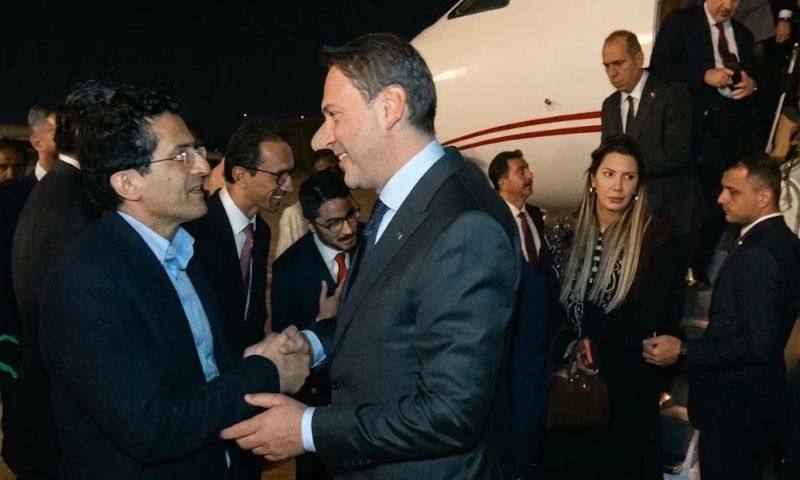
Upon arrival at Karachi airport, Bayraktar was received by Federal Petroleum Minister Ali Pervaiz Malik, Sindh Minister Zulfikar Ali Shah, and Petroleum Secretary Hamid Yaqoob Sheikh. Both ministers are set to officially welcome the research vessel at the port on Friday.
Unlocking Pakistan’s Offshore Hydrocarbon Potential
Islamabad is pushing to tap into its largely unexplored maritime zones to curb its heavy reliance on imported energy, particularly liquefied natural gas (LNG), which costs the country billions of dollars annually. According to a 2025 investment brochure by the Petroleum Division, Pakistan’s onshore and offshore sedimentary basins hold an estimated 3.585 billion barrels of undiscovered oil and 66.26 trillion cubic feet (TCF) of natural gas.
While these figures represent yet-to-find potential rather than proven reserves, boosting domestic output has become urgent. By June 2026, Pakistan’s existing recoverable reserves stood at roughly 276 million barrels of oil and 20.664 TCF of gas. Currently, domestic gas production hovers around three billion cubic feet per day against a daily demand of four billion cubic feet, alongside daily oil production of 65,000 barrels.
A Growing Islamabad–Ankara Energy Partnership
Equipped to map the seabed and gather vital geological data, the Oruç Reis represents the operational centerpiece of a rapidly expanding energy alliance between Pakistan and Turkiye. Minister Malik has pledged full institutional, maritime, and security support to ensure smooth survey operations, a commitment welcomed by Turkish Petroleum project officials.
The joint venture traces its formal roots to April 2025, when state-backed and domestic firms from both nations agreed to jointly bid in Pakistan’s first offshore licensing round since 2007. Out of 40 blocks offered in the Indus and Makran basins, Pakistan awarded 23 blocks—spanning 53,500 square kilometres—in October 2025 to four consortia featuring domestic firms and the state-owned Turkish Petroleum Corporation (TPAO).
Key milestones in this partnership include:
- Initial Investment: The four consortia committed $80 million for the first three years of exploration, with total investment projected to reach $750 million to $1 billion if projects advance to exploratory drilling.
- Operatorship Transfer: In October 2025, Pakistan Petroleum Limited (PPL) transferred operatorship of Eastern Offshore Indus Block-C to Turkish Petroleum Overseas Company (TPOC), giving TPOC a 25% stake alongside PPL (35%), OGDCL (20%), and MariEnergies (20%).
- Expanded Agreements: In December 2025, Prime Minister Shehbaz Sharif oversaw the signing of additional exploration and production pacts between Turkish Petroleum and major Pakistani firms—including MariEnergies, Fatima Petroleum, OGDCL, PPL, Prime Energy, and Government Holdings—covering three offshore and two onshore blocks.
Overcoming Past Exploration Hurdles
Pakistan’s offshore sector has historically struggled with geological risks, investment hurdles, and limited drilling—with only 18 offshore wells drilled since 1947. Most notably, the high-profile Kekra-1 well, drilled by an ExxonMobil-led consortium in 2019, failed to yield commercially viable reserves, leading to the US energy giant’s exit.
While the Oruç Reis seismic survey is only the initial phase of exploration, its geological mapping will help pinpoint viable drilling targets. Through Turkiye’s technical expertise and capital, Islamabad aims to finally unlock its maritime energy resources, strengthen national energy security, and attract renewed international investment into its petroleum sector.
