
Table of Contents
In a pivotal move, President Frank-Walter Steinmeier dissolved Germany’s Bundestag on Friday, setting the stage for early elections on February 23. The decision comes after Chancellor Olaf Scholz’s three-party coalition government, which included his Social Democrats (SPD), the Free Democrats (FDP), and the Greens, lost its majority in parliament. The dissolution of parliament follows a series of political setbacks, including a no-confidence vote that saw Scholz’s government effectively paralyzed.
Collapse of Scholz’s Coalition Government
The government crisis began when Finance Minister Christian Lindner of the Free Democrats (FDP) left the coalition, leading to a dramatic loss of majority support in the Bundestag. Scholz’s coalition, which had previously been seen as a promising alliance in the post-Merkel era, became increasingly fragmented. Without a stable majority, the coalition was unable to pass key legislation or implement vital policies, thus prompting the political deadlock.
Scholz’s government, which had been facing rising public dissatisfaction over its handling of economic challenges, social reforms, and Germany’s role in the ongoing Ukraine conflict, was ultimately undone by internal divisions. In a historic vote earlier this month, the chancellor lost a vote of confidence in the Bundestag, signaling the end of his leadership for the time being.
Early Elections: A Path Toward Stability
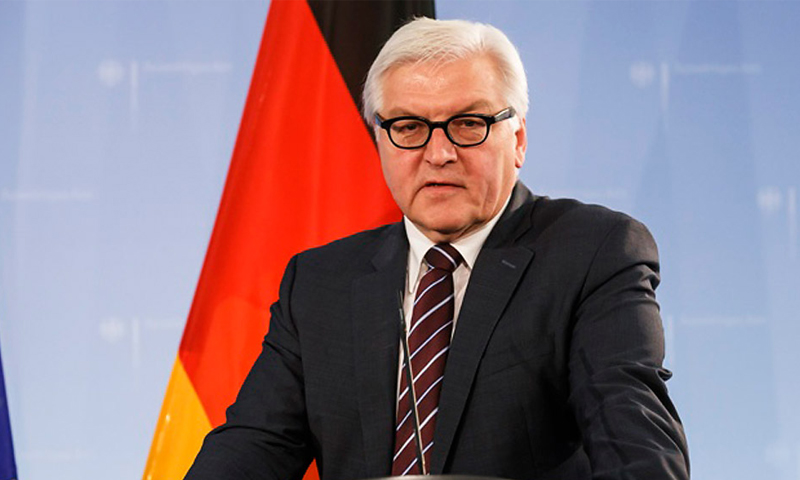
Addressing the nation in Berlin, President Steinmeier emphasized that early elections were the most appropriate response to the political crisis. He stated that “especially in difficult times, like now, stability requires a government capable of acting, and reliable majorities in parliament.” He further explained that early elections would offer a way forward for the country, enabling the formation of a government that could tackle pressing issues effectively.
Steinmeier’s remarks reflect a broader sense of urgency within Germany’s political sphere. The country faces numerous challenges, from economic stagnation and energy security to the ongoing consequences of the war in Ukraine. As the head of state, Steinmeier, who traditionally holds a ceremonial role, took the unusual step of calling for the dissolution of parliament, a reflection of the gravity of the political situation.
Following the elections, Steinmeier stressed that “problem-solving must become the core business of politics again.” The president’s words highlight the expectation that the new government will focus on resolving the issues that have plagued the country in recent months, restoring confidence in the political system.
A Call for Fair and Transparent Campaigning
In his speech, Steinmeier also called for the upcoming election campaign to be conducted in a fair and transparent manner. He expressed concern over the growing influence of external actors, particularly on social media platforms. “External influence is a danger to democracy, whether it is covert, as was evidently the case recently in the Romanian elections, or open and blatant, as is currently being practiced particularly intensively on (social media) platform X,” he warned.
This statement alluded to the increasing concerns about misinformation and foreign interference in democratic processes. Social media platforms like X (formerly Twitter) have become a battleground for political influence, with various actors trying to sway public opinion, especially in a highly polarized political environment like Germany’s.
Steinmeier’s comments come amid rising scrutiny of the role of online platforms in shaping political discourse. While Germany has implemented laws aimed at combating hate speech and disinformation, the effectiveness of these measures remains a subject of debate. The president’s remarks signal a renewed focus on safeguarding democratic integrity in the digital age.
The Political Landscape Ahead of the Snap Election
As Germany gears up for elections, the political landscape remains volatile. Scholz, the incumbent chancellor, will continue to serve in a caretaker role until a new government is formed. However, polls suggest that his Social Democrats (SPD) are struggling in the face of widespread dissatisfaction. In the most recent surveys, the SPD has fallen behind the conservative Christian Democratic Union (CDU) by more than 10 points, with the CDU’s leader, Friedrich Merz, emerging as the most likely candidate to replace Scholz as chancellor.
Merz has been critical of Scholz’s government, accusing it of overregulation and stifling economic growth. The CDU leader has called for a new approach to governance, with promises of more market-friendly policies and reforms to stimulate Germany’s economy. As the election campaign heats up, Merz is positioning himself as the candidate for change, hoping to capitalize on public frustrations with the current administration.
Meanwhile, the far-right Alternative for Germany (AfD) party, which has been gaining traction in recent years, is now polling slightly ahead of the SPD. While the mainstream parties, including the CDU and SPD, have ruled out any possibility of forming a coalition with the AfD due to its extremist positions, the rise of the far-right complicates the parliamentary arithmetic. If the AfD continues to grow in strength, it may make forming a stable government more difficult.
The Greens, who were part of Scholz’s governing coalition, are now in fourth place in most polls. Despite their strong environmental agenda, the Greens have struggled to maintain their influence within the coalition, especially as their leadership has been criticized for not being able to steer the government through key challenges like energy policy and economic reform.
Implications for Germany’s Political Future
The upcoming snap election represents a critical juncture for Germany. With the country facing significant economic challenges and geopolitical tensions, the new government will have to quickly address issues such as energy security, inflation, and the country’s role in European and global affairs.
As the political parties begin their election campaigns in earnest, voters will be looking for a leader who can offer stability, clear policy solutions, and the ability to navigate Germany’s complex political environment. The uncertainty surrounding the coalition dynamics, coupled with the rise of the far-right, makes it likely that any new government will need to be built on fragile compromises.
As President Steinmeier noted, the goal after the election is clear: to restore stability and trust in Germany’s political system, and to ensure that the country can effectively address the pressing challenges of the 21st century. How Germany’s political parties respond to these challenges will shape the future of the nation for years to come.
