
Table of Contents
In an exciting development, researchers at Shanghai Ruijin Hospital have unveiled a new, non-invasive technology to monitor blood glucose levels. This revolutionary technique eliminates the need for painful finger pricks or blood draws, offering a more comfortable alternative for individuals managing diabetes. The breakthrough was announced on Wednesday, and medical experts believe it could significantly enhance patient compliance and improve overall quality of life for diabetes sufferers.
Addressing the Global Diabetes Epidemic with Innovative Technology
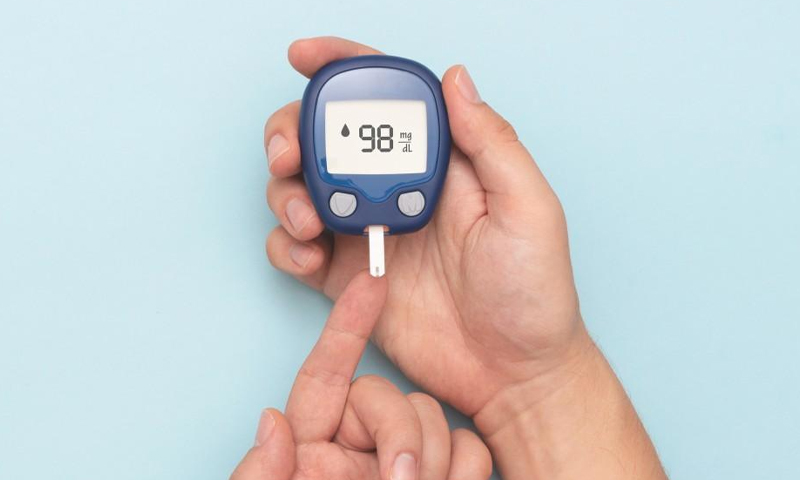
Diabetes is a global health crisis, with over 500 million people affected by the condition worldwide. In China alone, the prevalence of diabetes among adults is alarmingly high, reaching approximately 12 percent according to the most recent national data. Regular blood glucose monitoring is a vital component of diabetes management, but traditional methods that involve skin penetration—such as finger pricks and blood draws—can cause discomfort, infection risks, and contribute to non-compliance among patients.
The new non-invasive blood glucose monitoring system developed in Shanghai represents a major advancement in the field. It allows for accurate blood glucose measurements by simply placing a palm on a monitoring device, removing the need for traditional invasive methods.
How the New Technology Works
The breakthrough technology leverages optical coherence tomography (OCT) and μ-spatially offset Raman spectroscopy (mμSORS), offering high spatial resolution for detecting glucose levels. OCT is a technique that maps the distribution of human epidermal thickness, enabling more accurate measurements. Using this data, the researchers targeted the development of a monitoring system that can detect glucose levels in subcutaneous tissues at varying depths, specifically below the dermal-epidermal junction, where capillaries and interstitial fluid carry blood glucose information.
The technology works by collecting Raman spectral signals related to blood glucose, offering a non-invasive method to monitor glucose levels with remarkable precision. According to Wang Weiqing, a leading researcher from the National Clinical Research Center for Metabolic Diseases at Ruijin Hospital, the use of mμSORS significantly reduces interference from the skin’s surface, thereby improving the accuracy of glucose measurements.
Clinical Testing and Results
The second phase of the research involved clinical studies to test the accuracy and versatility of the new monitoring system. The team studied 200 diabetes patients and 30 healthy individuals, comparing the non-invasive glucose readings with standard venous blood glucose tests. The results were promising: the average absolute error between the mμSORS readings and venous blood glucose readings was only 14.6 percent, with 99.4 percent of the non-invasive readings falling within the clinically acceptable error range.
An important feature of this technology is its universal applicability. The technology does not require calibration for different individuals, making it suitable for diverse populations across various age groups, skin tones, and body types. This broad applicability opens the door for future large-scale applications of the technology, potentially making it accessible to millions of people worldwide.
A Step Forward for Diabetes Management
This innovative non-invasive glucose monitoring method holds great promise for the future of diabetes care. By eliminating the pain and inconvenience associated with traditional blood glucose testing, the new technology could make it easier for individuals with diabetes to monitor their condition regularly, which is key to effective disease management.
For researchers and clinicians alike, the development marks a significant milestone in the ongoing quest to improve the lives of people living with diabetes. The study’s findings were published in Nature Metabolism, a prestigious medical journal, highlighting the collaborative effort between the National Clinical Research Center for Metabolic Diseases at Ruijin Hospital, the Medical Chip Research Institute, and PhoVie, a Shanghai-based biotech company.
Looking Ahead: Potential for Widespread Adoption
While the research team has demonstrated that the technology works effectively in a clinical setting, the next steps involve further refinement and large-scale trials to ensure the system’s robustness and reliability across different populations. If successful, this technology could revolutionize diabetes care, providing a simple, painless way for patients to monitor their blood glucose levels and manage their condition more effectively.
This new approach to blood glucose monitoring not only offers hope for the millions living with diabetes but also sets a new standard for medical technology in the future. With the ongoing advancements in healthcare and technology, we can expect further innovations that will continue to improve the quality of life for patients worldwide.
