
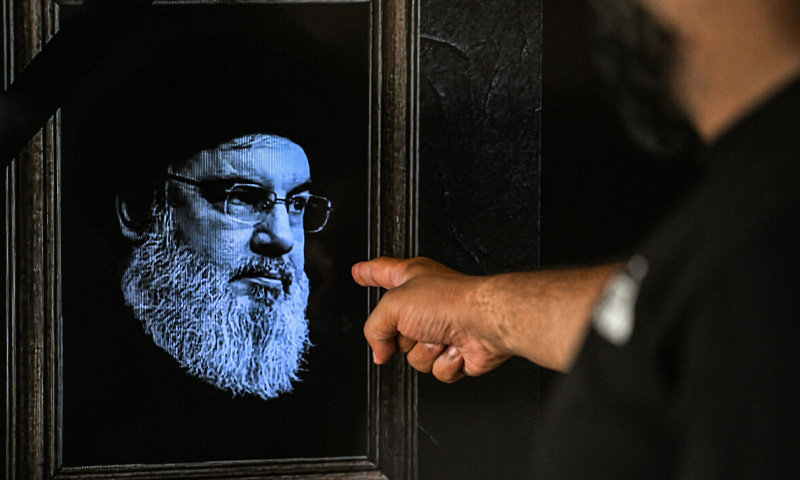
Lebanon is set to hold the funeral for Hassan Nasrallah, the former leader of the militant group Hezbollah, on Sunday, February 25. Nasrallah was killed in an Israeli airstrike on September 27, 2024, nearly five months ago, while he was in a bunker in Beirut’s southern suburbs meeting with commanders. The funeral ceremony will take place at 1 pm local time (11:00 GMT) at the Camille Chamoun sports stadium, situated on the outskirts of Beirut, with tens of thousands expected to attend, including Hezbollah supporters from across Lebanon and even from abroad.
Nasrallah’s death marked a significant turning point for Hezbollah, a powerful militant group based in Lebanon with deep political and military ties to Iran. The group, known for its resistance against Israel and its involvement in regional conflicts, has since dealt with a leadership vacuum, which it briefly filled with Hashem Safieddine, a senior Hezbollah figure.
Strict Security Measures in Place for the Event
Lebanese authorities have announced extensive security measures to ensure the safety of the attendees at the funeral. Beirut’s airport will be closed from midday until 4 pm local time (14:00 GMT) to accommodate the large number of attendees expected to travel to the city. Given Nasrallah’s prominent role in Hezbollah and the group’s significant influence in Lebanon, the funeral is expected to draw a large and diverse crowd of both local and international supporters.
The Lebanese government has deployed heavy security forces throughout the city, especially around the stadium and strategic points near Hezbollah strongholds. This level of preparedness underscores the anticipated scale of the event, which has gained attention not only regionally but globally, considering Hezbollah’s political and military influence in the Middle East.
Trump’s Approval Rating Drops Amid Growing Economic Concerns and Tariff Threats
Nasrallah’s Burial and His Legacy
Nasrallah will be laid to rest next to his son, Hadi Nasrallah, who died while fighting for Hezbollah in 1997. This burial decision is symbolic, marking the continuity of Nasrallah’s legacy within the movement and the enduring role of his family in Hezbollah’s leadership. The ceremony is expected to be highly emotional, as Nasrallah’s leadership was revered by many within the Shiite community and Hezbollah supporters.
For Hezbollah, Nasrallah’s death is a profound loss, as he was widely considered the face and soul of the group for over two decades. His tenure as leader saw Hezbollah evolve from a militia into a powerful political and military force in Lebanon and beyond. Despite the group’s efforts to continue its operations and maintain its influence, Nasrallah’s absence leaves a significant leadership void.
Hashem Safieddine’s Role and Funeral
The funeral will also honor Hashem Safieddine, who briefly assumed leadership of Hezbollah following Nasrallah’s death. Safieddine, a cleric with close familial ties to Nasrallah, was widely seen as the group’s most likely candidate to succeed him. However, Safieddine himself was also killed by Israeli forces. His death will be mourned by his supporters, and he will be buried separately in southern Lebanon on Monday, February 26.
Safieddine’s leadership was seen as crucial for Hezbollah’s future, as he was a prominent member of the group’s governing Shura Council and had strong connections to Iran. He had also studied religious law in Qom, Iran, a city considered the heart of Shiite religious scholarship. His leadership was viewed as the next step in the deepening relationship between Hezbollah and Iran, two entities that have long supported each other in political and military spheres.
International Attendance and Continued Tensions
The funeral is also expected to attract significant international attention. Iranian Foreign Minister Abbas Araghchi is slated to attend, along with several Iraqi political leaders. To accommodate the large number of international attendees, Iraqi Airways is adding extra flights to Beirut. This underscores the importance of Nasrallah not only in Lebanese politics but also in the broader regional context, particularly in relation to Iran and its allies.
In addition to the mourning, the funeral and related ceremonies come at a time of heightened tension between Hezbollah and Israel. Lebanese political figures, including those close to Hezbollah, have continued to press the Lebanese government to take stronger action against Israeli violations of ceasefire agreements. Israel, for its part, has missed a deadline set for its withdrawal from southern Lebanon and has since conducted military strikes in the region. The Lebanese government is under increasing pressure to enforce the terms of the ceasefire and ensure that Israel honors its commitments.
A Symbolic Moment in Lebanon’s Ongoing Conflict
The funeral for Nasrallah is not just a memorial for a deceased leader but also a powerful political statement. The event marks a significant moment in Lebanon’s ongoing struggle with Israel and internal political divisions. While the nation mourns the loss of one of its most prominent and controversial leaders, the future of Hezbollah remains uncertain. As the group navigates its leadership transition, it faces both internal challenges and external threats.
The heightened security around the event, along with the symbolic importance of Nasrallah’s burial, reflects the complex legacy left behind by a man who was both admired and reviled, depending on one’s political and ideological stance. His death and the subsequent leadership changes signal a new phase for Hezbollah, but the broader geopolitical dynamics in the region remain as volatile as ever.
