
Table of Contents
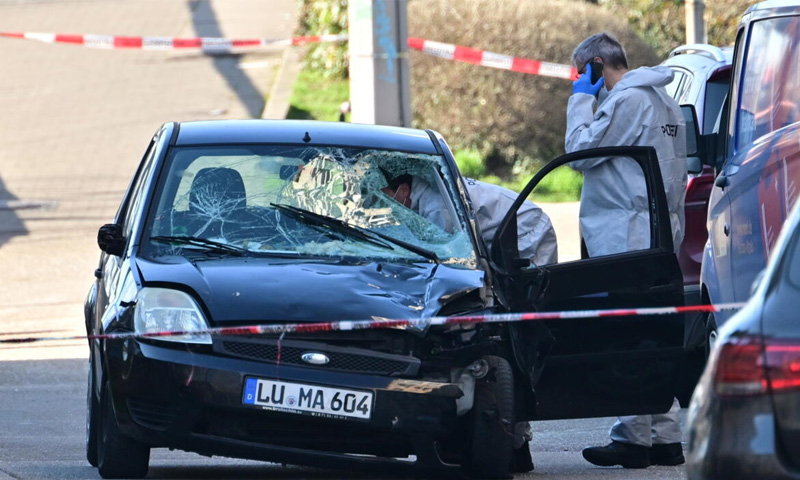
On Monday, a devastating incident occurred in the German city of Mannheim when a car was driven into a crowd in a pedestrian zone, resulting in at least one fatality and several others injured. The attack took place around 12:15 PM (1115 GMT), just as many people were going about their day in the city’s shopping district. According to local police, the car, which appeared to have suffered significant damage, was seen with its front window smashed.
In response to the incident, police swiftly cordoned off the affected area, evacuating the vicinity and urging residents to avoid the inner city. Armed officers were deployed, and helicopters were seen flying overhead as part of the major police operation. The police spokesperson, Stefan Wilhelm, confirmed that the authorities had arrested one person suspected of being involved in the attack, though they have not yet labeled it as a premeditated act of terrorism or a deliberate attack. However, the investigation remains ongoing, and the authorities are working to determine the full details of the incident.
Authorities Confirm Multiple Injuries and Fatalities
Initial reports indicated that two people had died, with at least 25 others injured in the car ramming attack. Pictures from the scene showed ambulances near the city’s iconic historical water tower, with emergency services tending to the wounded. A reporter from the news channel NTV reported that one person was found lying on the ground, covered under a tarpaulin, while the area was littered with debris. Among the wreckage, children’s shoes could be seen, intensifying the horror of the situation.
As the incident unfolded, authorities issued a disaster alert to the public, advising citizens to stay indoors. The local hospital, Mannheim University Hospital, declared a disaster alert, preparing its intensive care unit for a surge in patients. The tragic nature of the event raised serious concerns over public safety, especially in a city known for its festive celebrations, including the carnival parade held just a day before the attack.
Previous Attacks and Rising Concerns
This latest incident is not the first of its kind in Germany. In recent months, the country has experienced several violent attacks, including other car ramming incidents. In December, a car-ramming attack targeted a Christmas market in Magdeburg, killing six people and injuring hundreds more. Another attack in Munich last month saw a man deliberately drive into a trade union demonstration, resulting in the deaths of a two-year-old girl and her mother. These car ramming attacks, often linked to individuals with unclear motivations or asylum seekers, have raised alarms across the country.
Mannheim itself has also been the site of previous violent incidents. Last May, during an anti-Islam rally, a stabbing attack occurred that left a policeman dead and five others injured. This incident, combined with the recent car ramming attack, has contributed to a growing sense of insecurity among residents and visitors alike. Authorities continue to grapple with how to address these incidents effectively and prevent further tragedies.
Mannheim’s Security Measures and Carnival Celebrations
The timing of the attack was particularly sensitive as it coincided with the traditional German carnival celebrations, which are a major cultural event in cities like Mannheim. On Sunday, thousands of people participated in the carnival parade, and security was ramped up in preparation for the festivities, given the heightened threat of violence in recent months. The Interior Minister, Nancy Faeser, had already addressed the nation before the Mannheim attack, stressing that strong security measures were in place for the carnival period, especially given the high number of attendees.
Following the attack, Faeser canceled her planned visit to the Rose Monday parade in Cologne and instead traveled to Mannheim to oversee the response to the tragedy. The heightened security around the carnival celebrations reflected the national concern over public safety in the wake of previous attacks and the growing sense of vulnerability among the German public.
Public Safety Concerns and Political Implications
The Mannheim car ramming attack has reignited discussions about public safety and security in Germany. These concerns were also a significant theme in the country’s recent general election, in which the issue of safety and how to handle violent incidents, particularly those linked to asylum seekers, played a prominent role. The attack has also highlighted the challenge authorities face in preventing such acts of violence, which continue to occur despite efforts to increase security.
As police continue their investigation into the Mannheim attack, there is an ongoing debate in Germany about how best to address these growing threats. Authorities are increasingly faced with balancing the safety of the public with the complexities surrounding the motivations behind these attacks.
The events in Mannheim, as well as the rising number of similar incidents across Germany, are likely to dominate the national discourse in the coming days, with both the government and citizens grappling with the reality of living under the constant threat of such attacks. As more details emerge, the hope is that authorities will be able to prevent further tragedies and restore a sense of safety in German cities.
