
Table of Contents
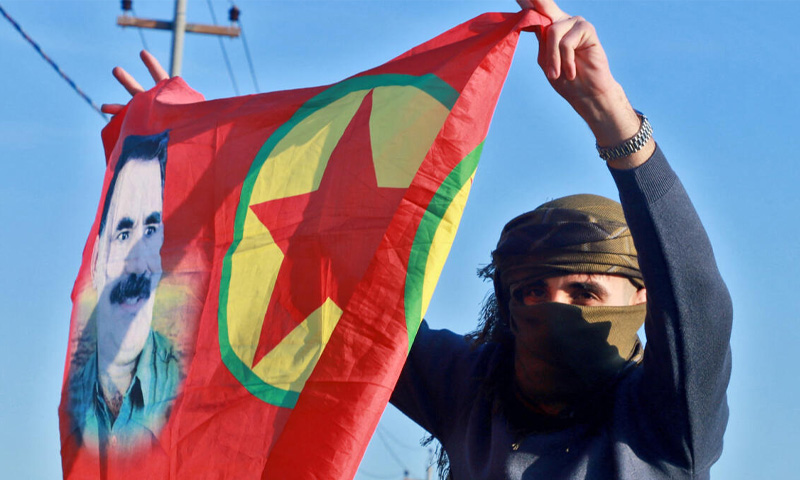
The Kurdistan Workers’ Party (PKK), an outlawed militant group engaged in a decades-long insurgency against the Turkish state, declared an immediate ceasefire on Saturday, signaling a potential breakthrough in the long-standing conflict. This move comes after the group’s imprisoned leader, Abdullah Ocalan, called on the PKK to lay down its arms and dissolve. The PKK’s declaration marks a significant step in what could be the final chapter of a 40-year insurgency that has claimed over 40,000 lives.
Ocalan’s Historic Call for Disarmament
On Thursday, Abdullah Ocalan, who has been imprisoned in Turkey since 1999, issued a call for the PKK to disarm and dissolve. This unprecedented request from the jailed leader has been met with support from multiple political factions within Turkey, including both President Recep Tayyip Erdogan’s government and the pro-Kurdish opposition Democratic People’s Party (DEM).
If fully implemented, this ceasefire could have profound implications for the entire region. It would end a conflict that has devastated southeastern Turkey, where tensions between the Kurdish population and the state have long fueled violence and instability. Furthermore, it could facilitate economic development and peace in a region that has long been scarred by war.
A Fragile Path to Peace
In its official statement, the PKK expressed its full agreement with Ocalan’s call and pledged to cease hostilities immediately unless attacked. However, the group also emphasized that the success of the disarmament process is contingent upon Turkey making certain political and security concessions. Specifically, the PKK called for greater freedoms for Ocalan, who has been held in near-total isolation for over two decades.
The PKK also proposed the convening of a congress to guide the disarmament process, with Ocalan’s direct leadership being a key condition. “Beyond this, issues like laying down arms being put into practice can only be realised under the practical leadership of Leader Apo,” the statement read, using Ocalan’s nickname. The PKK’s demand for an environment conducive to Ocalan’s leadership and involvement in the process highlights the complexity of the situation. Whether the Turkish government will accept these terms remains uncertain.
Government’s Response and Potential Challenges
Turkey’s Justice Minister Yilmaz Tunc spoke out on Friday, stating that no negotiations or offers such as amnesty or house arrest for Ocalan were currently being discussed. This clear stance from the Turkish government suggests that any potential peace deal may face significant obstacles, particularly if Ocalan is not granted more freedom to lead the process.
President Erdogan, who has been involved in multiple attempts to bring an end to the insurgency in the past, is said to be particularly focused on the potential political benefits of peace. A resolution to the conflict could solidify his political legacy, boost his popularity domestically, and enable him to continue ruling beyond 2028, when his term is set to expire. While there is no formal negotiation yet, the ceasefire offers a glimmer of hope for a resolution.
The Broader Regional Implications
The PKK insurgency has had far-reaching effects beyond Turkey’s borders. The group has been based in the mountains of northern Iraq, and its activities have impacted relations between Turkey and Iraq. Furthermore, the peace process could also influence ongoing conflicts in neighboring Syria. Since the fall of Syrian President Bashar al-Assad, Turkey has sought to exert more influence over Kurdish-controlled areas in northern Syria, particularly through its support of Syrian Arab fighters in opposition to Kurdish-led forces.
Elon Musk Becomes a Father for the 14th Time with Shivon Zilis’ Child
Ocalan’s call for disarmament has been welcomed by the international community, including the United States, the European Union, and Turkey’s neighbors Iraq and Iran. Many of these countries view the PKK as a destabilizing force in the region and have supported efforts to end the group’s armed insurgency.
Opposition from the Syrian Democratic Forces (SDF)
Despite the widespread support for Ocalan’s call for peace, not everyone in the region is on board with the proposed ceasefire. The Syrian Democratic Forces (SDF), a Kurdish-led militia aligned with the U.S. in the fight against ISIS, has stated that while they view Ocalan’s call as a positive development, it does not apply to them. The SDF’s reluctance to disarm and its continued control of territories in northern Syria have been sources of tension between the U.S., Turkey, and Kurdish groups.
This divergence of interests complicates the situation further. While the PKK may be willing to lay down its arms, other Kurdish groups, including those in Syria, remain firmly opposed to disarmament without broader political concessions.
