
Table of Contents
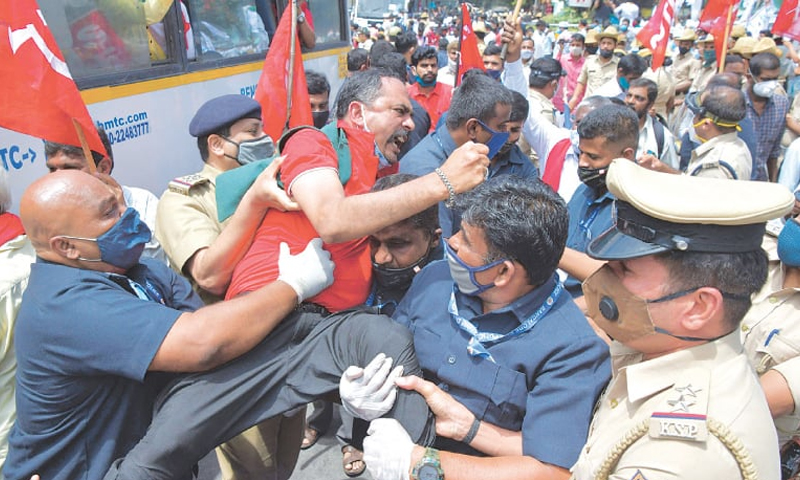
In a significant move, police in Punjab, India, detained hundreds of farmers and used bulldozers to tear down their temporary camps located in a border area. These farmers had been protesting for over a year, demanding better crop prices and legal guarantees for increased state support. The protest camp, situated at the Punjab-Haryana border, was cleared on the night of March 19, 2025, marking a forceful end to the farmers’ long-standing demonstration.
Background of the Protest
The farmers had camped at the border since February 2024 after security forces halted their march toward the national capital, New Delhi. The farmers were pressing for stronger protections for their livelihoods, including legal backing for better prices for their crops. They had also demanded a more significant state role in supporting their agricultural interests, arguing that the existing system failed to safeguard their financial well-being.
The protest grew out of growing discontent with government policies on agriculture and the failure of negotiations to address key demands. Despite their prolonged sit-in, the farmers continued to receive limited support from various political factions and were often at odds with government authorities.
The Eviction Process
On March 19, Punjab Police moved in to clear the protest sites. Senior police officer Nanak Singh stated that there was no resistance from the farmers and that they had cooperated with the clearance operation. “The farmers cooperated well and sat in buses themselves,” Singh said, adding that prior notice had been given to the protesters before the eviction.
However, television footage showed police using bulldozers to demolish tents and stages, signaling the end of the farmers’ year-long protest. The footage also revealed police escorting farmers as they carried personal belongings to vehicles.
Several key farmer leaders were detained in the operation. Among those arrested were Sarwan Singh Pandher and Jagjit Singh Dallewal. Dallewal, a prominent leader, was reportedly carried away in an ambulance as he had been on an indefinite protest fast for months. The mass detentions and clearances raised concerns about the ongoing tensions between farmers and the government.
Political Reactions
Rakesh Tikait, a spokesperson for the Bhartiya Kisan Union (BKU), criticized the government’s approach, calling the detentions a deliberate attempt to disrupt the ongoing negotiations between the farmers and the Bharatiya Janata Party (BJP) leadership. “On one hand, the government is negotiating with the farmer organizations, and on the other hand, it is arresting them,” Tikait stated on the social media platform X.
Trump Issues Two-Month Deadline to Iran for Nuclear Deal Negotiations
The Punjab branch of the Aam Aadmi Party (AAP), which authorized the eviction, expressed its support for the farmers’ demands but argued that the blockages of key roads and highways were damaging the state’s economy. “Let’s work together to safeguard Punjab’s interests,” said Tarunpreet Singh Sond, vice president of AAP in Punjab. “Closing highways is not the solution,” he added.
Despite this, the AAP reiterated its commitment to the farmers’ cause but called for them to pursue their demands through dialogues with the federal government. This position has drawn criticism from some quarters, including opposition groups who see the eviction as an attempt to suppress dissent.
A History of Farm Protests in India
The eviction in Punjab highlights the continuing tensions between farmers and the government. This follows the significant protests of 2020-2021, when farmers from across India camped on the borders of New Delhi for months, eventually forcing the federal government to repeal controversial farm laws. While the government claims that those laws would have benefited farmers, many have continued to voice concerns over agricultural policies, feeling that their needs remain unaddressed.
The recent developments also underscore the political divide in the region, with the BJP, led by Prime Minister Narendra Modi, and AAP, the ruling party in Punjab, offering differing views on how to resolve the ongoing agricultural crisis. While the BJP has defended its agricultural reforms, local political factions continue to advocate for more substantial changes to support farmers’ livelihoods.
Looking Ahead
The arrest of farmers and the demolition of protest camps in Punjab may signal a turning point in the ongoing agricultural unrest. While the state government pushes for solutions that include engaging with the federal government, farmers remain steadfast in their demands. With ongoing negotiations, the question remains whether the federal government will take more concrete actions to address the concerns raised by farmers or if the situation will escalate further, leading to more protests and confrontations.
As the issue continues to unfold, all eyes are on how the Indian government, political leaders, and farmers’ organizations will navigate these complex and often contentious debates surrounding agricultural reform and the future of India’s rural economy.
