
Table of Contents
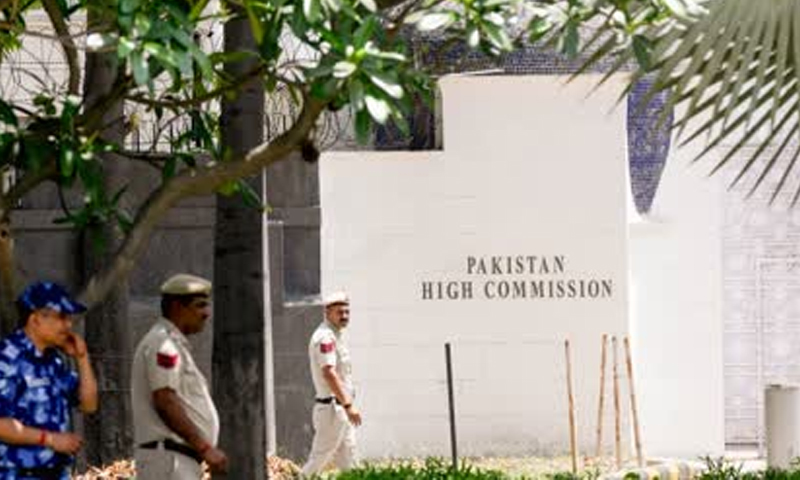
On Wednesday, the Indian Ministry of External Affairs declared a Pakistani official from the Pakistan High Commission in New Delhi as “persona non grata,” ordering the diplomat to leave the country within 24 hours. The Indian government claimed the official was involved in “activities deemed incompatible with diplomatic duties.” The expulsion is part of a broader diplomatic fallout between India and Pakistan, following an escalation in violence in the disputed Kashmir region.
In a formal statement, the Ministry of External Affairs revealed that the Charge d’Affaires at the Pakistan High Commission had been issued a demarche, urging Pakistan to ensure that none of its diplomats or officials misuse their privileges and diplomatic status in India. This move marks a continuation of growing diplomatic tensions between the two nuclear-armed neighbors.
Tensions Escalate After Deadly Attack in IIOJK
The expulsion of the Pakistani diplomat follows the recent escalation in the Kashmir region, particularly after the deadly attack in the Indian Illegally Occupied Jammu and Kashmir (IIOJK) area of Pahalgam on May 7, which resulted in the death of 26 men. This attack, blamed on militants allegedly backed by Pakistan, further exacerbated the already strained relations between India and Pakistan, both of whom claim the region of Kashmir in full but administer it in part.
In the aftermath of the attack, India took a series of retaliatory steps, including suspending a water-sharing treaty with Pakistan and closing the main land border crossing between the two nations. India also declared Pakistani military, naval, and air advisers in its High Commission in New Delhi persona non grata, expelling them from the country, and withdrew visas for Pakistani nationals, except for Sikh pilgrims.
Pakistan, in turn, responded by expelling Indian diplomats, canceling visas for Indian nationals, and closing the main border crossing on its side as well. These measures, though symbolic, reflect the deepening diplomatic crisis between the two countries.
A Series of Military Escalations
The escalation between the two countries began earlier in May with an unprovoked Indian cross-border attack on May 7, which killed at least 53 individuals, including 13 armed forces personnel and 40 civilians. The attack led to heightened tensions along the Line of Control (LoC), a de facto border between India and Pakistan in the disputed Kashmir region. India accused Pakistan of harboring “terrorist groups” operating from its side of the border, leading to retaliatory measures from both sides.
In the following days, India conducted drone strikes into Pakistani territory, which were met with defensive actions by Pakistan’s military. Pakistan claimed to have shot down nearly 80 drones, including Israeli-made IAI Heron UAVs, which are known for their long endurance and high-altitude surveillance capabilities. In response, Pakistan downed six Indian Air Force (IAF) fighter jets, including three Rafale jets, showcasing the growing intensity of the military conflict between the two nations.
India’s Top Court Slams BJP Minister Over Remarks on Colonel Sofiya Qureshi
Indian Missile Strikes on Pakistani Airbases
On May 9, the escalation took a more dangerous turn when India launched multiple missile attacks on Pakistani airbases, including the Nur Khan, Murid, and Shorkot airbases. These missile strikes, fired from Indian aircraft, targeted key military installations, intensifying the conflict.
The missile strikes marked a significant escalation, raising fears of a full-scale war between the two countries. Pakistan responded with a series of retaliatory strikes under “Operation Bunyan-um-Marsoos.” Pakistan’s military claimed that its strikes were “precise and proportionate,” aimed at Indian military targets. Indian officials had stated that their strikes were targeted at “terrorist camps” across the border, though many analysts questioned the legitimacy of these claims, particularly in the wake of rising civilian casualties.
Ceasefire Agreement Brokered by the United States
The conflict, which saw fighting intensify for at least 87 hours, ended on May 10 with a ceasefire agreement brokered by the United States. The ceasefire agreement halted further military action, and both sides agreed to de-escalate. However, the ceasefire did little to alleviate the deep-seated mistrust between the two nations, which continue to view each other through the lens of decades of rivalry.
Despite the ceasefire, the region remains on edge, and both countries continue to hold strong military positions along the LoC. The United States’ involvement in brokering the ceasefire was seen as a necessary intervention, given the potential for further escalation between two nuclear-armed nations.
The Diplomatic Fallout: A Deepening Crisis
The expulsion of the Pakistani diplomat and the broader diplomatic tensions reflect the worsening crisis between India and Pakistan. Both countries continue to blame each other for the violence in Kashmir, with Pakistan accusing India of human rights abuses in the region and India accusing Pakistan of supporting militant groups operating in Kashmir.
The diplomatic expulsions and retaliatory measures are likely to have lasting effects on relations between the two countries. While the ceasefire has temporarily halted the violence, the underlying issues remain unresolved. The two countries remain divided over the status of Kashmir, and the prospects for lasting peace appear distant.
Furthermore, the expulsion of diplomats raises questions about the future of bilateral talks, trade, and diplomacy between India and Pakistan. With both nations continuing to build up their military capabilities, the risk of further escalation remains high, and the international community remains concerned about the long-term consequences of the ongoing rivalry.
