
Table of Contents
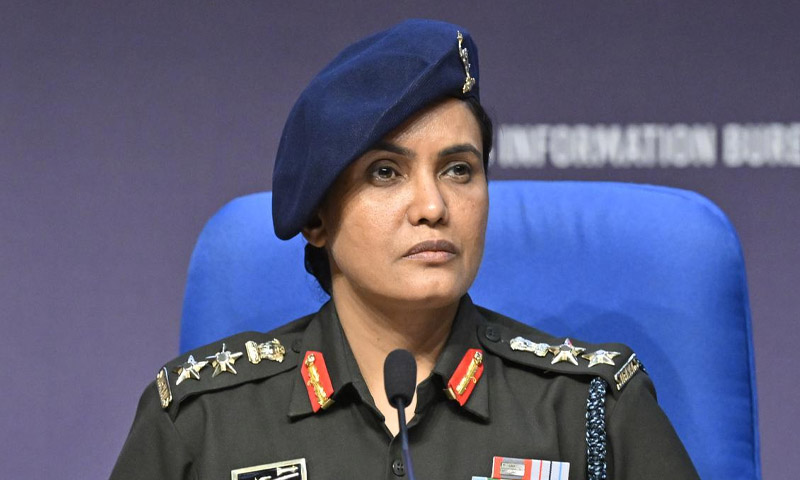
In a stern and widely watched hearing on Monday, the Supreme Court of India expressed deep concern over derogatory remarks made by Madhya Pradesh BJP minister Kunwar Vijay Shah against Colonel Sofiya Qureshi, questioning the sincerity of the minister’s public apology.
Describing the comments as “crass” and “thoughtless,” the court dismissed the apology and hinted it could be a calculated move to escape legal accountability.
Supreme Court Rebukes Minister for Derogatory Language
A bench comprising Justice Surya Kant and Justice N Kotiswar Singh lambasted Shah for his inflammatory remarks, made in a public address following India’s Operation Sindoor, where Colonel Qureshi and Wing Commander Vyomika Singh had briefed the media on the operation’s military aspects.
“The kind of crass comments you made, completely thoughtlessly… We don’t need this apology,” said the bench, adding, “It looks like crocodile tears to avoid legal proceedings.”
The justices were unimpressed by Shah’s attempts to express regret, suggesting that the apology was more performative than genuine.
The Offensive Remarks: A Political Speech Gone Too Far
The controversy erupted after a viral video emerged of Kunwar Vijay Shah referring to Colonel Qureshi as a “sister of terrorists”, drawing widespread condemnation.
“Those who widowed our daughters, we sent a sister of their own to teach them a lesson,” Shah said, apparently referencing Colonel Qureshi’s role in Operation Sindoor against Pakistan, following the Pahalgam attacks.
The remarks were not only seen as highly inappropriate but also disrespectful to a serving officer of the Indian Army—an institution considered beyond the pale of partisan politics.
Court Orders SIT Probe into Minister’s Remarks
The Supreme Court took the matter seriously enough to order a Special Investigation Team (SIT) to be formed by the Madhya Pradesh Police to probe the episode.
This move signals the judiciary’s intent to ensure that political leaders are held accountable when their speech endangers military morale, spreads misinformation, or incites hostility.
“Being a public representative, you are expected to choose every word carefully. We saw your videos; you were on the verge of using filthy language,” the court observed.
Colonel Sofiya Qureshi: A Decorated Officer Caught in Political Crossfire
Colonel Sofiya Qureshi is one of the highest-ranking female officers in the Indian Army and has previously been recognized for her professionalism and leadership. Her appearance alongside Wing Commander Vyomika Singh in the military briefing on Operation Sindoor was seen as a progressive move highlighting women’s growing role in India’s defense forces.
The attack on her reputation by a sitting minister not only undermines that progress but also raises questions about the dignity and protection of women in uniform, especially when serving on the front lines.
Operation Sindoor: A Shadow Over Bilateral Tensions
Operation Sindoor was India’s retaliatory military action following the April 22 attack in Pahalgam, which claimed 26 lives. India blamed Pakistan for the attack, although no concrete public evidence has been presented so far.
Pakistan categorically denied involvement and responded with Operation Bunyanum Marsoos, targeting Indian military assets. The tit-for-tat escalation brought both countries dangerously close to open conflict before a ceasefire was brokered on May 11.
Pakistan’s ISPR Chief: “We Celebrate Peace, Not Victory” Amid Regional Tensions
Backlash and Political Fallout
Kunwar Vijay Shah’s comments have not only invited legal scrutiny but have also caused political embarrassment for the Bharatiya Janata Party (BJP) at a sensitive time. Critics have accused the minister of using military operations to score political points, a practice that has increasingly drawn criticism from veterans and defense analysts.
While some party members attempted to downplay the controversy, others within the party and the broader public have called for disciplinary action.
A Test for Civil-Military Respect in Indian Democracy
This episode highlights the growing friction between political speech and military neutrality in India’s public discourse. Traditionally, Indian armed forces have remained apolitical, and any effort to drag uniformed personnel into political controversies is met with alarm.
Legal experts believe this case could set a precedent on how far elected officials can go in politicizing military operations and defaming serving officers.
