
Table of Contents
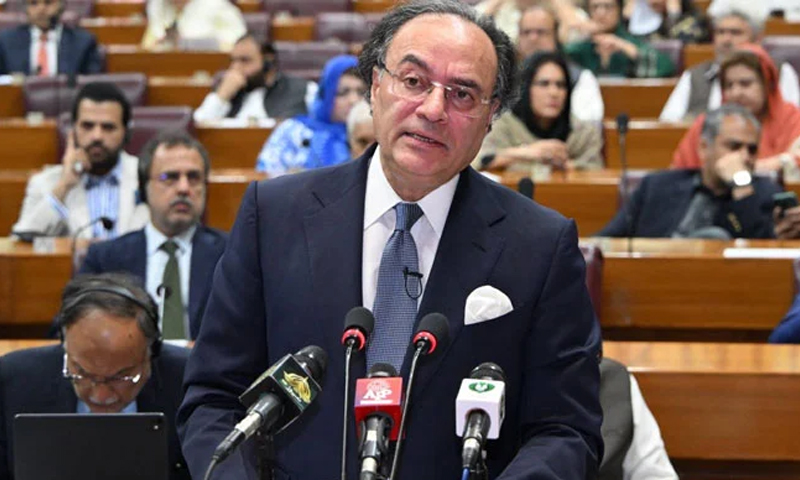
On June 11, 2025, Pakistan’s Finance Minister Muhammad Aurangzeb presented the Federal Budget 2025–26 with a total outlay of Rs17.573 trillion in the National Assembly. The budget presentation took place amid strong opposition protests, reflecting political tensions, even as the government emphasized it was a pivotal step towards economic recovery and stability.
The budget sets ambitious macroeconomic goals with a focus on revenue generation, fiscal responsibility, and structural reforms. Pakistan has targeted 4.2% GDP growth, 7.5% inflation, and a budget deficit of 3.9% of GDP, aiming for a primary surplus of 2.4%. This comes at a time when the country is navigating through post-crisis recovery and preparing for IMF program continuity.
Key Financial Projections and Allocations
Revenue Targets
- FBR Tax Revenue: Rs14.131 trillion (↑18.7% from last year)
- Non-Tax Revenue: Rs5.147 trillion
- Federal Net Revenue (after provincial transfers): Rs11.072 trillion
Total Expenditures
- Federal Expenditure: Rs17.573 trillion (↓7% from last year)
- Debt Servicing: Rs8.207 trillion (largest expenditure head)
- Current Expenditure: Rs16.286 trillion
Major Sectoral Allocations
| Sector | Allocation (Rs) |
|---|---|
| Defence | 2.550 trillion |
| Public Sector Development (PSDP) | 1.000 trillion |
| Pensions | 1.055 trillion |
| Civil Administration | 971 billion |
| Subsidies (Electricity, others) | 1.186 trillion |
| Grants to Regions & Welfare | 1.928 trillion |
| Benazir Income Support (BISP) | 716 billion (↑21%) |
Special funds were also allocated for AJK (Rs140B), Gilgit-Baltistan (Rs80B), and merged KP districts (Rs80B).
Development and PSDP
The National Economic Council (NEC) approved a consolidated development budget of Rs4.224 trillion, with:
- Federal PSDP: Rs1 trillion
- Provincial ADPs: Rs2.869 trillion
- SOE Investments: Rs355 billion
PSDP will focus on infrastructure, energy, and connectivity, while provinces will prioritize health and education.
Reforms in Revenue and Tax System
Finance Minister Aurangzeb emphasized Federal Board of Revenue (FBR) transformation as a cornerstone of fiscal reform. Pakistan’s tax-to-GDP ratio, currently around 10%, is targeted to rise to 14%.
Key Reform Measures:
- Digital production tracking
- B2B e-invoicing system
- AI-based tax audit selection
- Centralised data control unit
- Faceless audits
The government aims to plug leakages, broaden the tax net, and improve efficiency through technology-driven processes.
Comprehensive Tariff Reforms
Aurangzeb also introduced a Comprehensive Tariff Reform Package:
- Reduction of customs slabs to four: 0%, 5%, 10%, and 15%
- Phased elimination of regulatory duties within 5 years
- Abolishment of the Fifth Schedule of the Customs Act 1969
These changes aim to boost export competitiveness and reduce production costs, especially for key sectors like IT, telecom, textiles, and pharmaceuticals.
Focus on Higher Education and Scholarships
An allocation of Rs39.5 billion was made under the PSDP for 140 higher education projects. Key allocations include:
- Rs3.67B for Pak-US Ph.D. Knowledge Corridor
- Rs2.3B for Overseas Scholarships for MS/Ph.D.
- Rs500M for Afghan scholarships
- Rs611M for Kamyab Jawan Sports Academies
New campuses and academic blocks are also planned for underdeveloped regions like Skardu, Muzaffargarh, and Karachi.
Agriculture Sector Development
The agriculture sector was allocated Rs4.2 billion, with a focus on:
- Reviving cotton production
- Livestock enhancement
- Modern irrigation through Green Pakistan Initiative
Key projects include oilseed development, national productivity enhancement, and Pak-Sar-Zameen card.
Hasan Ali’s Historic Hat-Trick Sets Edgbaston Alight
Energy Sector and Circular Debt Strategy
Pakistan’s circular debt in the energy sector stands at Rs2.393 trillion, with rising financial charges. The government plans:
- Sharia-compliant refinancing using Debt Servicing Surcharge
- Replacement of expensive IPP debt
- Reduction in electricity rates for industries (↓31%)
Additionally, furnace oil-based power plants with 3,000 MW capacity have been shut down.
New EV Policy Introduced
A new Electric Vehicle (EV) Policy was introduced to promote 2- and 3-wheeler electric vehicles:
- Levies on fossil fuel vehicles
- Focus on reducing environmental impact and fuel imports
The policy will incentivize local production and use of EVs for a greener future.
Healthcare Sector Gets Boost
A total of Rs14.3 billion was allocated for health development projects:
- Rs4B for Jinnah Medical Complex, Islamabad
- Rs1B for Hepatitis C program
- Rs2B for national disease surveillance system
- Rs1.7B for a new cancer hospital in Islamabad
Economic Outlook and Conclusion
Minister Aurangzeb concluded that Pakistan has entered a phase of economic recovery with growing current account surplus, strong remittances, and improved foreign reserves. Credit rating agencies like Moody’s and Fitch have upgraded Pakistan’s outlook.
“This budget marks a decisive step in transforming the very DNA of our economy,” he said, adding that the government is focused on achieving sustainable, export-led growth while ensuring social welfare and fiscal discipline.
