
Table of Contents
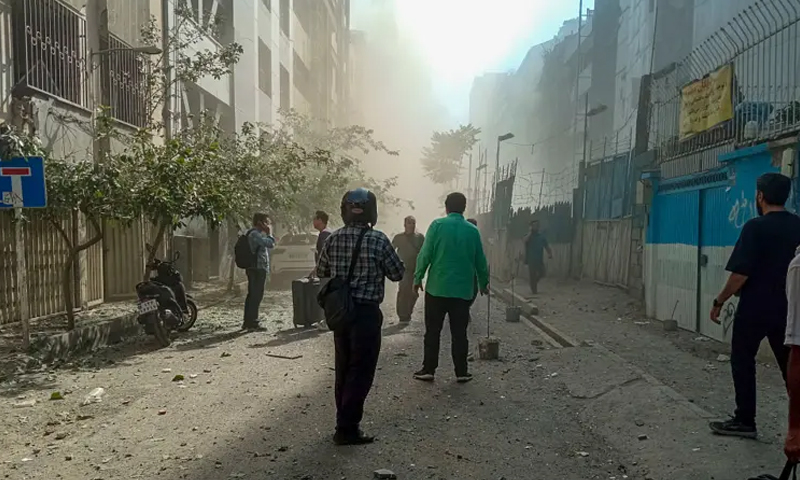
In a major escalation of Middle Eastern hostilities, Israeli airstrikes reportedly damaged a section of Iran’s Foreign Ministry building, according to Nour News, a media outlet closely aligned with the Iranian government.
The outlet reported that “several civilians” were injured, though it did not offer further details regarding the extent of the injuries or the condition of the building. Saeed Khatibzadeh, Iran’s deputy foreign minister, claimed Israel deliberately targeted the structure, calling it a provocative and unacceptable act.
Iran Responds with Strikes on Northern Israel
In retaliation, Iran launched its own strikes targeting northern regions of Israel. Magen David Adom (MDA), Israel’s emergency medical services provider, confirmed that eight individuals were treated following the Iranian attack.
Rs15 Billion Allocated for Sukkur–Hyderabad Motorway in FY 2025–26 Budget
- One elderly woman was hospitalized in moderate condition due to smoke inhalation.
- Seven others sustained minor injuries and were treated on site.
- An additional nine people experienced anxiety-related symptoms, according to MDA.
Israel’s Home Front Command has since issued an “all-clear” advisory, allowing civilians to exit their shelters. Search and rescue teams were deployed to investigate reports of fallen projectiles in multiple locations.
U.S. Senators Warn Against American Military Involvement
As tensions escalate, key voices in U.S. politics are urging restraint. In interviews with NBC’s “Meet the Press”, Senators Adam Schiff (D-CA) and Rand Paul (R-KY) expressed concern over the possibility of the U.S. becoming entangled in yet another Middle Eastern conflict.
Sen. Adam Schiff: Avoid Another War
Schiff cautioned that Israel may have seized a “strategic opportunity” to target Iran’s nuclear infrastructure after observing weakened proxy militias in the region. However, he emphasized that the United States should avoid direct military involvement.
“I think the United States should be very loathe to engage in another war after the wars in Iraq and Afghanistan,” Schiff said.
Sen. Rand Paul: War Not a Game
Paul echoed similar sentiments, warning that military escalation could backfire, driving Iranian civilians to rally behind an otherwise unpopular regime.
“I think it’s going to be very hard to come out of this and have a negotiated settlement,” Paul noted. “I see more war and more carnage — and it’s not the U.S.’s job to be involved in this war.”
Their comments reflect bipartisan reluctance in Washington to deepen American involvement in the Iran-Israel confrontation.
IDF Recovers Hostage’s Body in Gaza
Amid the rising regional crisis, Israel continues operations within Gaza, where the military recently recovered the body of hostage Lt. Col. (res.) Aviv Atzili, 49, from the Khan Younis area.
Atzili was taken hostage during the October 7, 2023, Hamas-led assault on kibbutz Nir Oz. His wife, Liat Atzili, was also kidnapped but returned to Israel after 54 days in captivity through a negotiated prisoner exchange.
In a statement, Prime Minister Benjamin Netanyahu paid tribute to Atzili:
“Aviv bravely went out to defend his kibbutz Nir Oz, fell in battle with the murderers, and was kidnapped to the Gaza Strip.”
The return of Atzili’s body has reignited public attention on the fate of remaining hostages still believed to be held in Gaza by Hamas and other militant groups.
Strategic Implications and Uncertain Future
The recent exchange of hostilities between Israel and Iran—two long-standing adversaries—has added new layers of complexity to a region already marred by ongoing wars in Gaza, Syria, and Lebanon. Analysts warn that direct strikes between state actors—as opposed to proxy warfare—may broaden the scope of conflict and draw in external powers, including the United States.
Proxy vs Direct Conflict
While Israel and Iran have long supported opposing factions in proxy conflicts across the region, direct strikes on sovereign targets, like the Iranian foreign ministry building, represent a significant escalation. Military analysts believe these could lead to a widening of the conflict, especially if further civilian or governmental casualties occur.
