
Table of Contents
In a major leap for energy technology, China has unveiled miniaturized nuclear batteries that could revolutionize the future of energy storage, enabling devices to run for decades without recharging. The innovation, led by Beijing-based company Betavolt, showcases China’s rising dominance in this emerging sector.
Introducing the BV100: 50-Year Coin-Sized Power Source
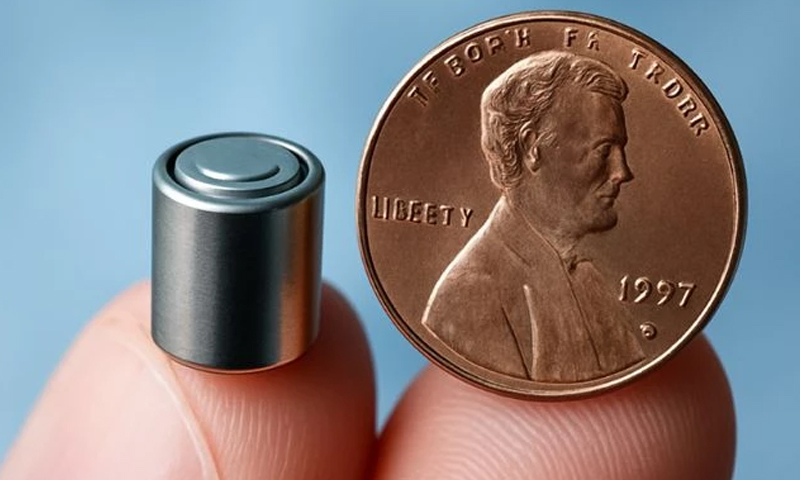
In January 2024, Betavolt introduced the BV100, a coin-sized nuclear battery powered by Nickel-63, designed to last up to 50 years without any need for recharging or maintenance. Already in production, this battery is poised to power a wide range of technologies, from aerospace systems and medical implants to consumer electronics and micro-robots.
The BV100 represents a fundamental shift in how power is delivered to devices, particularly in remote or inaccessible locations where battery replacement is difficult or dangerous.
Carbon-14 Battery Promises a 100-Year Lifespan
Building on this momentum, Northwest Normal University in China has revealed an even more impressive development: a nuclear battery powered by Carbon-14, capable of operating for up to 100 years.
NCERT Issues Cybersecurity Alert Amid India-Pakistan Tensions
Though Carbon-14 is a rare and expensive isotope, China has taken the lead by establishing a commercial reactor specifically designed to extract it. This not only supports research and production but also lays the foundation for a vertically integrated supply chain—mirroring China’s strategy in dominating global solar panel manufacturing.
The Global Race: US, UK, and Others Catching Up
While China currently holds a lead in nuclear battery technology, other nations are ramping up their efforts:
- In the United States, City Labs is developing tritium-based nuclear batteries with a 20-year lifespan, focusing on medical applications such as pacemakers and implants.
- The UK-based company Arkenlight is exploring a different approach by crafting batteries from nuclear waste, aiming to turn radioactive byproducts into sustainable energy sources.
- American firms Kronos Advanced Technologies and Yasheng Group have also entered the race through joint research partnerships to explore nuclear-powered energy solutions.
- Multiple European and Asian nations are investing in next-generation nuclear batteries, driven by the growing need for long-life, sustainable power in fields like defense, telecommunications, and space exploration.
From Niche to Mainstream: A History Rewritten
Although nuclear battery concepts were first explored in the 1950s by the United States, practical adoption was hindered for decades due to safety, cost, and longevity concerns. However, modern technological advancements and better containment methods are now shifting that narrative.
With the rise of miniaturized electronics, IoT devices, and a growing demand for clean, long-lasting power sources, nuclear batteries are becoming increasingly viable.
Applications Across Industries
These new nuclear batteries are expected to serve a broad array of sectors:
- Medical Devices: Implants like pacemakers that no longer require battery replacements.
- Aerospace: Powering satellites and deep-space probes without the need for solar arrays.
- Consumer Electronics: High-end smartwatches, sensors, and tracking devices.
- Defense and Surveillance: Covert and autonomous surveillance gear operating for decades.
- Internet of Things (IoT): Long-duration energy for sensors in remote or extreme environments.
A Reshaped Energy Landscape
China’s advancements mark a pivotal moment in the global energy transition. Experts believe that as nuclear battery technology matures, it could redefine how the world approaches energy storage—providing reliable, long-term solutions for applications that traditional batteries can’t serve.
With countries racing to scale up their nuclear battery programs, the next decade could witness a transformation in power systems—from wearable devices to interstellar missions—all fueled by compact, atomic-level innovation.
