
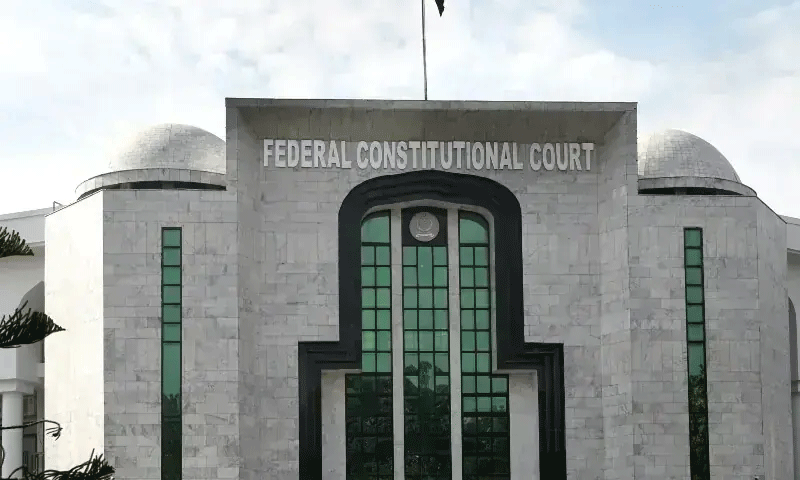
ISLAMABAD: The Constitutional Court on Tuesday expressed strong displeasure over customs authorities for keeping oil tankers detained for nearly three years in connection with an Iranian oil case, observing that the prolonged seizure of potentially inflammable cargo posed serious safety and humanitarian concerns.
Court Questions Prolonged Detention
Hearing the matter, a three-member bench headed by Justice Hasan Azhar Rizvi questioned the rationale behind the prolonged detention of tankers allegedly carrying inflammable material. “If a fire is caused by someone’s cigarette, who would be responsible?” the judge remarked, noting that the continued impoundment of such vehicles could pose grave risks. The court also observed that the drivers of the detained tankers were likely rendered unemployed due to the prolonged impoundment.
Dispute Over Nature of Cargo
During the proceedings, counsel for customs, Wasim Sajjad, argued that the detained tankers were involved in smuggling Iranian petroleum products. However, counsel representing the importer maintained that the cargo did not constitute petrol but rather light aliphatic hydrocarbons. Justice Roshan Khan observed that hydrocarbons could be chemically processed or mixed to produce petroleum products, terming it a significant commercial activity. The bench noted the need for clarity on the nature of the substance before proceeding further.
Court Orders Laboratory Testing
Subsequently, the court directed that laboratory testing of the hydrocarbon material be conducted within 15 days. It further ordered that if the test results were found to be in order, the tankers should be released under appropriate security arrangements. The court also instructed that the relevant forum decide the matter within 30 days following the submission of the laboratory report.
Background
The case dates back nearly three years when customs authorities seized multiple tankers allegedly carrying smuggled Iranian oil. The prolonged detention without resolution has drawn criticism from various quarters, with the court now stepping in to ensure a swift conclusion. The matter highlights the ongoing challenges of fuel smuggling along Pakistan’s border with Iran, where price differentials create incentives for illegal cross-border trade. However, the court’s emphasis on safety and humanitarian concerns underscores the need for timely adjudication of such cases. The importer’s claim that the cargo is not petrol but industrial hydrocarbons adds a layer of complexity. The laboratory results will be crucial in determining the legal status of the detained tankers. The customs department has been directed to facilitate the testing process. The court has also asked for a report on the progress of the investigation into the alleged smuggling network. The case has been adjourned pending the test results. The drivers of the tankers, many of whom have been without work for three years, await the outcome with hope. The court’s intervention is seen as a positive step toward resolving a long-standing impasse. The legal battle over the classification of the cargo could set a precedent for future smuggling cases. The customs department has defended its action, citing national security and economic interests. The importer has maintained that the material is legally imported for industrial use. The court’s directive for testing aims to settle this factual dispute. The next hearing is scheduled after the submission of the laboratory report. The constitutional bench has shown a desire to expedite the matter. The safety risks posed by storing potentially inflammable material for three years are significant. The court’s observation about a potential fire hazard is not unfounded. The area where the tankers are stored is densely populated. A fire could have catastrophic consequences. The court has rightly prioritized safety. The humanitarian aspect of drivers losing their livelihood also weighed on the bench. The case is a reminder of the need for efficient judicial and administrative processes. The prolonged detention without resolution serves no one’s interest. The court has now set a clear timeline. The laboratory must act within 15 days. The relevant forum must decide within 30 days thereafter. The tankers may finally be released if the test results are favorable. The drivers can return to work. The customs department can pursue the case based on clear evidence. The court has balanced the competing interests. Justice requires a speedy resolution. The constitutional bench has provided a pathway. The parties must now follow it. The outcome will be watched closely by the petroleum industry and legal experts. The distinction between petrol and light aliphatic hydrocarbons is technical but legally significant. The laboratory testing will be critical. The court has asked for a neutral, credible analysis. The results will form the basis of the final decision. The case highlights the complexities of cross-border trade and smuggling. The court’s intervention has brought clarity and urgency. The wheels of justice are turning. The tankers have been stationary for three years. They may finally move. The drivers may finally get their livelihoods back. The court has spoken. The parties must act. The timeline is set. The matter will be resolved. The constitutional bench has done its duty. Now it is up to the laboratory and the relevant forum. The court will review compliance. The case will be closed one way or another. The hope is for a just outcome based on facts. The court has ensured that procedure is followed. The legal system is functioning. The detention cannot continue indefinitely. The court has made that clear. The customs department has been put on notice. The importer has been given a chance to prove his case. The balance is struck. The constitutional bench has shown wisdom. The case is a test of the system. The system is responding.
