
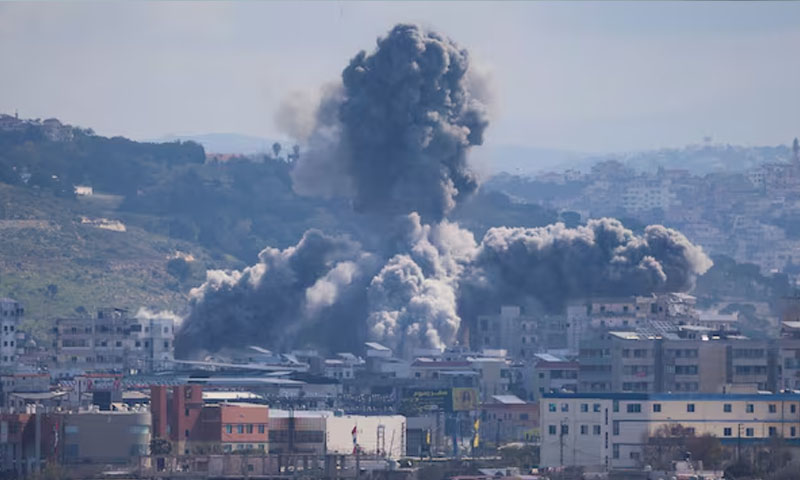
DUBAI: Israeli airstrikes targeted the historic Lebanese port city of Tyre on Tuesday, killing at least eight people, according to the Lebanese health ministry. The escalation comes amid a precarious pause in direct fire between Israel and Iran, brokered by US President Donald Trump.
Deadliest Strikes on Tyre Since March
The strikes on Tyre, described as the deadliest on the city since fighting intensified in March, followed an Israeli military evacuation order for the entire urban center. Footage verified by Reuters showed extensive debris and rescue teams searching for survivors along the city’s eastern outskirts.
US Apache Downed in Strait of Hormuz
In a separate escalation in the Gulf, a US Navy Apache gunship went down in the Iranian-controlled Strait of Hormuz on Tuesday. The two-man crew was successfully recovered within two hours by a US Navy surface drone. Speaking at New York’s John F. Kennedy International Airport, Trump confirmed the crew was safe. “The pilots are fine,” Trump said. “Nobody injured.” US Central Command (CENTCOM) reported the pilots were in stable condition. While it remains unclear if the helicopter suffered mechanical failure or was downed by Iranian fire, the incident underscores the volatility of the Strait, where Tehran continues to block significant global shipping.
Lebanon Campaign Complicates Peace Efforts
The ongoing campaign in Lebanon remains a major obstacle to President Trump’s efforts to convert a tenuous ceasefire between Israel and Iran into a lasting regional settlement. Iran has stated that any long-term peace deal with Washington depends on a cessation of hostilities in Lebanon. Conversely, Israel has insisted on treating the Lebanon campaign as a separate security matter to dismantle Hezbollah infrastructure.
Trump Warns Netanyahu
In an interview with Axios, Trump revealed he had issued a stern warning to Israeli Prime Minister Benjamin Netanyahu regarding the potential for renewed direct conflict with Tehran. “I said, ‘Bibi, you better be careful, or you will be on your own very soon,'” Trump told reporters.
Fluid Situation
Following the pause in direct Israel-Iran strikes on Monday, global oil prices gave up most of their recent gains. However, the situation remains fluid as both sides maintain strict conditions. Iran has demanded the lifting of international sanctions, release of frozen assets, and recognition of its control over the Strait of Hormuz. Israel has continued operations against Hezbollah in southern Lebanon, which its troops partially occupy. As Tehran prepares to bury two air defense personnel killed in earlier Israeli strikes, the international community remains on edge, watching whether the localized violence in Lebanon will once again trigger a direct confrontation between the region’s primary powers.
The Tyre airstrikes have drawn international condemnation, with calls for restraint from the UN and European powers. Rescue operations continue in the rubble, with the death toll expected to rise. The ancient city of Tyre, a UNESCO World Heritage site, has suffered significant damage. The Israeli military has stated that the strikes targeted Hezbollah infrastructure, but local officials report civilian casualties. The Lebanese government has lodged a formal complaint with the UN Security Council. The downing of the US Apache adds a dangerous new dimension to the crisis. Iran has not claimed responsibility, but the incident has raised alarm in Washington. The US Navy is investigating the cause. The Strait of Hormuz remains a critical flashpoint. Any miscalculation could lead to a wider war. Trump’s warning to Netanyahu suggests growing US frustration with Israel’s military campaign. The delicate balance between diplomacy and conflict hangs by a thread. The world watches as the region teeters on the brink. The hope for a lasting peace seems distant, but diplomatic channels remain open. The coming days will be crucial. The decisions made will shape the future of the Middle East
