
Table of Contents
Pakistan’s Military Chief at Center of Ceasefire Push
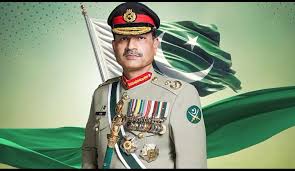
As the devastating US-Israeli war with Iran enters its sixth week, Pakistan’s Chief of Defence Forces and Chief of Army Staff Field Marshal Asim Munir has emerged as a pivotal figure in behind-the-scenes efforts to broker an end to the conflict .
Multiple sources have confirmed that Munir has been in direct, sustained contact with key decision-makers on both sides, working around the clock to bridge the gap between Washington and Tehran .
‘All Night Long’: Direct Contact with US and Iranian Officials
According to a source familiar with the discussions, Munir has been in contact “all night long” with high-level officials, including :
- US Vice President JD Vance
- US Special Envoy Steve Witkoff
- Iranian Foreign Minister Abbas Araghchi
This direct line of communication, facilitated by Pakistan, has reportedly become the primary channel for exchanging proposals between the warring nations .
Pakistan’s Foreign Office spokesperson Tahir Andrabi confirmed on Monday that the peace process between the US and Iran is “ongoing” . While declining to comment on specific details, Andrabi stated: “Our position remains that the peace process is ongoing” .
The ‘Islamabad Accord’: A Two-Phase Peace Framework
Pakistan has presented a detailed framework to end hostilities, tentatively named the “Islamabad Accord” .
The proposal is structured in two phases :
| Phase | Details |
|---|---|
| Immediate Ceasefire | Immediate halt to hostilities and reopening of the Strait of Hormuz |
| Comprehensive Agreement | 15–20 days to finalize a broader settlement; in-person talks in Islamabad |
Under this framework, the initial understanding would be formalized as a memorandum of understanding (MoU) processed electronically through Pakistan, which is currently serving as the sole communication channel in the talks .
The Terms on the Table
The broader settlement under discussion includes several key components :
- Iranian commitments not to pursue nuclear weapons
- Sanctions relief for Iran
- Release of frozen Iranian assets
- A regional framework for the management of the Strait of Hormuz
These terms reflect the core demands and counter-demands that have defined the conflict since its onset on February 28, 2026 .
Iran’s Hesitation and the Trump Ultimatum
Despite intense diplomatic pressure, Iran has not yet formally responded to the ceasefire proposal .
According to a senior Pakistani official, both Pakistan and China have urged Iran to engage, but “Tehran has so far not conveyed its readiness to take part in the dialogue” . The official added that key decisions are now being shaped by the Islamic Revolutionary Guard Corps (IRGC), with authority further diffused after senior figures, including Supreme Leader Ayatollah Ali Khamenei, were killed .
An Iranian official confirmed that Tehran has received the proposal and is reviewing it, but insisted that Iran will not reopen the Strait of Hormuz as part of a temporary ceasefire nor accept deadlines or pressure .
The Iranian foreign ministry spokesman, Esmaeil Baghaei, stated that negotiations are “incompatible with ultimatums and threats to commit war crimes” .
Meanwhile, US President Donald Trump has set a deadline of Tuesday, 8:00 p.m. Eastern Time for a deal, warning of devastating strikes on Iranian power plants and bridges if the Strait remains closed .
A Broader Diplomatic Push
Munir’s role is part of a larger Pakistani diplomatic initiative to de-escalate the Middle East crisis . Key elements include :
- A “quadrilateral strategic synergy” involving Pakistan, Turkey, Egypt, and Saudi Arabia
- Backchannel communication with US Special Envoy Steve Witkoff and Iranian Foreign Minister Abbas Araghchi
- A Four Foreign Ministers’ summit in Islamabad on March 30, involving Pakistan, Saudi Arabia, Turkey, and Egypt
The European Council and the UN Secretary General have publicly endorsed Pakistan’s diplomatic efforts .
The Road Ahead
The window for diplomacy remains narrow. While Pakistan has succeeded in keeping communication channels open, significant gaps remain between US demands and Iranian expectations .
One senior diplomat noted that Pakistan’s immediate priority is to sustain the contacts and prevent a complete breakdown. “Whether or not that could translate into formal negotiations will depend on decisions in Tehran and Washington,” he said .
For now, Field Marshal Asim Munir continues his intensive shuttle diplomacy, working to turn a fragile proposal into a lasting peace—with the world watching .
