
Table of Contents
🇮🇷 Tehran Rejects Trump’s Claims of Negotiations
Iran has categorically denied President Donald Trump’s claim that the United States and Iran are engaged in “productive conversations” to resolve the ongoing conflict, now in its fourth week .
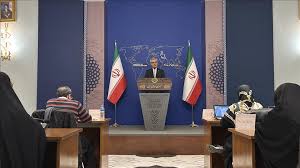
Foreign Ministry spokesman Esmaeil Baghaei stated that while messages have been conveyed through “friendly countries” indicating a US request for negotiations, “there is no dialogue between Tehran and Washington” . He emphasized that Iran’s position regarding the Strait of Hormuz and conditions to end the war “has not changed” .
Parliament Speaker Mohammad Bagher Ghalibaf called the reports “fake news” aimed at manipulating financial and oil markets, adding that the Iranian people demand a “complete and regret-inducing punishment of aggressors” .
Stark Warning on Energy Infrastructure
Iran issued a stern warning that any attack on the country’s energy infrastructure would be met with a “decisive, immediate, and effective response” from its armed forces .
The Islamic Revolutionary Guard Corps (IRGC) threatened that strikes on Iranian power plants would trigger retaliatory attacks on energy, IT, and desalination infrastructure across the region, targeting US-linked facilities and allied countries hosting American military assets .
US Pauses Strikes Amid Mixed Signals
President Trump announced Monday that he had ordered the Pentagon to postpone planned strikes on Iranian power plants for five days, citing “very good and productive” talks with Iran . The pause came hours before a 48-hour ultimatum he had issued demanding Iran fully reopen the Strait of Hormuz .
Despite Trump’s optimism, Iranian officials dismissed the claim as US efforts to “manage energy prices and buy time” for military planning . Tasnim News Agency, citing a senior source, confirmed “no direct or indirect contact” had occurred .
Strait of Hormuz Remains Flashpoint
The strategic waterway—through which roughly 20% of global oil passes—remains largely closed to commercial traffic . Iran’s Defense Council warned that any attack on Iranian coasts or islands would trigger mine-laying across Gulf sea lanes, effectively blocking maritime traffic beyond the narrow strait .
Iran has reportedly begun charging tankers up to $2 million for safe passage, a move Iranian lawmaker Alaeddin Boroujerdi said reflects Tehran’s “strength” .
Market and Casualty Impact
The conflicting signals sent oil markets swinging. Brent crude briefly dropped around 13% following Trump’s announcement before stabilizing near $101.80 per barrel . The International Energy Agency warned the current disruption is worse than the combined oil crises of 1973 and 1979, with 44 energy assets severely damaged across nine countries .
Casualties continue mounting, with over 1,340 reported killed in Iran and more than 1,000 in Lebanon since the conflict began February 28 . The US has deployed approximately 2,500 additional Marines to the region as operations continue .
