
Table of Contents
🇮🇷 Trump Questions Whether Iran’s New Supreme Leader Is Alive
As the Iran war enters its third week, President Donald Trump has cast doubt on the survival of Iran’s newly appointed Supreme Leader, Mojtaba Khamenei, suggesting he may have been killed or seriously wounded in the opening strikes of the conflict .
“I don’t know if he’s even alive. So far, nobody’s been able to show him,” Trump said in a telephone interview with NBC News on March 14. “I’m hearing he’s not alive, and if he is, he should do something very smart for his country, and that’s surrender” .
Mojtaba Khamenei, the son of slain Supreme Leader Ayatollah Ali Khamenei who was killed in the February 28 strikes, has not appeared in public since his appointment . His first statement to the nation was read by a state television news anchor over a still photograph, without any video appearance or confirmation of his condition .
U.S. Defense Secretary Pete Hegseth echoed these doubts on Friday, stating that Mojtaba Khamenei is “wounded and likely disfigured” . “Iran has plenty of cameras and plenty of voice recorders. Why a written statement? I think you know why. His father: dead; he’s scared, he’s injured, he’s on the run, and he lacks legitimacy,” Hegseth said at a Pentagon briefing .
🇮🇷 Iran’s Response: Supreme Leader ‘In Full Health’
Iranian officials have pushed back against these claims. Foreign Minister Abbas Araghchi told CBS News on March 15 that the country is “ready to defend ourselves as long as it takes” and denied Trump’s claim that Iran wants to “make a deal” .
Regarding the new Supreme Leader, Araghchi stated: “The Leader of the Revolution is in full health and is fully managing the situation” . He pointed to the presence of senior Iranian officials at the March 13 Quds Day rally in Tehran as evidence of the regime’s stability, noting that President Masoud Pezeshkian, Parliament Speaker Mohammad Bagher Qalibaf, and other top officials appeared in public .
However, the Quds Day event was disrupted by nearby explosions, and state TV broadcasts showed officials scrambling as loud blasts were heard .
Israel Launches New Wave of Strikes
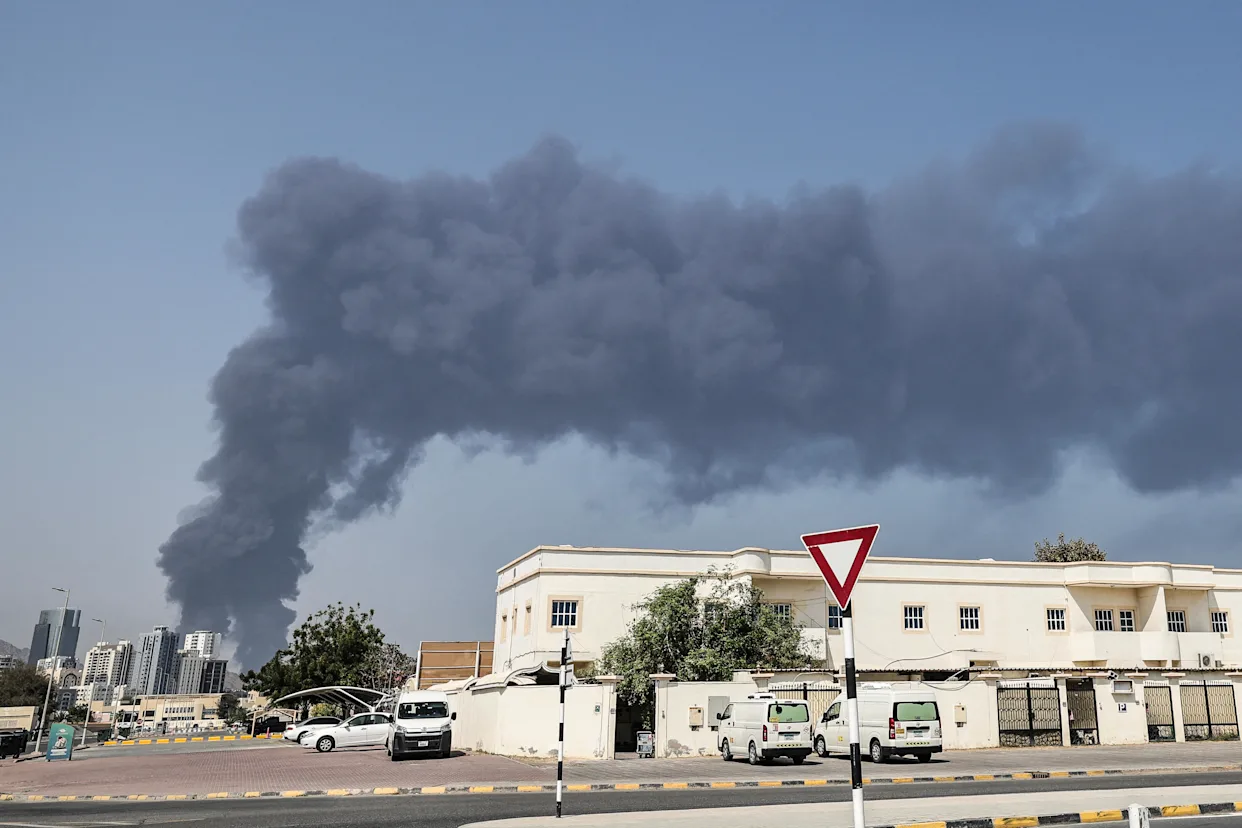
Israel has intensified its military campaign, launching fresh airstrikes on Tehran and other targets across Iran. In the early hours of March 16, huge explosions rocked Tehran, with smoke rising near Mehrabad Airport and the city’s landmark Milad Tower .
The Israeli military said it was conducting a “broad wave of attacks” targeting government infrastructure in Tehran and IRGC bases in western Iran . These strikes follow a shift in strategy toward “hyperlocal targeting” of Basij militia checkpoints and regime figures inside Tehran, often aided by intelligence from Iranians on the ground .
IDF spokesman Brigadier General Effie Defrin stated on March 15: “We still have thousands of targets in Iran, and we are identifying new targets every day” . Military officials indicate they are prepared for at least three more weeks of operations, with plans extending through Passover .
The IDF estimates that between 4,000 and 5,000 Iranian soldiers and commanders have been killed since the start of the war .
Casualties and Regional Impact
The human toll of the conflict continues to mount:
- Iran: At least 1,348 civilians have been killed, according to Iran’s U.N. representative
- Lebanon: More than 850 people killed, including 107 children, with over 2,000 wounded
- Israel: At least 12 people killed
- U.S.: 13 service members killed, including six in a KC-135 refueling aircraft crash in Iraq
Economic Fallout: Oil Prices and the Strait of Hormuz
The war has triggered severe economic disruptions. Brent crude prices have surged past $106 per barrel, up more than 40% since the conflict began . The average U.S. gasoline price has climbed to $3.70 per gallon .
Iran has effectively closed the Strait of Hormuz—through which 20% of global oil passes—to American and allied shipping . The U.S. has called on NATO and other nations to send warships to secure the passage, with mixed responses .
Energy Secretary Chris Wright acknowledged on March 15 that there are “no guarantees” oil prices will fall in the coming weeks but predicted the war would end in the “next few weeks” .
Negotiations: No Deal Yet
Trump stated on March 14 that Iran is ready to negotiate a ceasefire but rejected the current terms as insufficient . “Iran wants to make a deal, and I don’t want to make it because the terms aren’t good enough yet,” he said .
However, Foreign Minister Araghchi denied any interest in talks, telling CBS News: “We never asked for a cease-fire, and we have never asked even for negotiation” .
