
Table of Contents
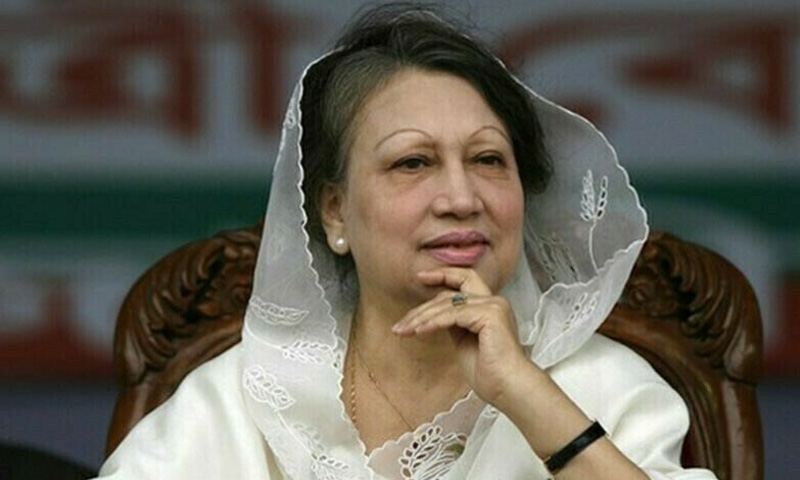
In a recent address broadcasted online, Khaleda Zia, the leader of Bangladesh’s Bangladesh National Party (BNP) and former Prime Minister, called for minimal reforms to be implemented by interim authorities to ensure that elections could be held swiftly. Zia emphasized that people are demanding a transparent and widely accepted election process following a political revolution that took place last year. The revolution, which led to significant political changes, has set the stage for Zia’s calls for restoring democracy and holding elections that will be free from manipulation or authoritarian influence.
Zia, 79, who has served as the Prime Minister of Bangladesh twice, made this call as she expressed the desire to see a “widely accepted election” after what she described as “swift and minimal reforms.” The BNP leader’s comments come in the wake of her own release from prison, where she had been incarcerated on corruption charges in 2018 during the tenure of her rival, Sheikh Hasina. Zia’s release followed the toppling of Hasina’s government in August, which paved the way for Zia to leave for exile in India.
The Path to Unification and Leadership
In her address, Zia made an impassioned appeal to the members of the BNP, urging them to unite and prepare for a leadership role in both the political movements and in leading the country through what she described as a critical period. Zia’s speech emphasized that the current government led by Sheikh Hasina was a “fascist regime” that had been forced to flee due to a mass uprising and sustained student-led movements. The leader of the BNP called for her party members to stay vigilant against any conspiracies that could undermine the gains of the popular uprising and the progress made in overthrowing the previous regime.
Zia’s call for unity comes at a time when political tensions in Bangladesh are high, and the country remains deeply divided along party lines. Her message was clear: only through solidarity within the party and with the broader Bangladeshi public could the BNP achieve its goals of democratic restoration and political reform.
The Political Landscape and Sheikh Hasina’s Exile
Sheikh Hasina, the former Prime Minister and leader of the ruling Awami League, remains in self-imposed exile in India after fleeing the country. Her departure came in the wake of significant political and legal challenges, including an arrest warrant for facing charges that include crimes against humanity. This dramatic shift in the political landscape has left Bangladesh in a state of uncertainty, with both Zia and Hasina being long-standing political rivals.
Trump Proposes $5 Million “Gold Card” to Replace EB-5 Visa Program
Hasina’s exit and the political vacuum left behind have created an environment ripe for change, with the caretaker government, now led by Muhammad Yunus, stepping in to facilitate a transition. Yunus, the Nobel Prize-winning microfinance pioneer, has been instrumental in launching multiple commissions to oversee a series of political and legal reforms aimed at ensuring free and fair elections in the future. However, despite his efforts, political instability remains a pressing concern for the nation.
The Role of the Caretaker Government
The caretaker government, under Yunus’s leadership, has been working towards facilitating the necessary reforms for holding elections. According to Yunus, the timing of the elections largely depends on the political parties’ ability to come to an agreement. He has expressed hope that the elections could take place by late 2025 or early 2026, providing a window of time to implement reforms and restore democratic structures within the country.
Zia’s response to these developments has been a call for urgency. She emphasized that minimal reforms were necessary to ensure the elections happen without delay, as Bangladesh’s democratic system and law and order continue to deteriorate. Zia believes that these reforms are vital not only to restore democracy but to safeguard the country against further political unrest and instability.
Call for Vigilance Against Conspiracies
A key theme in Zia’s address was the warning about “fascist” allies and their potential to undermine the progress made by the mass uprising. She voiced concern over conspiracies aimed at reversing the democratic gains made through the revolution. In this context, Zia urged her followers to remain united and vigilant, stressing the importance of thwarting any such efforts through unwavering solidarity among themselves and with the people of Bangladesh.
Zia’s message was clear: the country’s future rests on the collective strength of the people, and it is through unity and resilience that the path to a better future can be secured. She positioned the BNP as the force capable of leading the nation out of its current political crisis and restoring its democratic ideals.
