
Table of Contents
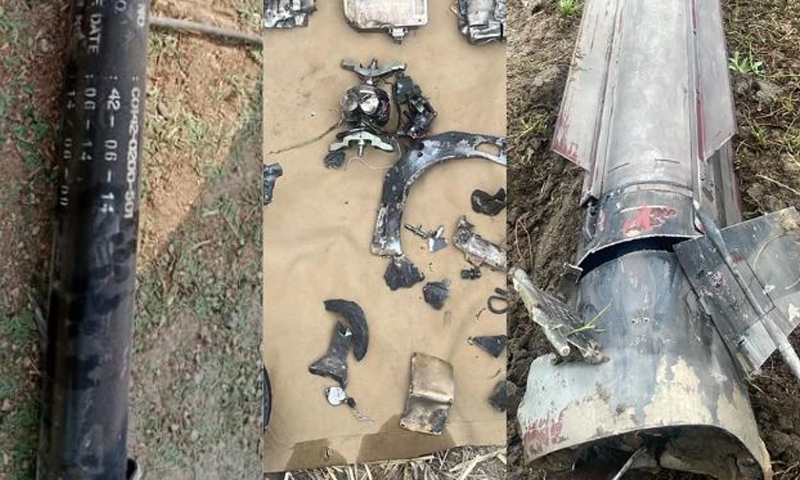
Amid a rapidly escalating conflict, Pakistan’s military confirmed it had destroyed 77 Israeli-made Harop drones deployed by India across the Line of Control (LoC) in recent days. Federal Minister for Information Atta Tarar announced the figures on Friday, citing official sources.
The unmanned aerial vehicles were reportedly launched to target civilian and military installations across Azad Jammu and Kashmir (AJK) and key areas of Punjab. The Harop drones, developed by Israel Aerospace Industries, are loitering munitions that crash into targets upon command, effectively operating as airborne suicide drones.
Massive Drone Interception: Timeline of Attacks
According to Pakistan’s security officials:
- 29 drones were intercepted between Wednesday and Thursday evening
- An additional 48 drones were shot down overnight into Friday
This coordinated drone wave marks one of the largest deployments of loitering munitions in South Asia and reflects a sharp turn toward high-tech warfare in the region.
Civilian Casualties Amid Indian Shelling
While countering the aerial threats, Pakistani civilians bore the brunt of Indian artillery shelling along the LoC. Security sources confirmed:
- Five civilians were martyred
- Seven others injured
- Shelling impacted Hajeera, Forward Kahuta, and Khuiratta
Local infrastructure also sustained significant damage. The Pakistan Army responded immediately, with sustained counterfire prompting Indian troops to raise a white flag near the Dharamsal 2 post, opposite Battal sector.
Rising Tensions Since Pahalgam Attack
The recent spike in hostilities stems from the April 22 terrorist attack in Pahalgam, Indian Illegally Occupied Jammu and Kashmir (IIOJK), which claimed 26 lives, mostly tourists. India blamed Pakistan for the incident, though no public evidence was presented. Pakistan denied involvement and called for a neutral investigation.
In retaliation, India closed the Wagah-Attari border, revoked Pakistani visas, and suspended the Indus Waters Treaty on April 23—moves met with reciprocal action by Pakistan.
May 6–7: Full-Scale Military Exchange
The conflict escalated to near-war levels on the night of May 6–7, when Indian forces reportedly launched:
- Missile strikes
- Air raids
- Drone attacks on multiple Pakistani cities, including Sialkot, Muridke, Shakargarh, and Bahawalpur, as well as AJK regions like Kotli and Muzaffarabad
According to Inter-Services Public Relations (ISPR):
- 31 civilians were killed, including women and children
- 71 others were injured
- Civilian structures, including mosques and the Neelum–Jhelum Hydropower Project, were damaged
Pakistan’s Retaliation: Jets Downed, Drone Neutralized
In response, Pakistan’s military claimed it shot down five Indian Air Force (IAF) jets and one Israeli-made Heron drone, identifying the aircraft as:
- Three Rafale jets
- One MiG-29
- One SU-series jet
These were reportedly downed over Bhatinda, Jammu, Akhnoor, Srinagar, and Avantipur.
While India has not confirmed the loss of Rafale jets, a French intelligence official confirmed to CNN that at least one Rafale was lost, marking the first combat downing of the French-made fighter.
What is the Harop Drone?
As per reports from Times of Israel and Eurasian Times, the Harop drone is equipped with:
- EO/IR sensors
- Forward-looking infrared (FLIR)
- Colour CCD camera
- Anti-radar homing capabilities
It can loiter for up to nine hours, seek and identify targets, plan attack trajectories, and engage using steep or shallow dive angles. With GNSS jamming resistance and stealth features, it’s ideal for high-risk missions.
Pakistan Shoots Down 29 Indian Drones Amid Escalating Border Tensions
Harop drones can be launched from trucks, naval ships, or remote terrain, offering India a way to strike targets without risking pilot casualties.
Why India Turned to Drone Warfare
According to Pakistani defence analysts, India’s increased drone usage reflects a shift in tactics after losing five warplanes during the May 6–7 conflict. They suggest:
- Fear of additional IAF losses
- Desire to distract domestic audiences from setbacks
- Attempt to leverage asymmetrical warfare with loitering munitions
Pakistan’s military said it remains on high alert, pledging “firm and proportionate responses” to every act of aggression.
Rafale vs. J-10C: A New Tech Rivalry in South Asia
The downing of Rafales, if confirmed, would be a major blow to India’s air superiority narrative, especially after its high-profile Rafale acquisition from France. A CNN analyst noted that such a loss could undermine confidence in the platform.
Meanwhile, Pakistan’s use of Chinese J-10C jets—modern fighters equipped with AESA radar and PL-15 missiles—has drawn attention from defence watchers, suggesting that a new East-West tech rivalry may be playing out in South Asia.
