
Table of Contents
The Pakistan Meteorological Department (PMD) has announced that 2025 will witness a series of four eclipses, including two lunar (moon) eclipses and two solar (sun) eclipses. These celestial events will capture the attention of skywatchers across the world, with one of the lunar eclipses offering a rare opportunity for people in Pakistan to witness a “Blood Moon.” Here’s everything you need to know about the upcoming eclipses of 2025 and how to safely view them.
Eclipses in 2025: A Lineup of Rare Celestial Events
In 2025, the year will feature four eclipses, each offering its unique visual spectacle, although not all will be visible from Pakistan.
1. Total Lunar Eclipse on March 14, 2025: A “Blood Moon”
The first eclipse of the year will be a total lunar eclipse, also known as a “Blood Moon.” This event will occur on March 14, 2025. A total lunar eclipse occurs when the Earth is positioned directly between the Sun and the Moon, causing the Earth’s shadow to cast upon the Moon, giving it a reddish hue. However, the March 2025 lunar eclipse will not be visible from Pakistan.
This eclipse will be visible across a wide geographical area, including parts of Europe, Australia, Africa, North America, and South America, as well as several oceans like the Pacific and Atlantic. Although Pakistani skywatchers will miss this celestial event, it promises to be a spectacular sight for people in the affected regions.
2. Partial Solar Eclipse on March 29, 2025
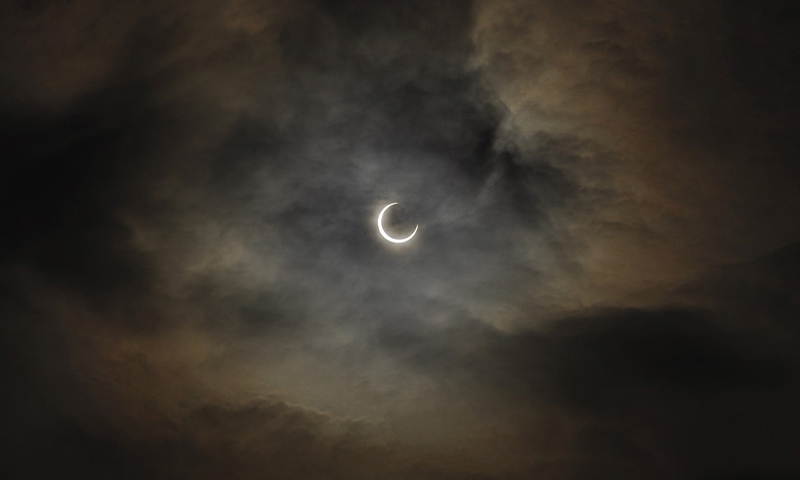
The second eclipse of 2025 will be a partial solar eclipse on March 29, 2025. Like the total lunar eclipse, this solar eclipse will not be visible in Pakistan. It will be observable across Europe, parts of Asia, North and West Africa, and much of North America. In a partial solar eclipse, only a portion of the Sun is covered by the Moon, creating a crescent-shaped appearance. Skywatchers in regions where it is visible will need to use special eye protection to safely view the event.
3. Second Total Lunar Eclipse on September 7, 2025: A Rare “Blood Moon” in Pakistan
The second total lunar eclipse of 2025 will take place on September 7, 2025, and it will be the only eclipse visible in Pakistan. This eclipse will provide a rare chance for stargazers in Pakistan to witness the “Blood Moon.” The eclipse will begin at 08:28 PM local time and reach its completion at 01:55 AM on September 8, 2025.
The September lunar eclipse will be particularly significant for Pakistan as it will be the only opportunity for the country’s stargazers to experience a total lunar eclipse. The reddish hue of the Moon during this event will make it a fascinating sight, and many skywatchers in Pakistan are expected to stay up to witness this rare phenomenon.
4. Partial Solar Eclipse on September 21, 2025
The final eclipse of 2025 will be another partial solar eclipse, occurring on September 21, 2025. However, this eclipse will not be visible in Pakistan either. It will be observable in parts of South Australia, the Pacific, the Atlantic, and Antarctica. As with all solar eclipses, it is essential for those viewing the event to take proper precautions to protect their eyes.
What is a Lunar Eclipse?
A lunar eclipse occurs when the Earth is positioned directly between the Sun and the Moon, causing the Earth’s shadow to fall upon the Moon’s surface. Since lunar eclipses can only occur during a full moon, they are a spectacular and rare celestial event for skywatchers. The total lunar eclipse can be especially breathtaking, as the Moon turns a deep reddish color, often referred to as a “Blood Moon.”
Lunar eclipses are safe to view with the naked eye, unlike solar eclipses, which require special protective eyewear. The shadow cast on the Moon by Earth gives it a dramatic and otherworldly appearance, making lunar eclipses a captivating event for those who are fortunate enough to witness them.
How to Safely View an Eclipse
While lunar eclipses are safe to view without eye protection, solar eclipses, whether partial or total, can be harmful to your eyes if viewed directly without proper eye protection. Experts, including NASA, strongly emphasize the importance of using specialized eye protection when observing any solar eclipse.
For those observing an annular or partial solar eclipse, it is recommended to use solar viewing glasses or a handheld solar viewer to safely watch the eclipse. Regular sunglasses, no matter how dark, are not sufficient for protecting your eyes during a solar eclipse. Using the correct protective gear will help prevent permanent eye damage and allow you to enjoy the celestial event safely.
