
Table of Contents
ISLAMABAD — Federal Minister for Water Resources Muhammad Mueen Wattoo has confirmed that Pakistan’s major water reservoirs are currently holding well above their seasonal averages, with Tarbela Dam nearing full capacity — a welcome development for the country’s agricultural, industrial, and domestic water needs.
Speaking during the question-hour session of the National Assembly on Wednesday, Wattoo noted that the current water storage status represents a significant improvement over the low levels typically seen earlier in the year.
Current Water Storage Status
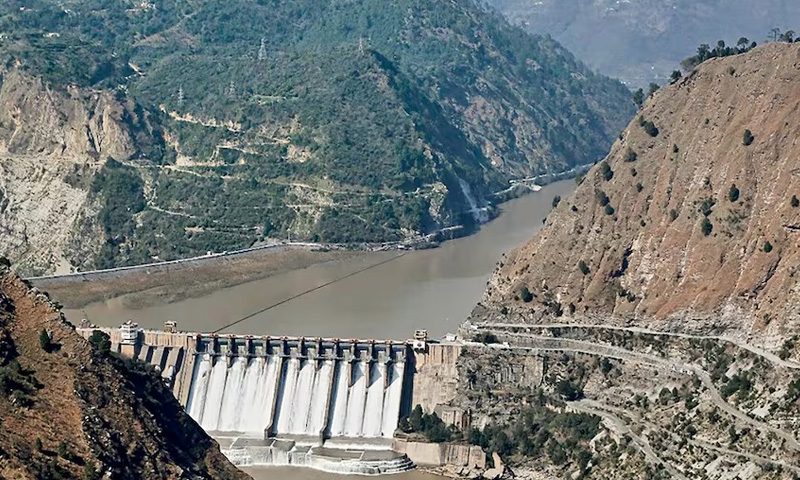
The minister informed lawmakers that Tarbela Dam is presently 96% full, while Mangla Dam stands at 64%, and Chashma Barrage is at 83% capacity. Collectively, the national water storage has reached approximately 75% of total capacity.
He explained that in normal seasonal patterns, two months each year witness a decline in water levels at these reservoirs due to high agricultural demand and reduced inflows. However, this year’s trend has reversed, with water levels holding significantly higher than expected.
“This is a positive sign for our water security and agricultural planning,” he told the House.
Addressing Water Scarcity Challenges
While welcoming the current storage situation, Wattoo cautioned that Pakistan remains vulnerable to global and domestic water scarcity threats. He highlighted that climate change, erratic rainfall patterns, and increased water demand are pressing concerns.
Pakistani Student Leads Global Team to Victory at AI 4 Good Incubator 2025
He assured lawmakers that Prime Minister Shehbaz Sharif is personally monitoring water resource management, with high-level meetings held every third day to review existing projects and future plans.
The government’s strategy includes:
- New storage projects to expand capacity for both irrigated and rain-fed regions.
- Long-term infrastructure planning to withstand seasonal and climate-driven variability.
- Enhanced efficiency in water distribution to reduce wastage and ensure equitable access.
Equitable Distribution Under the 1991 Water Accord
Responding to questions about fairness in water sharing between provinces, the minister reaffirmed that allocations are determined by the 1991 Water Accord — a legally binding agreement that clearly defines each province’s share.
He stressed that the Accord is strictly implemented, and provinces have full autonomy to manage their allocated water independently.
“Each province receives exactly what is agreed upon, and there is no interference in how they choose to use it,” Wattoo stated.
Telemetry System for Transparency
In a bid to enhance transparency and resolve disputes, the minister announced that the government is installing a telemetry system to allow real-time monitoring of water flows to all provinces.
This system will enable:
- Accurate measurement of water discharge from reservoirs.
- Live data sharing with provincial authorities.
- Elimination of manual discrepancies or disputes.
“If any province believes it is receiving less water than its allocated share, they can present the data. If deliberate shortfalls are proven, strict action will be taken,” Wattoo asserted.
Provinces Urged to Use Water Efficiently
Wattoo also urged provinces to focus on water conservation, modern irrigation methods, and reduction of losses through outdated canal systems. He suggested that provincial governments invest in lining watercourses, adopting drip irrigation, and educating farmers on optimal water usage to extend the utility of available resources.
Significance for Agriculture and Economy
Higher-than-average water levels in major reservoirs are expected to benefit agricultural production in the upcoming Kharif season. With sufficient water availability, farmers can expect improved irrigation schedules, leading to healthier crop yields and reduced dependence on costly groundwater pumping.
Industries reliant on hydropower generation may also benefit, as fuller reservoirs can support more stable electricity generation from dams, potentially easing energy supply pressures.
Looking Ahead
While the current situation is encouraging, the minister reiterated that Pakistan cannot afford complacency. He emphasized that long-term water security will require:
- Continued investment in storage and infrastructure.
- Strict implementation of provincial allocations.
- Adoption of modern water management practices.
- Public awareness campaigns on conservation.
“Water is our most precious resource, and managing it wisely is key to our future stability,” Wattoo concluded.
