
Table of Contents
NASA-supported research achieves a major breakthrough in space agriculture as scientists grow nutritious potatoes in simulated lunar soil, raising hopes of producing food for future Moon missions.*
Scientists have successfully grown potatoes in simulated lunar soil, marking a significant breakthrough in space agriculture and offering new possibilities for feeding astronauts living on the Moon in the future.
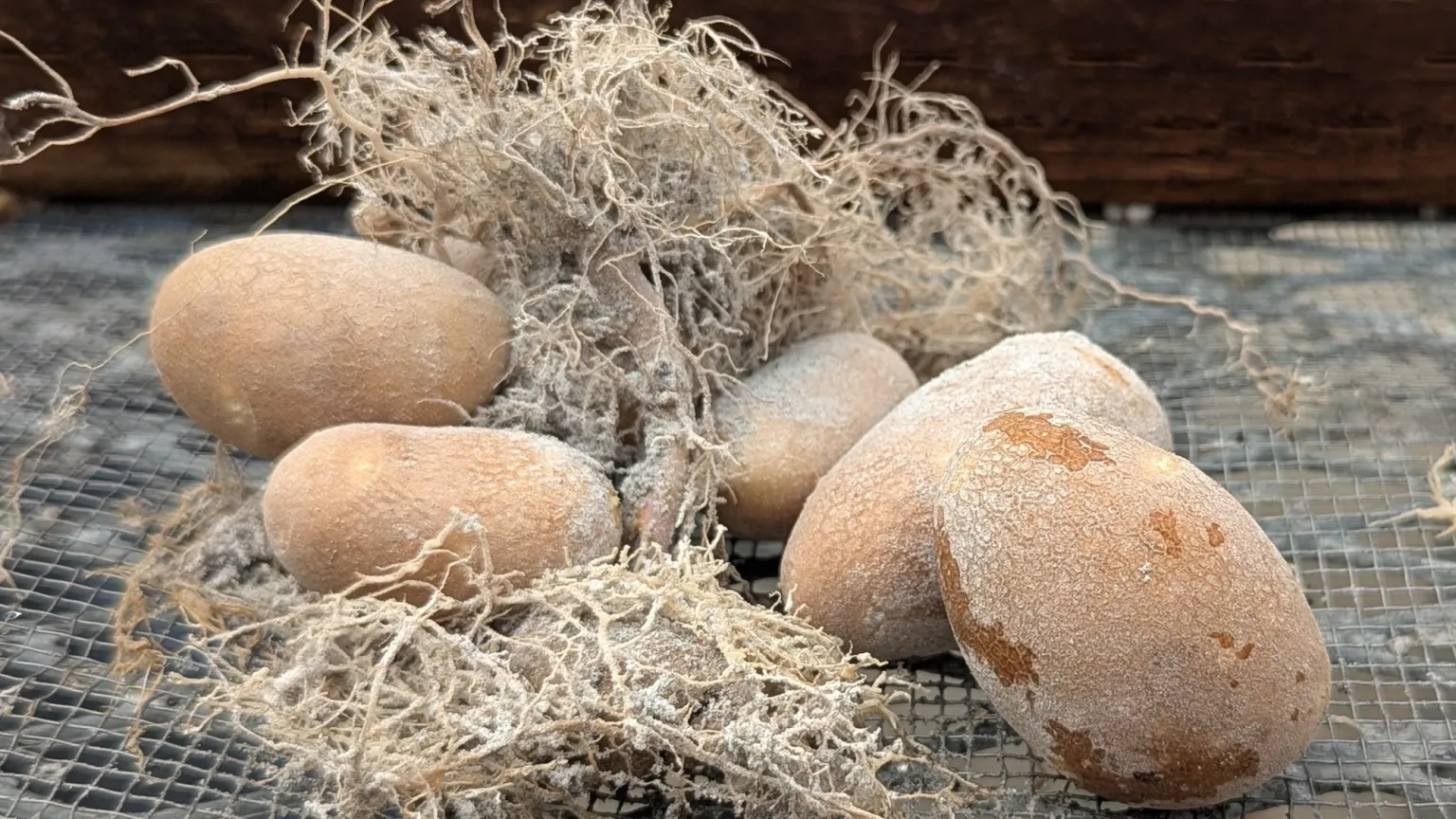
The research, supported by NASA, demonstrated that potatoes can grow in lunar soil when it is supplemented with sufficient organic material. Researchers found that under suitable conditions, the plants produced yields comparable to those grown in ordinary Earth soil.
The experiment used a potato variety called Modoc, an early-maturing variety with red skin and white flesh.
The findings are particularly important as the United States and China prepare for future crewed lunar missions, with both countries pursuing plans to establish long-term bases on the Moon.
Producing food locally could help sustain astronauts and reduce the enormous costs and logistical challenges associated with transporting food supplies from Earth.
Why Potatoes Could Become an Important Space Food
Oregon State University plant biologist Aymeric Goyer, who led the study published in the journal npj Microgravity, said potatoes offer several advantages for future space agriculture.
According to Goyer, potatoes produce more calories per unit of land than many other crops. They are also rich in potassium, vitamin C and protein, making them a nutritious food source.
Their high satiety value means they can provide a satisfying meal while helping astronauts meet their nutritional requirements.
How Scientists Grew Potatoes in Moon Soil
The Moon’s surface is covered with a material known as lunar regolith, consisting mainly of crushed rocks and dust formed over billions of years through meteorite impacts.
Unlike Earth’s agricultural soil, lunar regolith contains no organic material and lacks essential nutrients required for plant growth.
To overcome this challenge, researchers mixed simulated lunar soil with different quantities of vermicompost, a nutrient-rich organic material produced when earthworms break down organic waste.
According to Goyer, lunar regolith contains no nitrogen, meaning plants cannot grow properly without additional nutrients.
Experiments showed that potatoes planted in pure simulated lunar soil produced almost no roots or tubers.
However, when researchers added just 5% vermicompost to the mixture, the plants began developing roots and potatoes.
The most promising results came from a mixture containing 30% vermicompost and 70% simulated lunar regolith. Under these conditions, potato yields were comparable to those grown in Earth soil under the same experimental conditions.
Are Moon-Grown Potatoes Safe to Eat?
One of the major challenges in growing food on the Moon is the presence of potentially harmful heavy metals in lunar regolith.
Researchers found that without organic material, potato plants could absorb excessive amounts of heavy metals, potentially reaching toxic levels.
Adding vermicompost helped reduce the availability of these metals to plants, preventing excessive accumulation.
Although the potatoes were harvested and examined in laboratory analyses, researchers have not tasted them yet.
The initial experiment was conducted using small pots in a greenhouse under natural and artificial lighting. Temperatures were maintained at approximately 22 degrees Celsius during the day and 18 degrees Celsius at night.
The harvested potatoes were generally smaller than 10 grams, even in the Earth-soil samples.
However, Goyer said researchers are conducting another study using larger pots, i…
