
Table of Contents
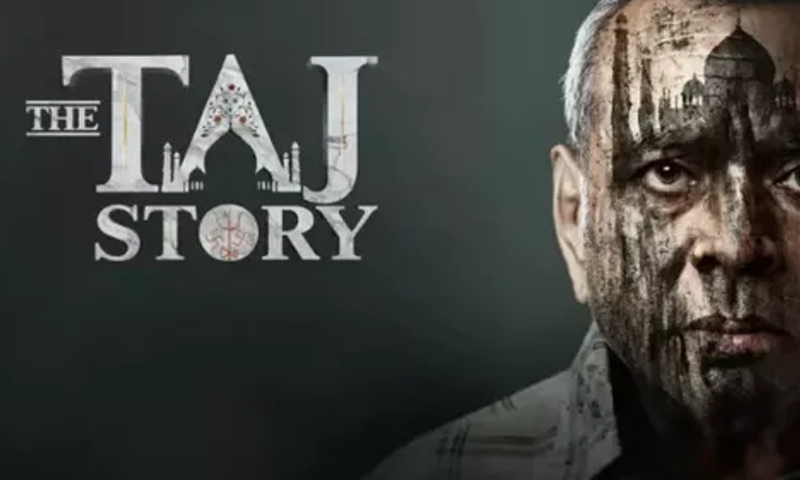
The much-talked-about courtroom drama The Taj Story, starring Paresh Rawal and written by Tushar Amrish, released on October 31, 2025, and within hours became one of the most discussed films on social media. The film — which revolves around the mysteries and historical debates surrounding the Taj Mahal — has sharply divided audiences, earning both glowing praise and harsh criticism in equal measure.
Soon after its release, X (formerly Twitter) was flooded with reactions. Many viewers hailed the film’s thought-provoking premise and stellar performances, while others dismissed it as a poorly executed propaganda attempt. The mixed reactions turned The Taj Story into an online storm, sparking heated debates about art, history, and cinematic freedom.
Praise for Powerful Writing and Performances
A large section of social media users showered the film with appreciation for its writing, direction, and strong courtroom sequences. The movie’s intense dialogues and the compelling portrayal of its lead character, Vishnu Das, seemed to resonate with many viewers who described it as “thought-provoking” and “emotionally charged.”
One user wrote on X,
“Watched the premiere of #TheTajStory – Brilliant writing by @TusharAmrish, starring @SirPareshRawal. This film is beyond mere entertainment — it reflects the doubts and heartlines of millions questioning the sanitized history we’ve been taught.”
Another cinegoer shared,
“Positive response pouring in for #TheTajStory — audiences are calling the film unbelievable and the most important movie of the year.”
A third user praised the movie’s message, writing,
“A brave retelling that turns pain into power and truth into victory.”
Several viewers specifically applauded Paresh Rawal’s performance as “career-defining,” noting how his screen presence and courtroom dialogues kept them engaged throughout the film. One long review circulating on X described:
“The courtroom tension in The Taj Story is nothing short of riveting. From the opening scene, when the advocate’s gavel echoes through the courtroom, the film sets a pace that seldom lets its foot off the pedal.”
Many appreciated how the film raised questions about history, faith, and truth — themes that often remain unexplored in mainstream Bollywood.
Backlash and Harsh Criticism
However, not everyone shared the same enthusiasm. Alongside the praise, The Taj Story also faced a wave of backlash from viewers and critics who accused it of being “propagandist” and historically misleading.
One user posted a scathing review, saying,
“#TheTajStoryFirstReview 1.5/5 disastrous. It’s not only a problematic propaganda film but also extremely poor and forceful in acting & direction.”
Another viewer quipped sarcastically,
“#TheTajStory is a sleep-inducing disaster! Director confused history with fiction & still failed. Script dull, acting lifeless, music torture. Even my remote wanted to escape halfway! Such films should come with a free pillow!”
A third user bluntly remarked,
“This is not The Taj Story, it is The Fake Story.”
Several film critics also highlighted inconsistencies in the screenplay, claiming that the film’s attempt to blend myth, history, and courtroom drama ended up feeling disjointed. Some also accused the makers of fueling unnecessary religious debates through selective storytelling.
Plot Summary: Mystery Behind the Monument
The Taj Story centers on Vishnu Das, a local tour guide at the Taj Mahal, played by Paresh Rawal. Intrigued by the monument’s long-debated origins and the mystery surrounding its 22 sealed rooms, Vishnu embarks on a mission to uncover the “truth” behind the iconic structure.
What begins as a mere curiosity soon evolves into a high-stakes courtroom battle, where Vishnu demands a DNA test to prove whether the Taj Mahal is a tomb or a temple. The narrative explores the intersections of faith, science, and nationalism, set against a backdrop of political and social tension.
Through Vishnu’s journey, the film attempts to explore how history is written, remembered, and questioned, forcing audiences to confront uncomfortable realities about belief systems and cultural ownership.
Controversy Surrounding the Film’s Poster
Even before its release, The Taj Story was mired in controversy. The poster, which depicted a Shiv motif emerging from the Taj Mahal’s dome, sparked massive backlash online. Many critics and netizens accused the filmmakers of trying to reignite communal tensions between Hindu and Muslim communities.
In response, the makers issued an official clarification, stating that the film was not intended to provoke religious sentiments but to encourage dialogue and historical curiosity. Their statement read:
“The Taj Story is inspired by documented historical references and aims to start conversations, not conflicts. It is a cinematic exploration of unanswered questions, not a political statement.”
Despite the clarification, the controversy only added to the film’s buzz, making it one of the most discussed releases of the season.
Final Verdict: A Divisive Yet Impactful Film
Whether loved or loathed, The Taj Story has undeniably made an impact. The film has succeeded in sparking discussions across social media, classrooms, and living rooms about history, religion, and artistic freedom.
For admirers, it’s a bold attempt to question established narratives. For critics, it’s a dangerous blend of fiction and ideology masquerading as art. But one thing is certain — The Taj Story has ensured that no one walks out of the theatre indifferent.
As the debate rages on, The Taj Story stands as another reminder of cinema’s power to divide opinions, challenge perceptions, and provoke thought — even if uncomfortably so.
