
Table of Contents
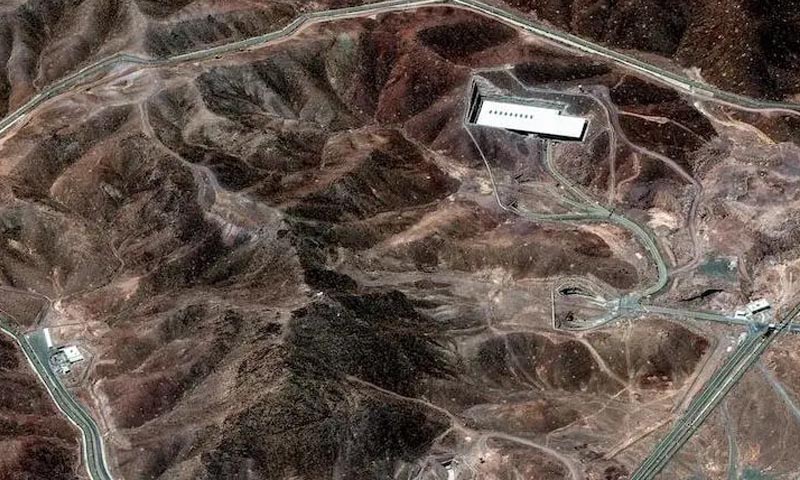
In a dramatic and potentially game-changing move, U.S. President Donald Trump announced that American military forces have conducted coordinated airstrikes on three key nuclear facilities inside Iran. The sites targeted were Fordow, Natanz, and Isfahan—all central to Iran’s uranium enrichment and nuclear infrastructure. The strikes mark the first direct U.S. military action on Iranian soil targeting nuclear assets, and were closely coordinated with Israel’s ongoing campaign against Tehran.
Air India Cuts International Wide-Body Flights by 15% Following Ahmedabad Incident
President Trump made the announcement through an official statement on social media, declaring the mission a success. “We have successfully completed our strikes on three Iranian nuclear sites: Fordow, Natanz, and Isfahan. All aircraft are out of Iranian airspace. A full payload of bombs was dropped on Fordow, the main target. All crews are returning safely,” he wrote.
B-2 Stealth Bombers and Bunker-Busters Used in the Strike
Sources within the Pentagon confirmed that the operation employed B-2 Spirit stealth bombers to bypass Iranian air defenses and deliver 30,000-pound GBU-57 Massive Ordnance Penetrator (MOP) bombs on fortified underground sites like Fordow. These facilities are protected by layers of concrete and rock, requiring specialized munitions capable of penetrating deep into the earth.
In addition to aerial bombardment, the U.S. Navy launched a volley of Tomahawk cruise missiles from submarines stationed in the region, striking supplementary infrastructure and potentially targeting Iranian air defenses around Isfahan and Natanz.
Israel’s Military Campaign Sets the Stage
The U.S. intervention follows over a week of intensive Israeli strikes on Iranian missile systems and elements of the country’s nuclear program. Israeli intelligence had reportedly flagged specific vulnerabilities in Iran’s nuclear defense network, prompting joint planning with U.S. military strategists. According to defense officials, Israel lacks the capabilities to breach the depth and fortifications of Iran’s nuclear sites without American involvement.
The attack represents a significant escalation in U.S.-Israeli military cooperation, aimed at dismantling Iran’s nuclear weapons development potential. Analysts suggest the strikes were timed to maximize strategic surprise and minimize Iranian response capabilities.
Iran Vows “Severe Retaliation” as Global Concerns Mount
Iranian officials have condemned the strikes as an unprovoked act of war. Foreign Minister Hossein Amir-Abdollahian called the attacks “a violation of international law and Iranian sovereignty” and vowed “severe and unprecedented retaliation.”
The commander of Iran’s Islamic Revolutionary Guard Corps (IRGC) issued a stark warning, suggesting that U.S. bases in the Middle East, as well as shipping in the Strait of Hormuz, could be targeted in response. There are also fears that Iran may further enrich uranium or withdraw completely from international nuclear agreements.
Citizens in Tehran and other major cities were seen queuing for fuel and essential supplies as panic buying spread amid fears of a wider war.
Political Fallout at Home for President Trump
Domestically, President Trump faces mounting questions about the legality and political ramifications of his decision. Critics argue that the move contradicts his long-standing promise to avoid foreign wars. Legal scholars and members of Congress—particularly from the Democratic Party—have raised concerns about the absence of Congressional authorization for the military action.
On the other hand, key Republican allies have praised the strike as a strong and decisive move that sends a clear message to adversaries.
Global Leaders Call for Restraint and Diplomatic Solutions
The international response has been swift and apprehensive. The European Union, United Nations, and several NATO allies have urged all sides to de-escalate and return to diplomatic negotiations. British Prime Minister and German Chancellor issued a joint statement condemning Iran’s continued nuclear activities but also emphasizing the need to avoid a regional war.
Energy markets responded with immediate volatility, with oil prices spiking on concerns over potential disruptions in the Strait of Hormuz, a vital chokepoint for global oil shipments.
What Comes Next: A Region on Edge
As of now, Iranian military movements remain under close surveillance. U.S. forces in Iraq, the Persian Gulf, and the Eastern Mediterranean have been placed on high alert. Meanwhile, Israel has reportedly reinforced its missile defenses and placed key military units on standby.
Experts warn that the region stands on the brink of a broader military conflict, depending on Iran’s response in the coming days. Whether this marks the beginning of a prolonged confrontation or serves as a high-stakes deterrent remains uncertain.
